EVOLVE2CARE and DataPACT Webinar on Legal Compliance and Automated Policies in Transitional Care

As AI systems and digital health solutions become increasingly integrated into transitional care, navigating the complex landscape of tech legislation is more important than ever. Addressing this challenge, EVOLVE2CARE partnered with the Data Pact project to deliver an insightful webinar focusing on the legal implications of Artificial Intelligence (AI) and the automation of regulatory compliance.

The webinar brought together innovators, Living Labs, legal experts, and healthcare stakeholders to discuss how current laws impact health data processing and how new technologies can help automate compliance monitoring.

🎥 Missed the webinar or would like to revisit the discussion? 

Watch the full recording here: 

Connecting Innovation with Living Labs

The session opened with an introduction to the EVOLVE2CARE project’s mission to bridge the gap between stakeholders in transitional care by utilizing Living Labs as a research and innovation enabler. The project utilized the Axelab platform from the European Network of Living Labs to launch an open call, successfully providing 10 vouchers of 5,008 euros to external companies. Through this initiative, Living Labs provided critical services like usability testing and real-world validation, helping companies overcome regulatory and business model hurdles to accelerate market readiness.

Navigating the Intersection of GDPR and the EU AI Act

The webinar’s next featured speaker, Sharon Srirap from the Malta IT Law Association and the Data Pact project, explored the profound legal implications of AI systems. The presentation highlighted the intrinsic link between data and law, noting that AI systems in the healthcare sector rely on vast volumes of sensitive personal data to learn and make predictions.

A central message was the interplay between different regulations, specifically the GDPR and the EU AI Act. While the GDPR targets constrained data use through principles like purpose limitation and data minimization, AI systems inherently thrive on expansive and flexible data sets. To navigate this tension, the presentation emphasized the importance of utilizing synthetic or anonymized data wherever possible and implementing privacy by design and default, particularly when dealing with special categories of health data.

Automating Compliance with ODRL

To bridge the gap between complex legal texts and practical implementation, Paolo introduced technological approaches to automate compliance elements. The discussion focused on the Open Digital Rights Language (ODRL), a machine-readable web standard used to represent usage policies, permissions, prohibitions, and obligations.

Paolo demonstrated how the Data Pact project has developed a comprehensive mathematical semantics model for ODRL, effectively removing ambiguity from policy interpretation. This innovative approach allows systems to evaluate streams of events—such as electronic health records being accessed—against established policies to automatically flag non-compliant actions. By utilizing tools like policy editors and ODRL evaluation engines, organizations can streamline data sharing agreements and evaluate access control requests in an exact and efficient manner.

Preparing for the Future of Digital Health

The webinar demonstrated the immense value of cross-disciplinary collaboration in understanding the evolving regulatory frameworks. By bringing together Living Lab methodologies, legal expertise, and automated compliance tools, the session provided valuable insights for innovators and stakeholders seeking to responsibly design and deploy AI systems in transitional care ecosystems.

EVOLVE2CARE at the EIC Summit 2026: Bringing Living Labs to Europe’s Innovation Stage

EVOLVE2CARE took center stage at the EIC Summit 2026, one of Europe’s flagship events for innovation and entrepreneurship. Held on 4 June 2026, the Summit brought together startups, researchers, investors, policymakers, and innovation support organizations to discuss how breakthrough ideas can successfully reach the market and generate societal impact.

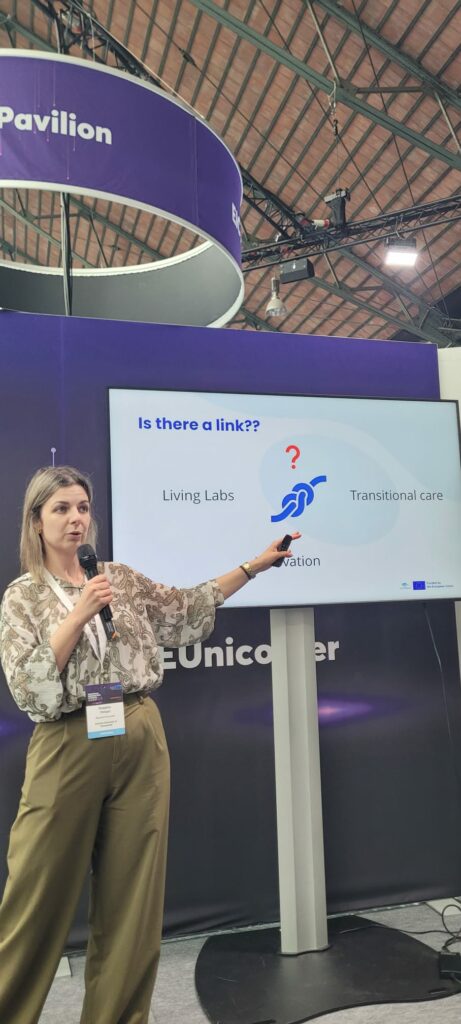
As part of the EUnicorners sessions hosted within the EIC Pavilion, EVOLVE2CARE contributed to two dedicated presentations showcasing how Living Labs can support innovators in navigating the complex journey from concept validation to real-world adoption.

Living Labs as a Competitive Advantage

The first session, “Living Labs as a competitive advantage for European companies” presented by Martina Desole from the European Network of Living Labs (ENoLL), focused on how Living Labs can transform innovation from a high-risk process into a structured, evidence-based pathway.

The presentation highlighted the unique value that Living Labs provide to innovators by offering access to users, facilities, expertise, and real-life testing environments. Through co-creation, experimentation, and validation, Living Labs help innovators reduce uncertainty, identify challenges early, and generate evidence that supports investment and market uptake.

The session emphasized that innovation success depends not only on technological excellence but also on understanding user needs, regulatory requirements, and real-world implementation conditions.

Accelerating HealthTech Innovation in Transitional Care

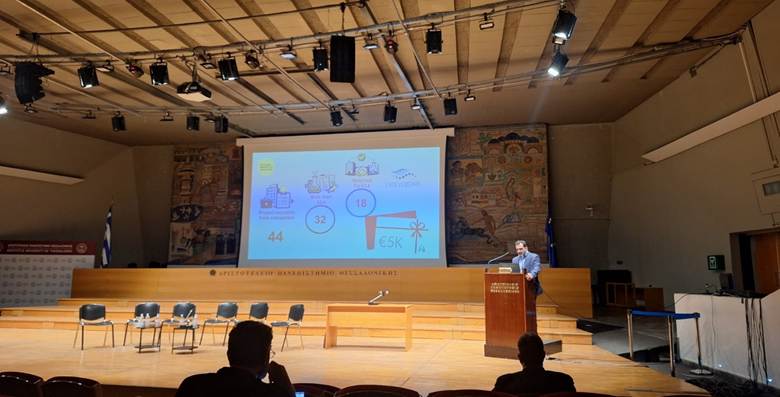
Later in the day, Despoina Petsani from the Aristotle University of Thessaloniki presented the session “Accelerating HealthTech Innovation in Transitional Care through Living Labs: Lessons from the EVOLVE2CARE Project.” The presentation highlighted how EVOLVE2CARE supports innovators in validating HealthTech solutions within transitional care environments through Living Lab methodologies and real-world experimentation.

A central message was that successful healthcare innovation requires more than technological excellence. Living Labs provide innovators with access to users, multidisciplinary expertise, testing infrastructures, and structured co-creation processes that help address challenges related to validation, user acceptance, ethics, and regulatory compliance. The session also showcased AccelUP, the EVOLVE2CARE marketplace connecting innovators with certified Living Lab services, as well as the experimentation vouchers that enable companies to access testing and validation support.

As EVOLVE2CARE continues supporting innovators across Europe, the EIC Summit reinforced a key message: successful healthcare innovation requires more than technology alone. It requires collaboration, validation, and engagement with the people and environments where innovation will ultimately be used.

EVOLVE2CARE at MIE 2026: Grounding Digital Health Innovation in Living Labs

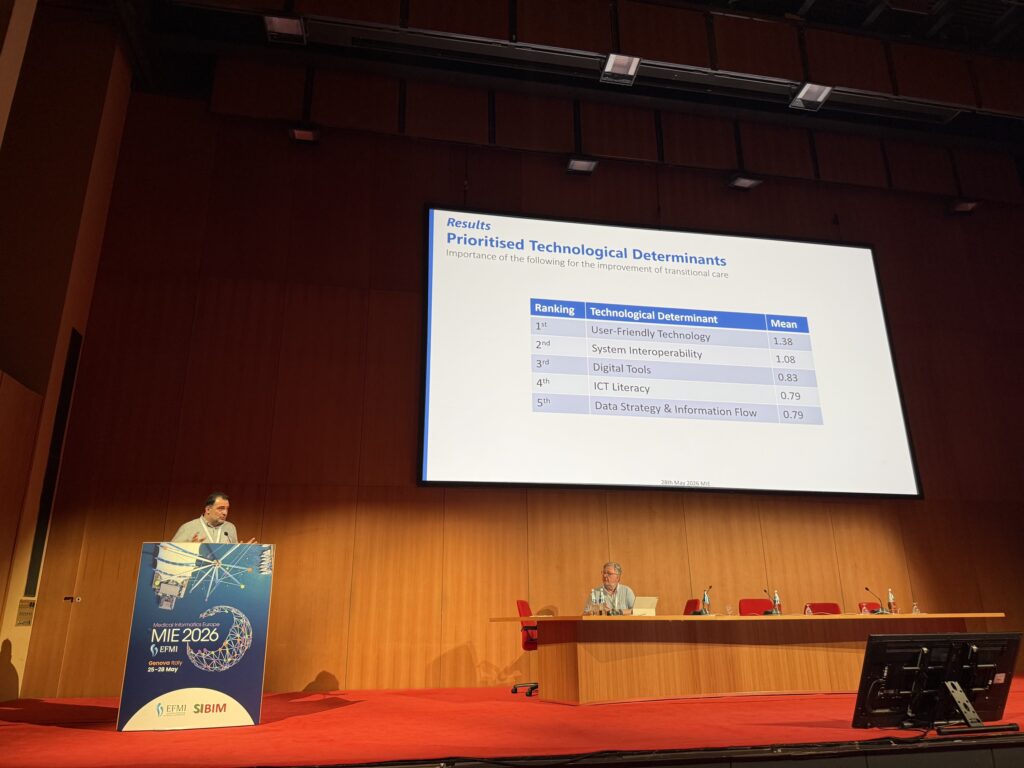
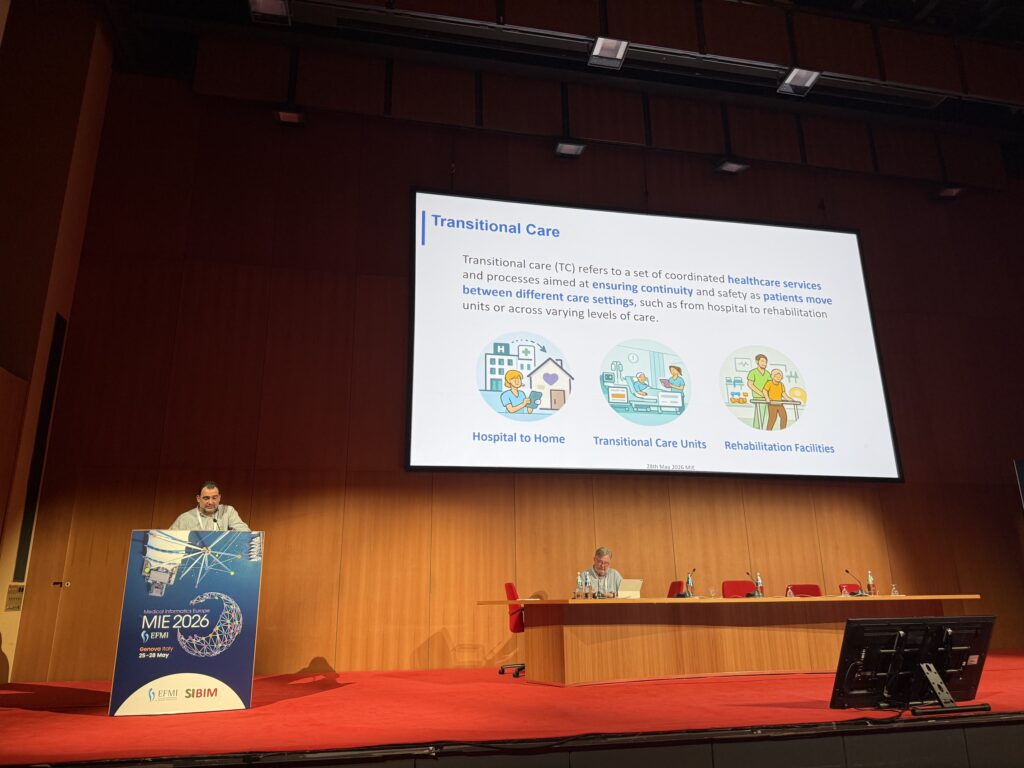
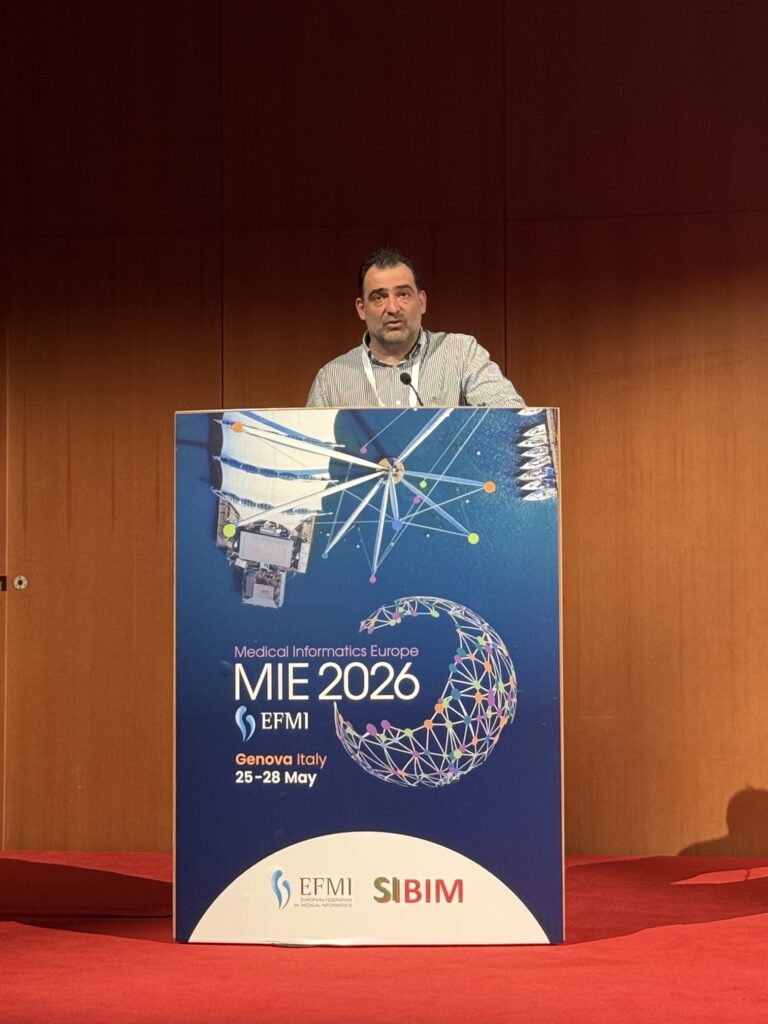
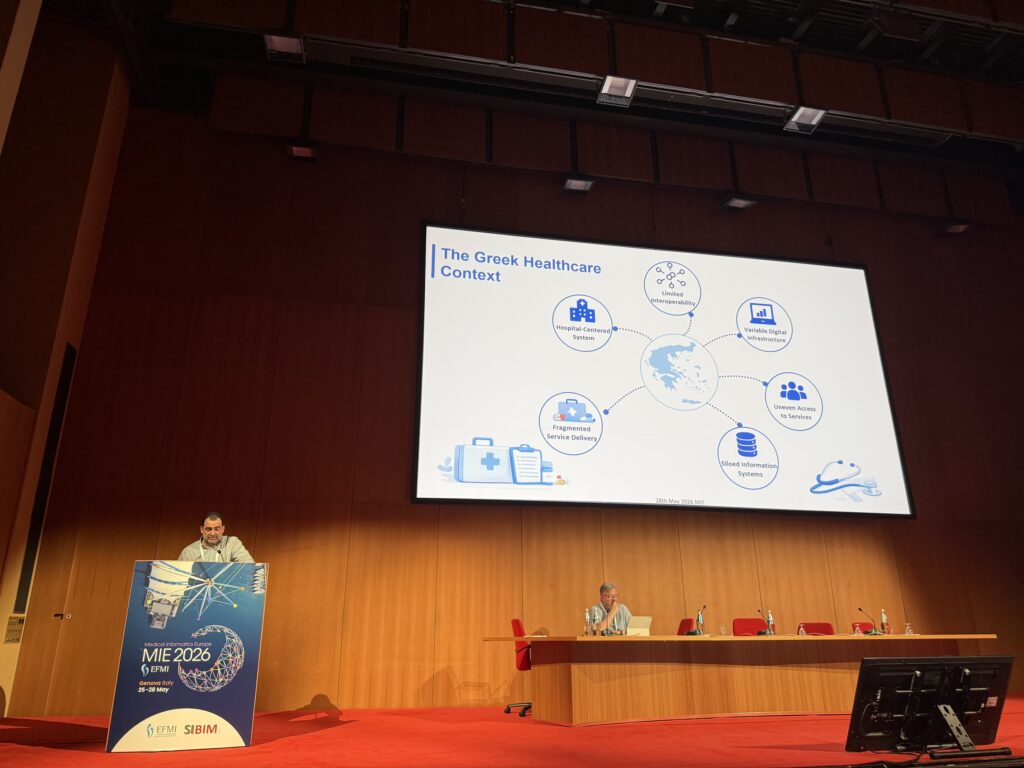
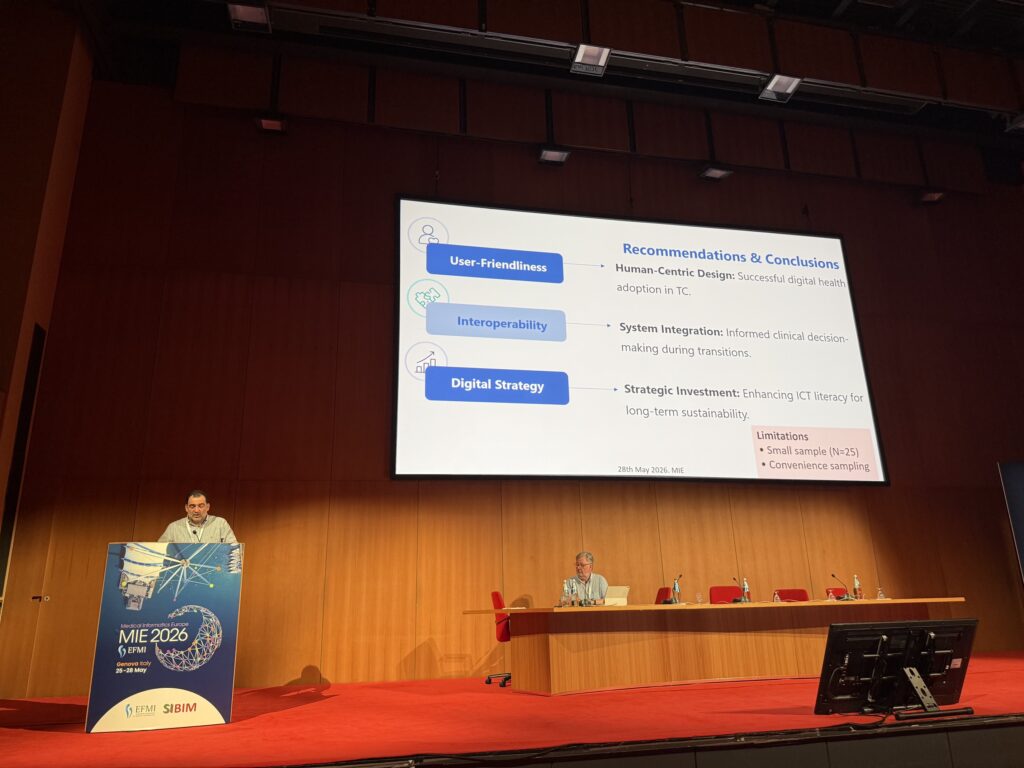
The intersection of technological innovation and real-world clinical application is at the forefront of digital health. Marking a significant contribution to this dialogue, Dr. Evdokimos Konstantinidis, Assistant Professor at the Aristotle University of Thessaloniki (AUTH), is participating in the 36th Medical Informatics Europe (MIE) conference. Taking place from May 25-28, 2026, in the historic city of Genova, Italy, Dr. Konstantinidis presented a compelling paper during the final day, which has stemmed from the EVOLVE2CARE project, highlighting the critical role of Living Labs in health technology.

The MIE 2026 Landscape: Technology Meets Healthcare

Set against the scenic backdrop of the Magazzini del Cotone, MIE 2026 is organized by the European Federation for Medical Informatics (EFMI), which is proudly celebrating its 50th anniversary this year. The conference theme, “Opening the Personal Gate between Technology and Health Care,” aligns perfectly with the current digital health climate.

As noted in the conference proceedings, while artificial intelligence continues to generate immense global interest, it is crucial that these technologies are not overestimated. Technological solutions must be carefully integrated into the healthcare process to provide high-quality, contextualized data. Dr. Konstantinidis’s participation underscored the shared vision that meaningful knowledge arises from open dialogue among all healthcare stakeholders.

EVOLVE2CARE: Bridging the Implementation Gap

The paper presented at MIE 2026 stems directly from the research and real-world experimentation conducted under the EVOLVE2CARE umbrella. The project tackles the persistent challenge of integrating research into everyday clinical settings. Healthcare professionals frequently face critical obstacles, which EVOLVE2CARE aims to resolve through:

  • Overcoming Time Constraints: Addressing the heavy clinical workloads that leave little room for research activities.
  • Aligning Priorities: Ensuring that long-term research objectives do not conflict with immediate patient care needs.
  • Fostering Co-ownership: Engaging healthcare professionals directly in the innovation process through structured, multi-stakeholder partnerships.

By leveraging Living Lab methodologies, Dr. Konstantinidis emphasizes how EVOLVE2CARE supports transitional care innovation. These environments enable the validation of scalable, human-centered solutions within authentic care settings rather than isolated laboratories.

Dr. Evdokimos Konstantinidis’s presentation at MIE 2026 has been a vital step forward in advocating for evidence-based validation in HealthTech. By sharing the practical applications of the EVOLVE2CARE project, he reinforces the necessity of grounding digital innovation in realistic healthcare environments.

EVOLVE2CARE Presented at the Aristotle Innovation Forum 2026

EVOLVE2CARE was presented at the Aristotle Innovation Forum (AIF) 2026, a high-impact international conference hosted by the Aristotle University of Thessaloniki (AUTH) that brings together academia, industry, policymakers, entrepreneurs, and society to explore innovation and artificial intelligence.

Held under the theme “Aristotle Meets AI”, the Forum examined how emerging technologies and ethical reasoning can shape future societies. Positioned as a landmark innovation event in Southeastern Europe, AIF provided a dynamic platform for dialogue, networking, and knowledge exchange across multiple sectors.

EVOLVE2CARE at the AI in Medical Education Session

On 19 May 2026, EVOLVE2CARE was featured during the “AI in Medical Education” session of the Medical Forum at AIF.

Representing the project, Evdokimos Konstantinidis, Assistant Professor in Digital, Technological and Open Innovation in Health at the Laboratory of Medical Physics and Digital Innovation of the Aristotle University of Thessaloniki, presented EVOLVE2CARE and its contribution to advancing HealthTech innovation through Living Lab methodologies.

The session brought together researchers and healthcare professionals to discuss how artificial intelligence is reshaping medical education and healthcare systems, creating opportunities while also raising important questions regarding implementation, validation, and adoption.

Living Labs as Enablers of Health Innovation

The EVOLVE2CARE presentation highlighted the project’s mission to bridge the gap between technological innovation and real-world healthcare implementation.

A central message of the presentation was that innovation alone is not sufficient. Health technologies must be tested, refined, and validated within realistic healthcare settings involving the stakeholders who will ultimately use them.

Through Living Lab methodologies, EVOLVE2CARE supports this process by:

Real-world experimentation: validating solutions in authentic care environments rather than controlled laboratory settings.

Co-creation and stakeholder engagement: involving healthcare professionals, patients, innovators, and researchers throughout the innovation cycle.

Evidence-based validation: generating feedback and measurable outcomes to assess usability, feasibility, and impact.

Innovation support: connecting innovators with Living Lab infrastructures through the EVOLVE2CARE Open Call and experimentation framework.

These elements reflect the project’s broader vision of supporting transitional care innovation through structured experimentation and collaboration.

From Medical Education to Healthcare Transformation

The inclusion of EVOLVE2CARE within the AI in Medical Education session highlighted the growing recognition that innovation in healthcare extends beyond technology development alone.

Artificial intelligence and digital tools increasingly influence not only clinical practice but also how healthcare professionals are educated, trained, and prepared to adopt innovation responsibly.

By presenting at AIF, EVOLVE2CARE contributed to wider discussions on how HealthTech solutions can move beyond prototypes and research settings toward validated, scalable, and human-centered implementation.

From Applications to Experimentation: The Journey Behind the EVOLVE2CARE Open Call

Behind every successful experimentation phase lies a carefully designed selection process.

For EVOLVE2CARE, the Open Call was not simply a call for proposals. It was the foundation of a structured pathway connecting HealthTech innovators with Living Labs across Europe. The Open Call marked the transition from interest to engagement, and from ideas to implementation.

This blog builds on insights from Deliverable D2.2 – “Living Labs, Innovators and Researchers Scouting and Selection Report”, which is publicly available on Zenodo and provides a transparent overview of the scouting, evaluation, and selection process behind the EVOLVE2CARE Open Call.

Designing an Open Call with Purpose

HealthTech innovation thrives when solutions are tested where care actually happens. With this in mind, the EVOLVE2CARE Open Call focused on identifying innovators and Living Labs ready to collaborate in three critical domains of transitional care:

  • Hospital discharge management
  • Remote monitoring and home-based care
  • Ageing and chronic care support

The objective was not only to select promising technologies, but to ensure alignment between innovators’ ambitions and the real-world experimentation capacity of Living Labs.

A Structured and Transparent Process

The scouting and selection process was designed to be clear, fair, and impact-oriented.

Applications were evaluated against predefined criteria that considered:

  • Relevance to transitional care use cases
  • Technical feasibility and maturity
  • Potential for measurable impact
  • Readiness for collaboration within Living Lab environments

Beyond scoring, the process also focused on matchmaking, ensuring that selected innovators were paired with Living Labs capable of supporting meaningful experimentation.

This structured approach ensures that the experimentation phase is grounded in strategic alignment rather than opportunistic selection.

From Selection to Real-World Validation

With the Open Call phase completed, selected mini-projects have now entered Living Lab environments for real-world experimentation.

This marks a critical shift. The focus moves:

  • From proposal quality to implementation performance
  • From theoretical value to practical usability
  • From innovation potential to measurable impact

Within Living Labs, solutions are tested in real healthcare contexts, involving professionals, patients, and ecosystem actors. This enables innovators to refine their tools, identify integration challenges early, and generate evidence that goes beyond technical feasibility.

Building Evidence for Sustainable Uptake

The Open Call was the first step in a broader journey toward sustainability and scalability.

By documenting the scouting and evaluation methodology, EVOLVE2CARE reinforces its commitment to transparency and replicability. The structured selection process lays the groundwork for credible experimentation outcomes, stronger positioning of project results, and future ecosystem adoption.

Readers interested in understanding the full methodology behind the Open Call scouting and selection process can explore Deliverable D2.2 – “Living Labs, Innovators and Researchers Scouting and Selection Report”, available publicly on Zenodo.

From applications to experimentation, EVOLVE2CARE continues to build a pathway where innovation is not only selected, but validated, strengthened, and positioned for real-world healthcare transformation.

Bridging the Digital Health Innovation Gap – ADHW26 Workshop Recap

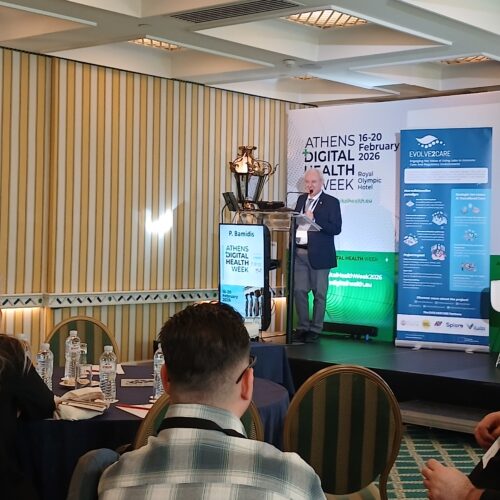
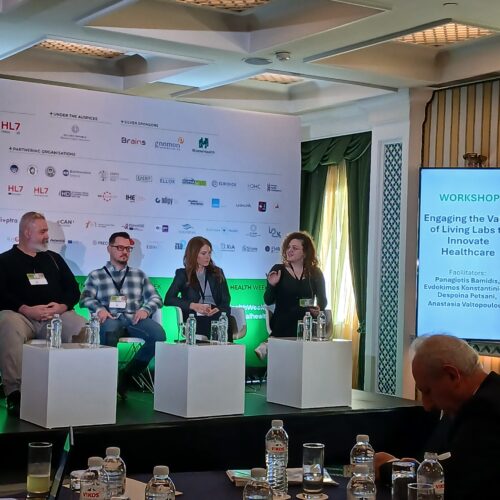
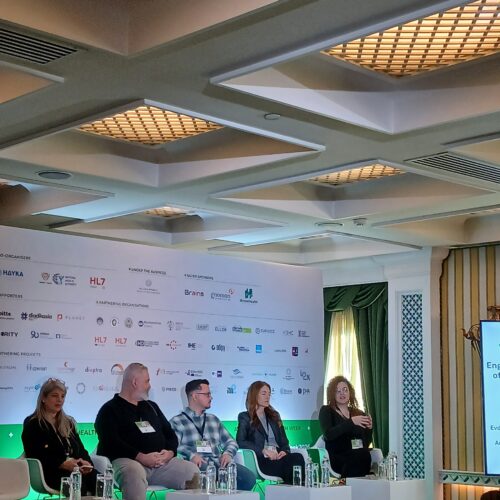
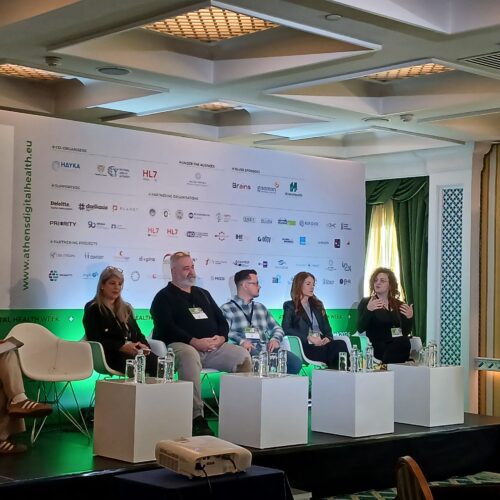
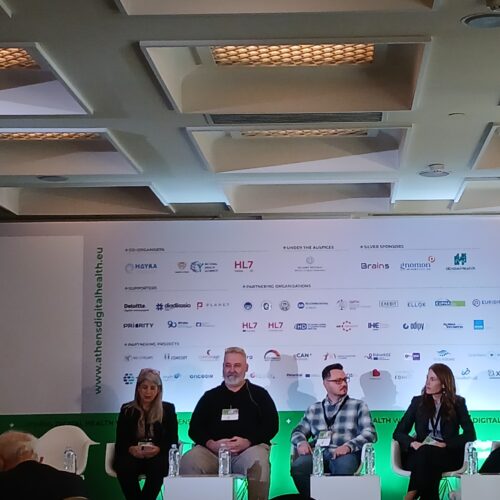
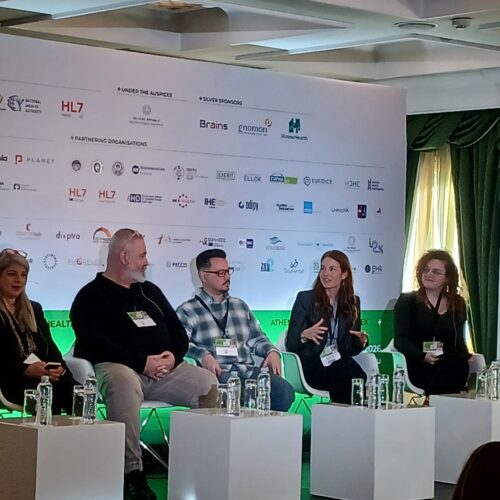
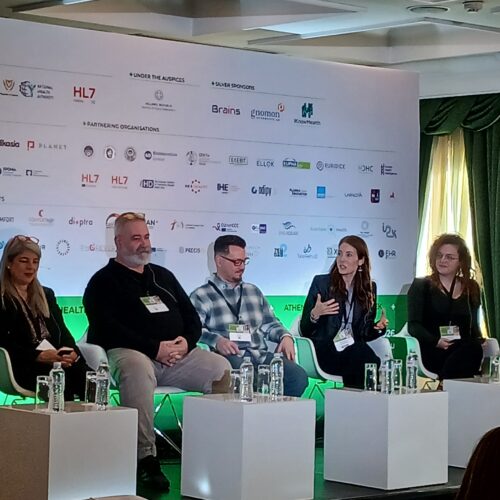
Organised by the EVOLVE2CARE project in the context of Athens Digital Health Week 2026, the workshop “Engaging the Value of Living Labs to Innovate Healthcare” took place on 18 February and was chaired by Despoina Petsani, Project Mission Coordinator (AUTH). The session convened innovators, researchers, and ecosystem actors to examine a pressing question in HealthTech: how can promising digital solutions successfully transition from pilot testing to routine clinical practice?

Rather than focusing solely on the generation of new technologies, the discussion addressed the structural and operational barriers that prevent digital health innovations from scaling within real healthcare environments. Speakers highlighted a persistent misalignment between technological development and clinical realities. Digital tools frequently struggle to integrate into established workflows, while regulatory complexity, GDPR compliance, interoperability limitations, and fragmented stakeholder collaboration continue to slow adoption . This creates tension between rapid technological advancement and the healthcare sector’s demand for rigorous validation and governance, often resulting in solutions that are technically robust but operationally stalled.

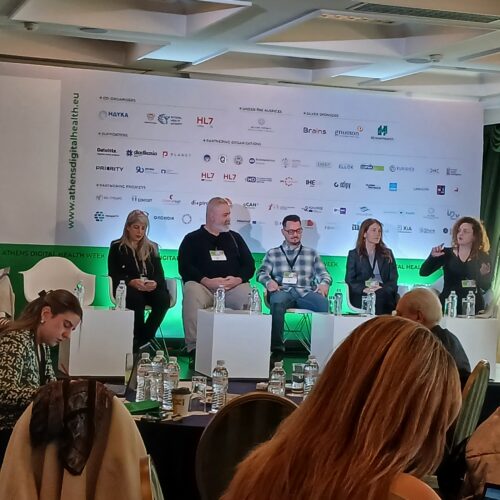
Spyridoula Trakaki emphasised that startups commonly face systemic barriers to market entry and underscored the importance of open innovation ecosystems in overcoming fragmentation and accelerating uptake. Complementing this perspective, Konstantina Kostopoulou, Chief Product Owner of the Healthentia App, shared practical insights into integration pain points during experimentation, particularly around stakeholder engagement and the initial reactions of clinicians and third parties to new digital tools . Her intervention reinforced the idea that adoption depends not only on technological robustness but also on early trust-building and alignment with end-user expectations.

From a service design standpoint, Thanos Loules and Ilias Rafail of IASIS AMKE explored the challenges of developing inclusive services while maintaining active citizen engagement throughout the experimentation process . They stressed that meaningful co-creation requires sustained involvement rather than superficial consultation. Dr. Angelina Kouroubali further addressed the delicate balance between thorough research and the urgency to bring solutions to market, suggesting that structured experimentation frameworks can reconcile scientific rigor with innovation speed .

Across contributions, Living Labs emerged as a strategic integration mechanism. By enabling structured testing within authentic care settings, they reduce deployment risks, strengthen collaboration among stakeholders, and generate the field-based validation required for broader adoption . Rather than positioning digital tools as external add-ons, Living Labs facilitate their evolution into embedded components of care delivery systems.

The workshop ultimately underscored that sustainable healthcare transformation depends on aligning fast-moving innovation cycles with the operational and regulatory realities of the care sector. Through open ecosystems and Living Lab methodologies, stakeholders can bridge this divide—ensuring that digital health innovations are interoperable, credible, and capable of delivering measurable value in real-world clinical settings .

EVOLVE2CARE Workshop at Athens Digital Health Week 2026

EVOLVE2CARE will participate in Athens Digital Health Week 2026 (ADHW2026) with a dedicated workshop titled:

“Engaging the Value of Living Labs to Innovate Healthcare”

📍 Royal Olympic Hotel, Athens
đź“… Wednesday, 18 February 2026
🕙 10:00–11:30 | Kallirhoe Hall

About Athens Digital Health Week 2026

Taking place from 16–20 February 2026, ADHW2026 brings together leading experts, innovators, policymakers, and decision-makers to address critical challenges and showcase breakthrough advancements shaping the future of digital health across Europe and beyond.

Co-organised by IDIKA S.A., the National eHealth Authority (NeHA) of Cyprus, and HL7 Hellas, the event serves as a high-profile networking hub where European projects, governance bodies, and digital health stakeholders connect to accelerate healthcare transformation across Europe.

Workshop Overview

Digital health innovation often encounters significant barriers, including regulatory complexity, interoperability limitations, misalignment with real clinical and user needs, financial constraints, and fragmented stakeholder collaboration.

This EVOLVE2CARE workshop will explore how Living Labs and open innovation ecosystems can help address these challenges by:

  • Strengthening stakeholder engagement
  • Supporting user-centred design
  • Facilitating real-world experimentation
  • Accelerating the translation of innovation into clinical practice

The session will combine theoretical reflections with practical insights drawn from real-world experiences of innovators, clinicians, and ecosystem actors.

Panel Discussion

The workshop will feature short expert interventions from key stakeholders across the digital health ecosystem:

  • Spyridoula Trakaki, Co-Founder of Kakushin, will discuss the main challenges startups face in digital health and reflect on how open innovation ecosystems can create added value for emerging HealthTech ventures.
  • Konstantina Kostopoulou, Chief Product Owner of Healthentia App, will share practical insights on stakeholder integration challenges during experimentation and how clinicians and third parties initially responded to innovation adoption.
  • Thanos Loules & Ilias Rafail (IASIS AMKE) will explore service design challenges in health innovation and discuss how citizens can be meaningfully engaged throughout the experimentation process.
  • Dr. Angelina Kouroubali, Digital Health Expert, will address stakeholder engagement pain points and examine how innovators can balance rigorous research and validation with the urgency of bringing solutions to market.
  • Prof. Dr. Vassilis Vasilikos, Cardiologist, will provide the clinician’s perspective on innovation adoption, highlighting common barriers in clinical practice, nparticularly in cardiology, and attitudes toward integrating digital solutions into healthcare settings.

The session will conclude with an open discussion on how Living Labs can strengthen collaboration, enhance experimentation processes, and accelerate the translation of digital health innovation into sustainable real-world impact.

The workshop will be facilitated by the EVOLVE2CARE coordinator team from Aristotle University of Thessaloniki (AUTH).

đź”— Registration is required:
https://www.athensdigitalhealth.eu/registration

EVOLVE2CARE Contributes to Open Science at the ManagiDiTH Winter School 2026

EVOLVE2CARE was featured during the ManagiDiTH Winter School and Innovation Bootcamp 2026, held in Finland from 26–30 January 2026, an intensive five-day programme combining innovation, entrepreneurship, and hands-on collaboration in the field of digital health.

The Winter School brought together students, researchers, enterprises, and academic partners to explore innovative health technologies through keynote sessions, teamwork, ideation, prototyping, and final concept presentations. Activities focused on bridging academic knowledge with real-world healthcare challenges, encouraging interdisciplinary collaboration and practical experimentation.

During the programme, Aristotle University of Thessaloniki (AUTH) presented EVOLVE2CARE as a concrete example of a European HealthTech project supporting Living Lab–based experimentation and Open Science practices. The presentation highlighted how EVOLVE2CARE contributes to transparent and responsible innovation in transitional care, while actively engaging with Open Science principles.

In particular, AUTH showcased the use of the RAISE platform for uploading and managing datasets generated through Living Lab activities, demonstrating how EVOLVE2CARE supports FAIR data practices and enables responsible data sharing across collaborative research environments.

Through its presence at the Winter School, EVOLVE2CARE strengthened its visibility within academic and innovation communities, while reinforcing its mission to support human-centred, data-aware HealthTech solutions that can be tested and refined in real-life settings.

From Testing to Adoption: What Makes HealthTech Solutions Ready for Real-World Deployment?

HealthTech innovation rarely fails because of a lack of ideas.
More often, it fails in the space between testing and adoption.

Many promising solutions perform well in pilot environments but struggle to scale, integrate into real healthcare settings, or gain long-term acceptance. The challenge is not proving that a technology works. The real challenge is proving that it is ready.

At EVOLVE2CARE, readiness is understood as a multi-dimensional journey, rather than just a final checkbox. Real-world deployment depends on whether solutions can respond to the practical, organisational, social, and regulatory realities of transitional care.

This blog builds on insights from Deliverable D1.2 – Stakeholder Needs Analysis and KPI Framework, which is publicly available and provides a deeper look into what makes HealthTech solutions ready for real-world deployment.

Why successful pilots don’t always lead to adoption

Testing a HealthTech solution in isolation can demonstrate technical feasibility, but real-world healthcare environments are far more complex.

Healthcare professionals operate under time pressure, fragmented systems, and strict accountability requirements. Hospitals must ensure that new solutions integrate smoothly into existing workflows without increasing workload or disrupting care delivery. Patients and caregivers need technologies that are understandable, usable, and supportive.

When these realities are not addressed early, innovations risk remaining “pilot-ready” but not system-ready.

Readiness starts with real-world relevance

A solution is ready for adoption when it demonstrates value where care actually happens.

Real-life experimentation helps innovators understand whether their solutions:

  • integrate into existing digital and organisational infrastructures
  • reduce administrative burden instead of adding complexity
  • support clinical decision-making in meaningful ways
  • improve patient experience, continuity of care, and outcomes

Living Labs play a critical role here by offering environments where innovations can be tested under realistic conditions, involving healthcare professionals, patients, caregivers, and organisations from the outset. This early exposure allows innovators to identify gaps, refine features, and adapt their solutions long before large-scale deployment.

Scaling requires more than technical performance

Moving beyond pilots requires attention to scale, sustainability, and long-term viability.

Healthcare organisations increasingly expect evidence that innovations are:

  • cost-effective and operationally efficient
  • adaptable to different care settings and regions
  • supported by training and knowledge transfer
  • aligned with broader health system goals

Regulatory preparedness as part of readiness

Regulatory compliance is often addressed late in the innovation process, creating delays and costly redesigns. However, readiness for deployment also means regulatory readiness.

Testing solutions in real-world settings helps innovators:

  • understand how regulations apply in practice
  • identify compliance challenges early
  • align development choices with safety, privacy, and legal requirements

Human-centred adoption

Readiness is ultimately about people.

Patients and caregivers have highlighted the importance of preserving human connection, clarity, and trust when digital solutions are introduced. Healthcare professionals have stressed the need for tools that support their expertise. Care organisations seek solutions that align with their operational realities.

Real-life experimentation allows these perspectives to shape innovation, ensuring that adoption is not forced, but earned through relevance and usability.

EVOLVE2CARE’s work on stakeholder needs and experimentation offers further insight into how readiness can be approached systematically across the HealthTech ecosystem. Readers interested in the methodological foundations behind this approach can further explore our public Deliverable D1.2 – Stakeholder Needs Analysis and KPI Framework.

Experimentation as a Trust-Building Tool in HealthTech

Why Real-Life Testing Matters for Patients, Providers, and Regulators

Trust is one of the most underestimated barriers in healthcare innovation.

HealthTech solutions promise better outcomes, smoother transitions, and more personalized care. Yet patients hesitate, healthcare professionals remain cautious, and regulators demand extensive evidence before approving deployment. The question is not whether innovation is needed, but whether it can be trusted.

At EVOLVE2CARE, we approach experimentation not as a technical checkpoint, but as a human, ethical, and social process. Real-life testing in Living Labs allows innovation to be shaped with people and not simply delivered to them.

Our approach is grounded in the work carried out within the project to better understand what different stakeholders truly need from HealthTech innovation in transitional care. These insights have been consolidated in Deliverable D1.2 – Stakeholder Needs Analysis and KPI Framework, which offers a deeper look into how experimentation can align innovation with real-world expectations across patients, healthcare providers, Living Labs, and regulators.

Why patients hesitate

For patients and caregivers, trust is deeply personal.

New digital health tools often raise concerns around data privacy, usability, and the fear that technology may replace, rather than support, human care. When innovations are introduced without sufficient explanation or involvement, uncertainty quickly turns into resistance.

Real-life experimentation helps address these concerns by actively involving patients and caregivers in the development process. Living Labs create safe, supportive environments where individuals can test solutions, provide feedback, and influence how technologies evolve. When patients see that their experiences, preferences, and limitations are taken seriously, trust begins to grow.

Why healthcare providers resist

Healthcare professionals operate in demanding environments, balancing patient care with administrative responsibilities and fragmented digital systems. New technologies are often perceived as adding complexity rather than relieving pressure.

Through real-life experimentation, healthcare providers can assess whether innovations genuinely integrate into existing workflows, reduce administrative burden, and support clinical decision-making. Testing solutions in realistic settings allows professionals to identify what works, what doesn’t, and what needs refinement before wider adoption.

Why regulators are cautious

Regulators play a critical role in safeguarding patient safety, data protection, and ethical standards. Their caution is not a barrier to innovation, but a necessary responsibility in a highly sensitive sector.

Living Lab experimentation offers regulators early insight into how HealthTech solutions function in real-world conditions. By observing technologies as they are tested with users, regulators can better understand emerging risks, ethical implications, and compliance challenges. Early engagement reduces uncertainty, helps avoid costly redesigns, and supports smoother pathways to approval.

Living Labs as trust enablers

Living Labs sit at the intersection of innovation, care delivery, and regulation.

Beyond providing physical spaces or technical infrastructure, Living Labs act as trusted intermediaries that facilitate transparent collaboration among patients, healthcare professionals, innovators, and policymakers. Living Labs ensure that ethical considerations, data protection, inclusivity, and societal context are embedded throughout the experimentation process and not only addressed as afterthoughts.

Trust is not built through promises or pilot demonstrations alone.
Trust is built through real-life evidence, transparency, and shared responsibility.

For readers interested in exploring the methodological foundations behind this trust-driven approach, Deliverable D1.2 – Stakeholder Needs Analysis and KPI Framework is publicly available and offers further insight into how real-life experimentation can support responsible HealthTech innovation in transitional care.


Â