Sister-Projects Joint Webinar on Experimentation Frameworks for Testing Innovations

As emerging technologies continue to evolve rapidly, creating safe and effective environments to test them is crucial. To address this industry need, a live external webinar titled “Experimentation frameworks for testing innovations” has been scheduled. This collaborative event is jointly hosted by three EU-funded sister projects: EVOLVE2CARE, FINEX, and APROVALS.

What to Expect

The webinar is designed to present a comprehensive action plan for implementing test environments. Specifically, it will focus on how to utilize regulatory sandboxes, living labs, and test beds to evaluate the potential of new and emerging technologies.

To provide a structured approach, expert speakers will analyze each of these three frameworks across several critical dimensions. These dimensions include:

  • Infrastructure & Physical Resources
  • Programs & Services
  • Stakeholder Engagement & Policy

Webinar Agenda and Featured Speakers

Attendees can look forward to a highly focused, step-by-step agenda designed to maximize value.

  • Welcome (5 mins): A brief opening to kick off the session.
  • Introduction to the Sister Projects (10 mins): A short introduction featuring Anastasia Valtopoulou, Research Associate at iMedPhys, AUTH (EVOLVE2CARE), alongside representatives from FINEX and APROVALS.
  • Experimentation Spaces & Test Beds: Presented by David Bigorra, Consultant at Cleantech Group representing FINEX.
  • Living Labs: Presented by Despoina Petsani, Research Associate at iMedPhys, AUTH, representing EVOLVE2CARE.
  • Regulatory Sandboxes: Presented by Alexis Biton, Head of International Affairs and APROVALS Coordinator.
  • Interactive Q&A: The event will conclude with a dedicated time for audience questions.

Event Details and Registration

The EVOLVE2CARE, FINEX, and APROVALS project teams look forward to welcoming you to an insightful session on advancing innovation through structured experimentation.

  • Date: July 2, 2026
  • Time: 16:00 CEST / 4:00 PM CET
  • Registration: Please secure your spot and receive the meeting link by registering online.

You can complete your registration via the official Zoom link here: https://authgr.zoom.us/meeting/register/RjL57wDAQxGEBvrTUQajwQ.

A.R.I.A. in Berlin: Building the Infrastructure for Wearable Affect

The digital health landscape is currently defined by a paradox: while over 538 million wearables were shipped in 2024 alone, the data they collect remains trapped in incompatible silos. To address this “infrastructure challenge,” Anecoica Studio UG and the Good Tech Living Lab recently completed a successful real-world validation of A.R.I.A. (Affective Reasoning & Intelligent Adaptation). This collaboration, born from the EVOLVE2CARE Open Call, marks a critical shift in how we understand the body’s emotional context.

The API for Human Emotion

A.R.I.A. is not a consumer wellness app or a medical device; it is B2B infrastructure designed as a personalization API for wearable effect. It serves as a standardization layer that allows any wearable device to communicate with any application.

The core problem

The problem is the “labels problem”. Generic population models often reach high accuracy in labs (89.4%) but plummet to 56% in real-world conditions because biometric signals vary significantly between individuals. A.R.I.A.’s value lies in calibration, creating personalized models rather than relying on population averages.

Moving from Lab to Life: TRL 4 Validation

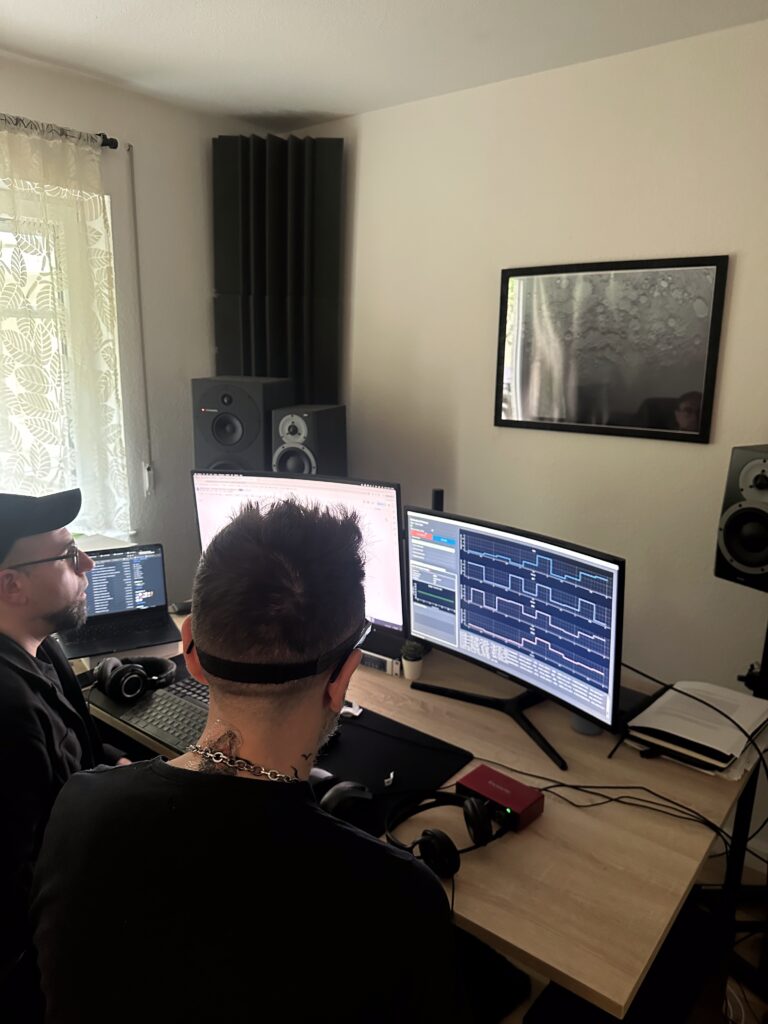
On May 3rd, 2026, in Berlin, the project reached a major milestone by moving from TRL 3 (lab accuracy) to TRL 4 (real-world validation). The Living Lab pilot involved 10 healthy adult volunteers in a non-clinical exploratory study.

Using a “Wizard-of-Oz” configuration, the team tested how participants perceived AI-generated soundscapes calibrated to three experiential states: Energetic, Meditative, and Focus. Key observations from this pilot include:

  • Emotional Safety: Participants consistently rated emotional safety at the highest levels, thanks to a neutral framing that eliminated discomfort risk.
  • Perceptual Coherence: High levels of absorption were reported, indicating that the calibrated soundscapes effectively matched the intended mental states.
  • Acceptability: Nearly all participants expressed a willingness to return for future sessions, a strong indicator of the system’s commercial viability.

The Roadmap to 2030

The Berlin pilot is just the first step in a multi-layered roadmap toward establishing a neutral infrastructure standard for the $25B biometric economy.

  • Layer 1 (Current): Focuses on 3-class arousal detection (Stress, Baseline, Amusement) with a 5-minute calibration.
  • Layer 2 (2027): Will introduce voice modality for richer emotional resolution.
  • Layer 3 (2028+): Will implement Per-User Embedding Spaces, creating continuous, longitudinal models that serve as a personalized “moat” for users.

Conclusion

The EVOLVE2CARE partnership has successfully bridged cutting-edge German deep tech with Romanian research expertise. By focusing on calibration as the primary product, A.R.I.A. is poised to solve the 80% churn problem in digital health, where static apps fail because they cannot adapt to the individual.

How could a personalized, real-time understanding of your emotional state transform the apps you use every day?