EVOLVE2CARE and RAISE-SUITE Explore the Role of Open Science in Transitional Care 

As digital health ecosystems become increasingly interconnected, the need for trustworthy, accessible, and interoperable data is more important than ever. Addressing this challenge, EVOLVE2CARE and RAISE-SUITE joined forces on 11 June 2026 to deliver the first session of the EVOLVE2CARE Joint Webinar Series, “Connecting the Dots in Transitional Care: Open, Trusted & Interoperable Care.” 

The webinar, titled “Impact and Use of Open Science in Transitional Care,” brought together researchers, innovators, Living Labs, policymakers, and healthcare stakeholders to discuss how Open Science principles can support collaboration, innovation, and evidence-based decision-making across healthcare systems. 

🎥 Missed the webinar or would like to revisit the discussion? 

Watch the full recording here: 

Open Science as a Driver of Healthcare Innovation 

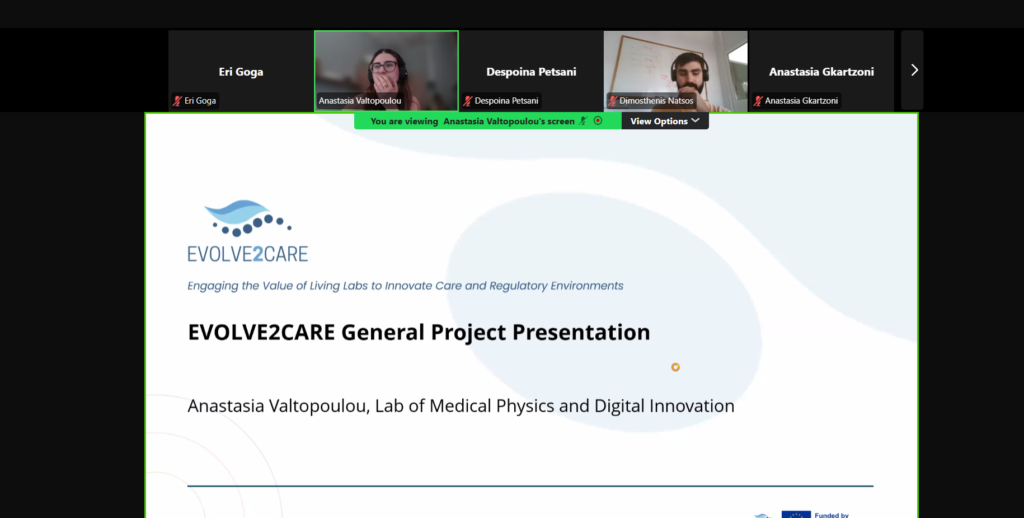
The session opened with an introduction to the EVOLVE2CARE project by the Laboratory of Medical Physics and Digital Innovation of the Aristotle University of Thessaloniki (AUTH). The presentation highlighted the project’s mission to standardize HealthTech experimentation practices and strengthen collaboration between innovators, Living Labs, healthcare providers, and end users. 
A key message of the webinar was that successful healthcare innovation requires more than technological development. It also depends on the ability to share knowledge, collaborate across disciplines, and ensure that data can be accessed and reused responsibly throughout the innovation lifecycle. 

FAIR Data and Responsible Data Sharing in Practice 

The webinar’s featured speaker, Dimosthenis Natsos, Security R&D Engineer at Cyclopt, explored the role of Open Science and FAIR (Findable, Accessible, Interoperable, and Reusable) data practices in supporting digital health innovation. 
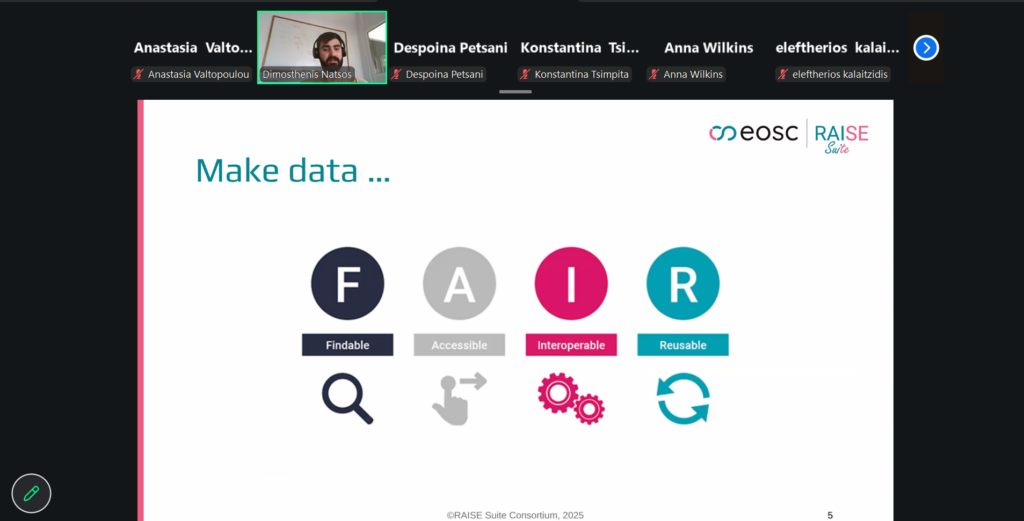
The presentation highlighted why researchers and innovators should adopt FAIR principles to improve the discoverability, accessibility, and reuse of research data. At the same time, it emphasized the importance of balancing openness with privacy, security, and ethical considerations, particularly when handling sensitive health-related information. 

A central message was that while data sharing can accelerate scientific discovery and innovation, it must be supported by appropriate governance frameworks, robust safeguards, and responsible data management practices to maintain trust and ensure compliance with regulatory requirements. 

From Principles to Practice 

To illustrate these concepts, the webinar presented practical examples of how Open Science and FAIR data approaches can support transitional care innovation. 

The discussion demonstrated how structured data management, privacy-by-design methodologies, and interoperable data infrastructures can improve collaboration between healthcare providers, researchers, and innovators. These approaches can ultimately contribute to more informed decision-making, stronger evidence generation, and better outcomes for both patients and caregivers.
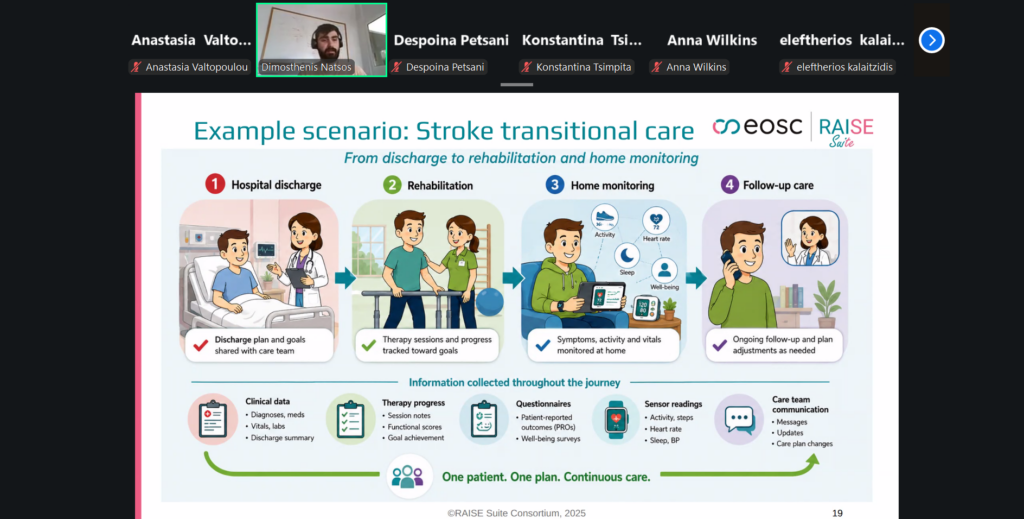
For EVOLVE2CARE, these principles are particularly relevant as the project supports HealthTech innovators through Living Lab experimentation, real-world validation activities, and collaborative innovation ecosystems. 

Strengthening European Collaboration 

The webinar also demonstrated the value of collaboration between European research and innovation initiatives working towards more open, trusted, and interoperable healthcare systems. 

By bringing together expertise from different projects and communities, the session created an opportunity to exchange knowledge on Open Science, FAIR data practices, and digital health innovation. The discussion highlighted how collaboration across projects can help address common challenges related to data sharing, interoperability, and innovation adoption. 

As the first event of the “Connecting the Dots in Transitional Care” webinar series, the session provided valuable insights for innovators, Living Labs, researchers, policymakers, and healthcare stakeholders seeking to navigate the rapidly evolving digital health landscape. 

EVOLVE2CARE Presented at the Central Macedonia as a Digital Health Experimentation Hub Event

EVOLVE2CARE was presented at the open ecosystem event “Central Macedonia as a Digital Health Experimentation Hub”, held on 10 June 2026 in Thessaloniki. Organised by the Region of Central Macedonia and Health Hub EDIH, with the support of the Hellenic Digital Health Cluster (HDHC), the event brought together representatives from the public sector, healthcare, industry, academia, and innovation ecosystems to explore digital health experimentation opportunities, Living Labs, testbeds, innovation support services, and interregional collaboration. 

Organised in the framework of the UNITE – European Digital Health Valleys project, the event highlighted how regional and European innovation ecosystems can support the development, validation, and deployment of innovative digital health solutions. Discussions focused on experimentation infrastructures, real-world validation, innovation support mechanisms, and opportunities for collaboration across European regions. 

EVOLVE2CARE at the “Engaging the Value of Living Labs & DemoScale Labs for Care and Smart Ageing” Session 

EVOLVE2CARE was featured during the session “Engaging the Value of Living Labs & DemoScale Labs for Care and Smart Ageing”, which explored how Living Labs can support the validation and adoption of digital health solutions, particularly in the areas of care services and smart ageing. 

Representing the project, Despoina Petsani, Research Associate at the Laboratory of Medical Physics and Digital Innovation of the Aristotle University of Thessaloniki (AUTH), presented EVOLVE2CARE and its contribution to advancing HealthTech innovation through Living Lab methodologies. The session was co-presented with George Dimitriou, Cluster Manager of the Hellenic Digital Health Cluster (HDHC).

Living Labs as Enablers of Digital Health Innovation 

The EVOLVE2CARE presentation highlighted the project’s mission to bridge the gap between technological innovation and real-world healthcare implementation. 

A central message of the presentation was that innovation alone is not enough. Digital health solutions must be tested, refined, and validated within realistic healthcare settings involving the stakeholders who will ultimately use them. 

Strengthening Regional Digital Health Ecosystems 

The inclusion of EVOLVE2CARE in the event highlighted the growing importance of experimentation hubs, Living Labs, and regional innovation ecosystems in accelerating healthcare transformation. 

By contributing to the discussions at “Central Macedonia as a Digital Health Experimentation Hub,” EVOLVE2CARE reinforced the importance of real-world validation and stakeholder engagement as key drivers for the future of digital health innovation in Europe. 

A.R.I.A. in Berlin: Building the Infrastructure for Wearable Affect

The digital health landscape is currently defined by a paradox: while over 538 million wearables were shipped in 2024 alone, the data they collect remains trapped in incompatible silos. To address this “infrastructure challenge,” Anecoica Studio UG and the Good Tech Living Lab recently completed a successful real-world validation of A.R.I.A. (Affective Reasoning & Intelligent Adaptation). This collaboration, born from the EVOLVE2CARE Open Call, marks a critical shift in how we understand the body’s emotional context.

The API for Human Emotion

A.R.I.A. is not a consumer wellness app or a medical device; it is B2B infrastructure designed as a personalization API for wearable effect. It serves as a standardization layer that allows any wearable device to communicate with any application.

The core problem

The problem is the “labels problem”. Generic population models often reach high accuracy in labs (89.4%) but plummet to 56% in real-world conditions because biometric signals vary significantly between individuals. A.R.I.A.’s value lies in calibration, creating personalized models rather than relying on population averages.

Moving from Lab to Life: TRL 4 Validation

On May 3rd, 2026, in Berlin, the project reached a major milestone by moving from TRL 3 (lab accuracy) to TRL 4 (real-world validation). The Living Lab pilot involved 10 healthy adult volunteers in a non-clinical exploratory study.

Using a “Wizard-of-Oz” configuration, the team tested how participants perceived AI-generated soundscapes calibrated to three experiential states: Energetic, Meditative, and Focus. Key observations from this pilot include:

  • Emotional Safety: Participants consistently rated emotional safety at the highest levels, thanks to a neutral framing that eliminated discomfort risk.
  • Perceptual Coherence: High levels of absorption were reported, indicating that the calibrated soundscapes effectively matched the intended mental states.
  • Acceptability: Nearly all participants expressed a willingness to return for future sessions, a strong indicator of the system’s commercial viability.

The Roadmap to 2030

The Berlin pilot is just the first step in a multi-layered roadmap toward establishing a neutral infrastructure standard for the $25B biometric economy.

  • Layer 1 (Current): Focuses on 3-class arousal detection (Stress, Baseline, Amusement) with a 5-minute calibration.
  • Layer 2 (2027): Will introduce voice modality for richer emotional resolution.
  • Layer 3 (2028+): Will implement Per-User Embedding Spaces, creating continuous, longitudinal models that serve as a personalized “moat” for users.

Conclusion

The EVOLVE2CARE partnership has successfully bridged cutting-edge German deep tech with Romanian research expertise. By focusing on calibration as the primary product, A.R.I.A. is poised to solve the 80% churn problem in digital health, where static apps fail because they cannot adapt to the individual.

How could a personalized, real-time understanding of your emotional state transform the apps you use every day?