Advancing Regulatory Learning in HealthTech through EVOLVE2CARE Workshops

Behind effective HealthTech innovation lies not only strong technology, but also a clear understanding of the regulatory environment in which it operates.

As part of its work on transitional care, EVOLVE2CARE organised two dedicated workshops in February and March 2026, bringing together innovators, Living Labs, researchers, and policymakers to explore how regulatory learning can support the real-world adoption of digital health solutions.

Workshop 1: Understanding regulatory barriers in transitional care

The first workshop, “Understanding Regulatory Barriers and Enablers in Transitional Care”, took place on 25 February 2026, gathering 19 participants in an interactive session focused on identifying key regulatory challenges.

The session introduced the concept of regulatory learning and explored how Living Labs can contribute to navigating complex regulatory environments. Through a hands-on exercise using a collaborative Miro board, participants shared real experiences, highlighting barriers related to compliance, policy fragmentation, and implementation constraints.

Beyond identifying challenges, the discussion also focused on potential solutions. Participants exchanged strategies for addressing regulatory obstacles and proposed policy measures that could better support innovation in transitional care.

Workshop 2: From insights to ecosystem-level discussion

Building on these initial findings, EVOLVE2CARE contributed to the ENoLL Joint Working Group on Regulatory Learning, relaunched on 4 March 2026, which brought together 61 participants.

During this session, EVOLVE2CARE presented the first results from the workshop and the regulatory learning survey, contributing to a wider discussion involving the Joint Research Centre (JRC) and Living Lab practitioners across Europe.

The workshop also featured best practice examples, illustrating how regulatory learning approaches are already being applied in real settings. Participants reflected on key questions around skills development, capacity building, and the role of collaborative frameworks in supporting regulatory adaptation.

Across both sessions, a clear message emerged: regulatory challenges remain a major barrier to scaling digital health solutions, but they can be addressed through structured, collaborative approaches. 

The Vital Role of Living Labs

Across both sessions, a clear message emerged: regulatory challenges remain a major barrier to scaling digital health solutions, but they can be adA recurring theme across both workshops was that while regulatory challenges are significant, they are manageable through structured, collaborative approaches. Living Labs are central to this effort because they enable: 

  • Real-world testing: Validating solutions in actual care environments. 
  • Early identification: Spotting regulatory constraints before they become roadblocks. 
  • Stakeholder collaboration: Building stronger ties between innovators, healthcare providers, and policymakers. 

Looking Ahead

The work continues with a third workshop scheduled for May 2026. This upcoming session will focus on translating workshop and survey data into actionable recommendations, capacity-building activities, and policy-oriented outcomes for the HealthTech ecosystem.

By fostering this ongoing dialogue, EVOLVE2CARE aims to bridge the gap between innovation and implementation, creating a more responsive regulatory environment for the future of healthcare.

From Applications to Experimentation: The Journey Behind the EVOLVE2CARE Open Call

Behind every successful experimentation phase lies a carefully designed selection process.

For EVOLVE2CARE, the Open Call was not simply a call for proposals. It was the foundation of a structured pathway connecting HealthTech innovators with Living Labs across Europe. The Open Call marked the transition from interest to engagement, and from ideas to implementation.

This blog builds on insights from Deliverable D2.2 – “Living Labs, Innovators and Researchers Scouting and Selection Report”, which is publicly available on Zenodo and provides a transparent overview of the scouting, evaluation, and selection process behind the EVOLVE2CARE Open Call.

Designing an Open Call with Purpose

HealthTech innovation thrives when solutions are tested where care actually happens. With this in mind, the EVOLVE2CARE Open Call focused on identifying innovators and Living Labs ready to collaborate in three critical domains of transitional care:

  • Hospital discharge management
  • Remote monitoring and home-based care
  • Ageing and chronic care support

The objective was not only to select promising technologies, but to ensure alignment between innovators’ ambitions and the real-world experimentation capacity of Living Labs.

A Structured and Transparent Process

The scouting and selection process was designed to be clear, fair, and impact-oriented.

Applications were evaluated against predefined criteria that considered:

  • Relevance to transitional care use cases
  • Technical feasibility and maturity
  • Potential for measurable impact
  • Readiness for collaboration within Living Lab environments

Beyond scoring, the process also focused on matchmaking, ensuring that selected innovators were paired with Living Labs capable of supporting meaningful experimentation.

This structured approach ensures that the experimentation phase is grounded in strategic alignment rather than opportunistic selection.

From Selection to Real-World Validation

With the Open Call phase completed, selected mini-projects have now entered Living Lab environments for real-world experimentation.

This marks a critical shift. The focus moves:

  • From proposal quality to implementation performance
  • From theoretical value to practical usability
  • From innovation potential to measurable impact

Within Living Labs, solutions are tested in real healthcare contexts, involving professionals, patients, and ecosystem actors. This enables innovators to refine their tools, identify integration challenges early, and generate evidence that goes beyond technical feasibility.

Building Evidence for Sustainable Uptake

The Open Call was the first step in a broader journey toward sustainability and scalability.

By documenting the scouting and evaluation methodology, EVOLVE2CARE reinforces its commitment to transparency and replicability. The structured selection process lays the groundwork for credible experimentation outcomes, stronger positioning of project results, and future ecosystem adoption.

Readers interested in understanding the full methodology behind the Open Call scouting and selection process can explore Deliverable D2.2 – “Living Labs, Innovators and Researchers Scouting and Selection Report”, available publicly on Zenodo.

From applications to experimentation, EVOLVE2CARE continues to build a pathway where innovation is not only selected, but validated, strengthened, and positioned for real-world healthcare transformation.

EVOLVE2CARE in Athens: Aligning for Impact and Sustainability

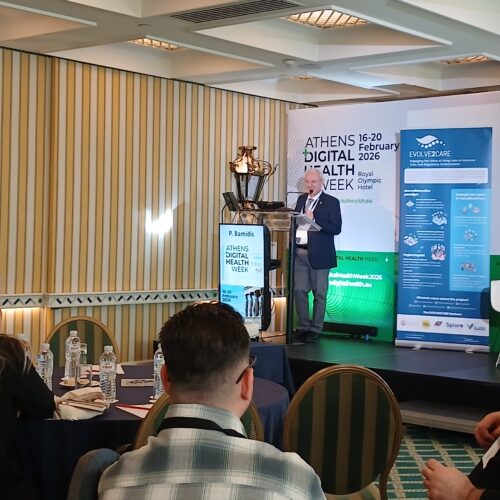
On 17–18 February 2026, the EVOLVE2CARE consortium met in Athens, Greece, for its 4th Plenary Meeting. Held in parallel with Athens Digital Health Week 2026 (ADHW2026) at the Royal Olympic Hotel, the gathering offered more than just coordination updates, it created a moment to reflect, realign, and strengthen the project’s next phase within Europe’s rapidly evolving digital health landscape.

Across two intensive days, partners focused on consolidating the Open Call results, reinforcing the EVOLVE2CARE experimentation framework, advancing the positioning of AccelUP, and scaling outreach and sustainability efforts.

Day 1: From Open Call Results to Real-World Experimentation

The first day was dedicated to a pivotal transition point for the project: moving from Open Call completion to structured implementation in Living Lab environments.

Reflecting on the Open Call Impact

With the Open Calls now officially finalised, the consortium reviewed:

  • Key statistics and insights from the application and selection process
  • Improvements introduced through Deliverable D2.2
  • The shift from recruitment to real-world pilot implementation

Beyond numbers, the discussion focused on impact. How can the lessons learned from the Open Call strengthen communication materials and support the long-term positioning of project outcomes?

The emphasis is now clear: experimentation must generate measurable, documented value within Living Labs.

Strengthening the EVOLVE2CARE Experimentation Framework

Day 1 also included final roadmap presentations for three central deliverables shaping the project’s experimentation model:

  • D1.4 – Roadmap on navigating complexities enabling innovative technologies in transitional care
  • D1.5 – Stakeholder Needs Analysis and KPI Framework
  • D1.6 – EVOLVE2CARE Action Plan

Concrete decisions were taken to reinforce structure and comparability across pilots:

  • Each mini-project will submit a structured “initial context” (solution, target users, key assumptions) before pilots begin, enabling meaningful before/after analysis.
  • A Regulatory & Ethics Log will allow Living Labs to systematically record compliance and data-related issues during implementation.
  • The KPI framework will be disseminated beyond the consortium, engaging relevant European health clusters and sister projects.

Day 2: Connecting Ecosystem Dialogue with Strategic Planning

The second day blended external engagement at ADHW2026 with focused internal alignment on evaluation, outreach, and long-term sustainability.

Engaging the Digital Health Ecosystem at ADHW2026

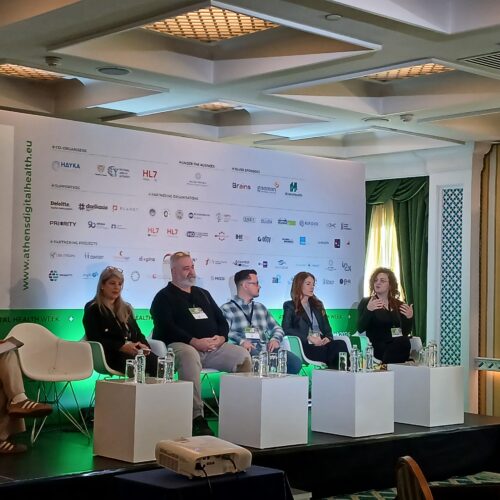
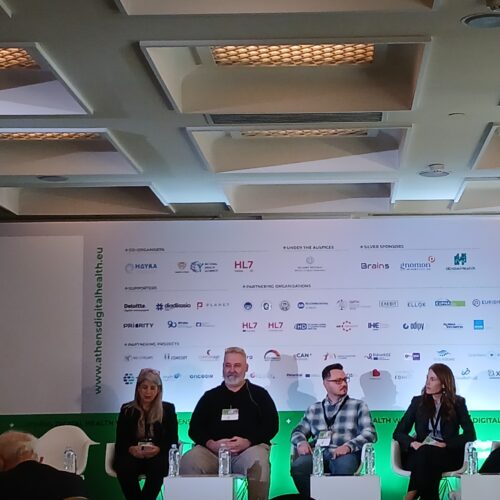
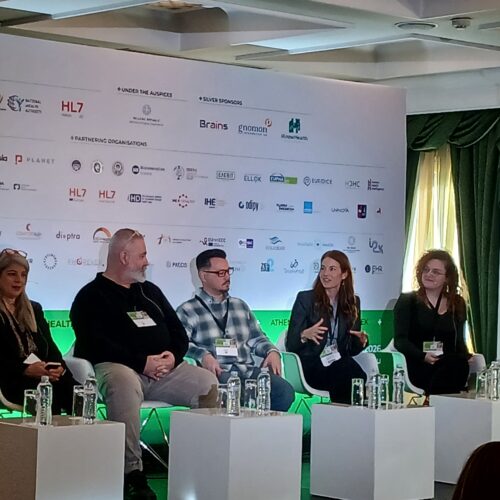
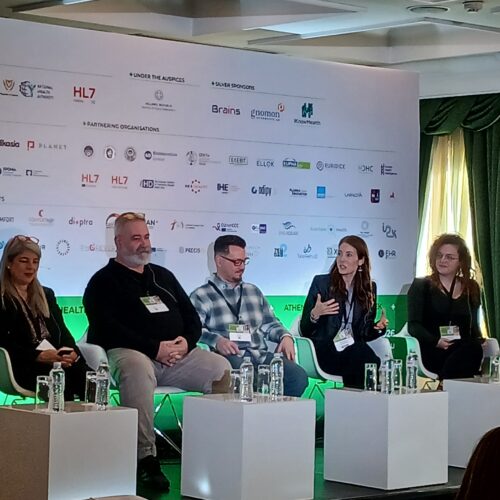
On the morning of 18 February, EVOLVE2CARE hosted the workshop:

“Engaging the Value of Living Labs to Innovate Healthcare”

Chaired by Despoina Petsani (AUTH), the session brought together innovators, clinicians, researchers, and ecosystem actors to tackle a pressing HealthTech question:

How can promising digital solutions successfully transition from pilot testing to routine clinical practice?

The discussion went beyond technology development and addressed the structural realities of healthcare innovation, including regulatory complexity, GDPR compliance, interoperability limitations, integration into clinical workflows, and fragmented stakeholder collaboration.

Across contributions, Living Labs emerged as structured experimentation environments capable of reducing deployment risks while generating real-world validation.

🔗 Read the full workshop recap here.

Aligning the Next Phase of the Project

Returning to the plenary discussions, partners focused on shaping the next phase of EVOLVE2CARE.

The agenda centred on five strategic priorities:

  • Structuring the evaluation framework for mini-project experimentation
  • Aligning questionnaires and feedback tools for innovators and Living Labs
  • Strengthening AccelUP’s positioning beyond the Open Call phase
  • Expanding participation in European Commission and EIT-related events
  • Planning sustainability and exploitation activities for all project results

Key Highlights from the Discussions

  • Evaluation tools were aligned to ensure structured before/after feedback capturing both technical and market-oriented value.
  • Pricing perception and value-creation questions were integrated into experimentation surveys.
  • Complementary assessment mechanisms were coordinated to ensure systematic data collection.
  • The exploitation approach was further defined, combining questionnaire-based validation with market and competitor analysis.
  • Dissemination efforts will intensify in the “Global Outreach & Sustainability” phase, with stronger participation in European-level events, broader press outreach, and enhanced digital engagement.
  • Strategic planning began for participation in Open Living Lab Days and policy-oriented events to showcase the project’s KPI framework and experimentation insights.

Key Decisions Moving Forward

  • Mini-project evaluation will follow a structured, comparable methodology capturing both experimentation outcomes and market insights.
  • Two internal exploitation workshops will be organized. One dedicated to AccelUP positioning, and another focusing on the remaining project results.
  • Outreach efforts will prioritise European Commission–related events and EIT KIC engagement.
  • Communication efforts will intensify, with coordinated partner promotion and increased focus on subscriber growth and stakeholder engagement.

A Strategic Transition Point

The 4th Plenary Meeting marked a clear evolution for EVOLVE2CARE:

  • From Open Call recruitment to structured pilot implementation
  • From framework design to measurable evidence generation
  • From awareness-building to strategic European outreach
  • From experimentation to sustainability planning

With mini-projects underway, evaluation tools aligned, and exploitation strategy defined, EVOLVE2CARE moves forward with a clearer pathway toward scalable, validated, and ecosystem-integrated HealthTech innovation!

Bridging the Digital Health Innovation Gap – ADHW26 Workshop Recap

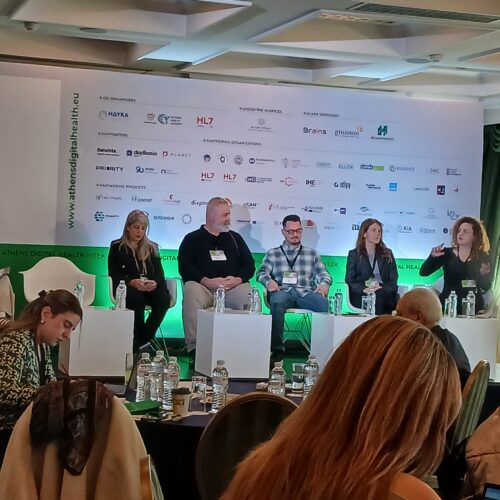
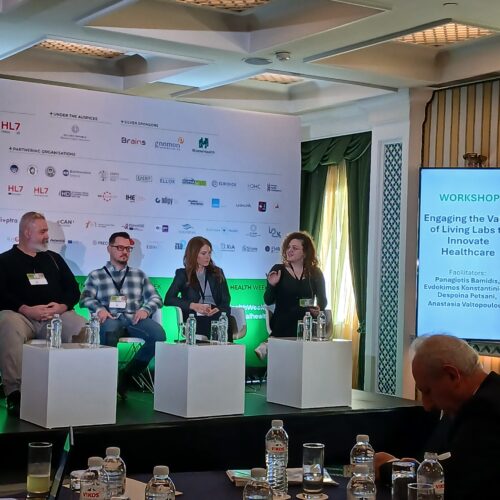
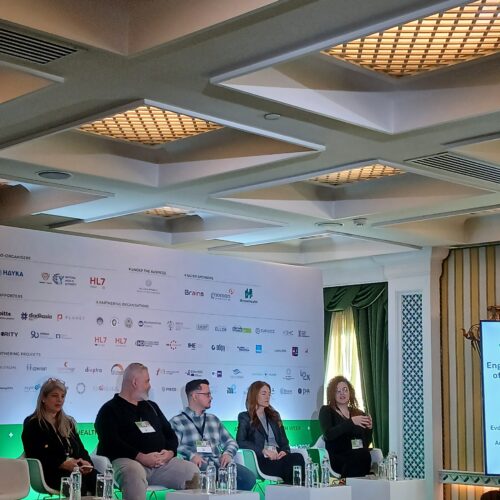
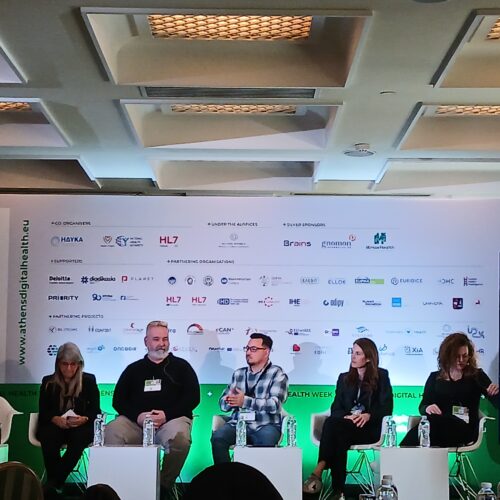
Organised by the EVOLVE2CARE project in the context of Athens Digital Health Week 2026, the workshop “Engaging the Value of Living Labs to Innovate Healthcare” took place on 18 February and was chaired by Despoina Petsani, Project Mission Coordinator (AUTH). The session convened innovators, researchers, and ecosystem actors to examine a pressing question in HealthTech: how can promising digital solutions successfully transition from pilot testing to routine clinical practice?

Rather than focusing solely on the generation of new technologies, the discussion addressed the structural and operational barriers that prevent digital health innovations from scaling within real healthcare environments. Speakers highlighted a persistent misalignment between technological development and clinical realities. Digital tools frequently struggle to integrate into established workflows, while regulatory complexity, GDPR compliance, interoperability limitations, and fragmented stakeholder collaboration continue to slow adoption . This creates tension between rapid technological advancement and the healthcare sector’s demand for rigorous validation and governance, often resulting in solutions that are technically robust but operationally stalled.

Spyridoula Trakaki emphasised that startups commonly face systemic barriers to market entry and underscored the importance of open innovation ecosystems in overcoming fragmentation and accelerating uptake. Complementing this perspective, Konstantina Kostopoulou, Chief Product Owner of the Healthentia App, shared practical insights into integration pain points during experimentation, particularly around stakeholder engagement and the initial reactions of clinicians and third parties to new digital tools . Her intervention reinforced the idea that adoption depends not only on technological robustness but also on early trust-building and alignment with end-user expectations.

From a service design standpoint, Thanos Loules and Ilias Rafail of IASIS AMKE explored the challenges of developing inclusive services while maintaining active citizen engagement throughout the experimentation process . They stressed that meaningful co-creation requires sustained involvement rather than superficial consultation. Dr. Angelina Kouroubali further addressed the delicate balance between thorough research and the urgency to bring solutions to market, suggesting that structured experimentation frameworks can reconcile scientific rigor with innovation speed .

Across contributions, Living Labs emerged as a strategic integration mechanism. By enabling structured testing within authentic care settings, they reduce deployment risks, strengthen collaboration among stakeholders, and generate the field-based validation required for broader adoption . Rather than positioning digital tools as external add-ons, Living Labs facilitate their evolution into embedded components of care delivery systems.

The workshop ultimately underscored that sustainable healthcare transformation depends on aligning fast-moving innovation cycles with the operational and regulatory realities of the care sector. Through open ecosystems and Living Lab methodologies, stakeholders can bridge this divide—ensuring that digital health innovations are interoperable, credible, and capable of delivering measurable value in real-world clinical settings .

EVOLVE2CARE Workshop at Athens Digital Health Week 2026

EVOLVE2CARE will participate in Athens Digital Health Week 2026 (ADHW2026) with a dedicated workshop titled:

“Engaging the Value of Living Labs to Innovate Healthcare”

📍 Royal Olympic Hotel, Athens
📅 Wednesday, 18 February 2026
🕙 10:00–11:30 | Kallirhoe Hall

About Athens Digital Health Week 2026

Taking place from 16–20 February 2026, ADHW2026 brings together leading experts, innovators, policymakers, and decision-makers to address critical challenges and showcase breakthrough advancements shaping the future of digital health across Europe and beyond.

Co-organised by IDIKA S.A., the National eHealth Authority (NeHA) of Cyprus, and HL7 Hellas, the event serves as a high-profile networking hub where European projects, governance bodies, and digital health stakeholders connect to accelerate healthcare transformation across Europe.

Workshop Overview

Digital health innovation often encounters significant barriers, including regulatory complexity, interoperability limitations, misalignment with real clinical and user needs, financial constraints, and fragmented stakeholder collaboration.

This EVOLVE2CARE workshop will explore how Living Labs and open innovation ecosystems can help address these challenges by:

  • Strengthening stakeholder engagement
  • Supporting user-centred design
  • Facilitating real-world experimentation
  • Accelerating the translation of innovation into clinical practice

The session will combine theoretical reflections with practical insights drawn from real-world experiences of innovators, clinicians, and ecosystem actors.

Panel Discussion

The workshop will feature short expert interventions from key stakeholders across the digital health ecosystem:

  • Spyridoula Trakaki, Co-Founder of Kakushin, will discuss the main challenges startups face in digital health and reflect on how open innovation ecosystems can create added value for emerging HealthTech ventures.
  • Konstantina Kostopoulou, Chief Product Owner of Healthentia App, will share practical insights on stakeholder integration challenges during experimentation and how clinicians and third parties initially responded to innovation adoption.
  • Thanos Loules & Ilias Rafail (IASIS AMKE) will explore service design challenges in health innovation and discuss how citizens can be meaningfully engaged throughout the experimentation process.
  • Dr. Angelina Kouroubali, Digital Health Expert, will address stakeholder engagement pain points and examine how innovators can balance rigorous research and validation with the urgency of bringing solutions to market.
  • Prof. Dr. Vassilis Vasilikos, Cardiologist, will provide the clinician’s perspective on innovation adoption, highlighting common barriers in clinical practice, nparticularly in cardiology, and attitudes toward integrating digital solutions into healthcare settings.

The session will conclude with an open discussion on how Living Labs can strengthen collaboration, enhance experimentation processes, and accelerate the translation of digital health innovation into sustainable real-world impact.

The workshop will be facilitated by the EVOLVE2CARE coordinator team from Aristotle University of Thessaloniki (AUTH).

🔗 Registration is required:
https://www.athensdigitalhealth.eu/registration

EVOLVE2CARE Contributes to Open Science at the ManagiDiTH Winter School 2026

EVOLVE2CARE was featured during the ManagiDiTH Winter School and Innovation Bootcamp 2026, held in Finland from 26–30 January 2026, an intensive five-day programme combining innovation, entrepreneurship, and hands-on collaboration in the field of digital health.

The Winter School brought together students, researchers, enterprises, and academic partners to explore innovative health technologies through keynote sessions, teamwork, ideation, prototyping, and final concept presentations. Activities focused on bridging academic knowledge with real-world healthcare challenges, encouraging interdisciplinary collaboration and practical experimentation.

During the programme, Aristotle University of Thessaloniki (AUTH) presented EVOLVE2CARE as a concrete example of a European HealthTech project supporting Living Lab–based experimentation and Open Science practices. The presentation highlighted how EVOLVE2CARE contributes to transparent and responsible innovation in transitional care, while actively engaging with Open Science principles.

In particular, AUTH showcased the use of the RAISE platform for uploading and managing datasets generated through Living Lab activities, demonstrating how EVOLVE2CARE supports FAIR data practices and enables responsible data sharing across collaborative research environments.

Through its presence at the Winter School, EVOLVE2CARE strengthened its visibility within academic and innovation communities, while reinforcing its mission to support human-centred, data-aware HealthTech solutions that can be tested and refined in real-life settings.

EVOLVE2CARE Featured at the RAISE Final Event in Brussels

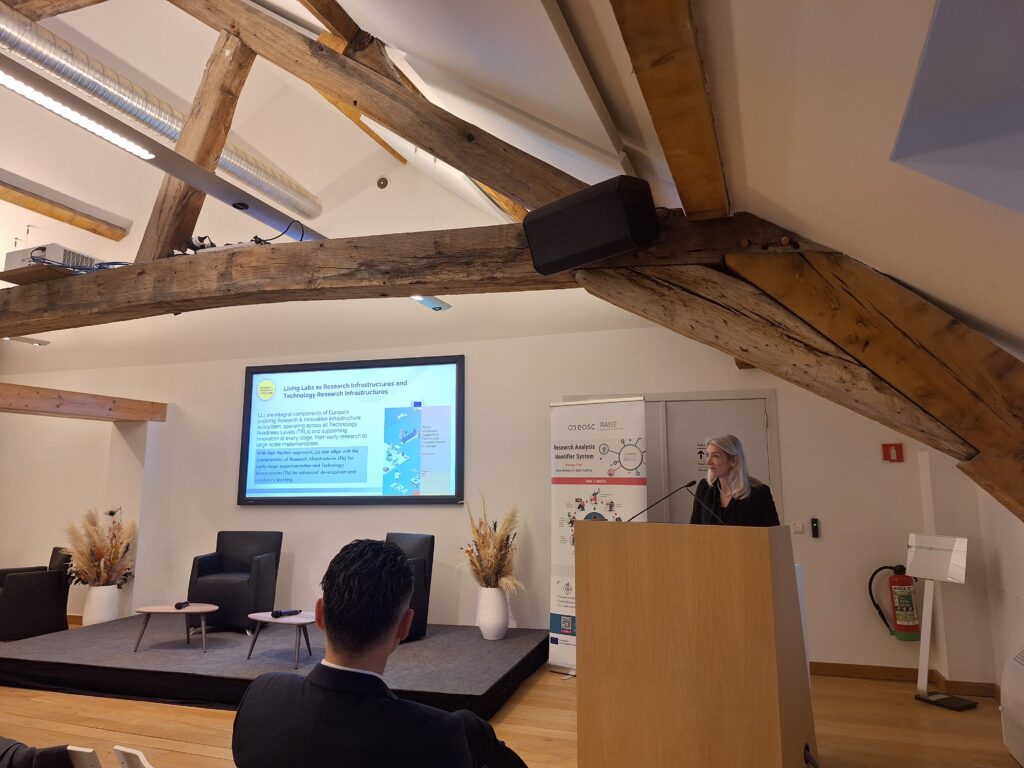
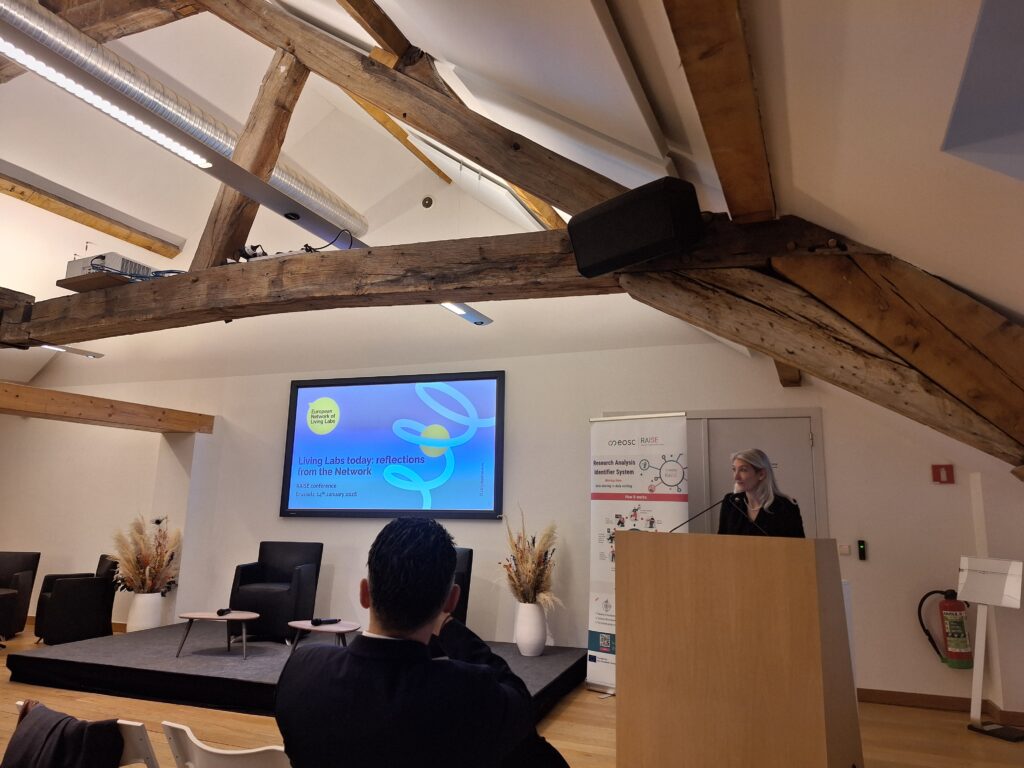
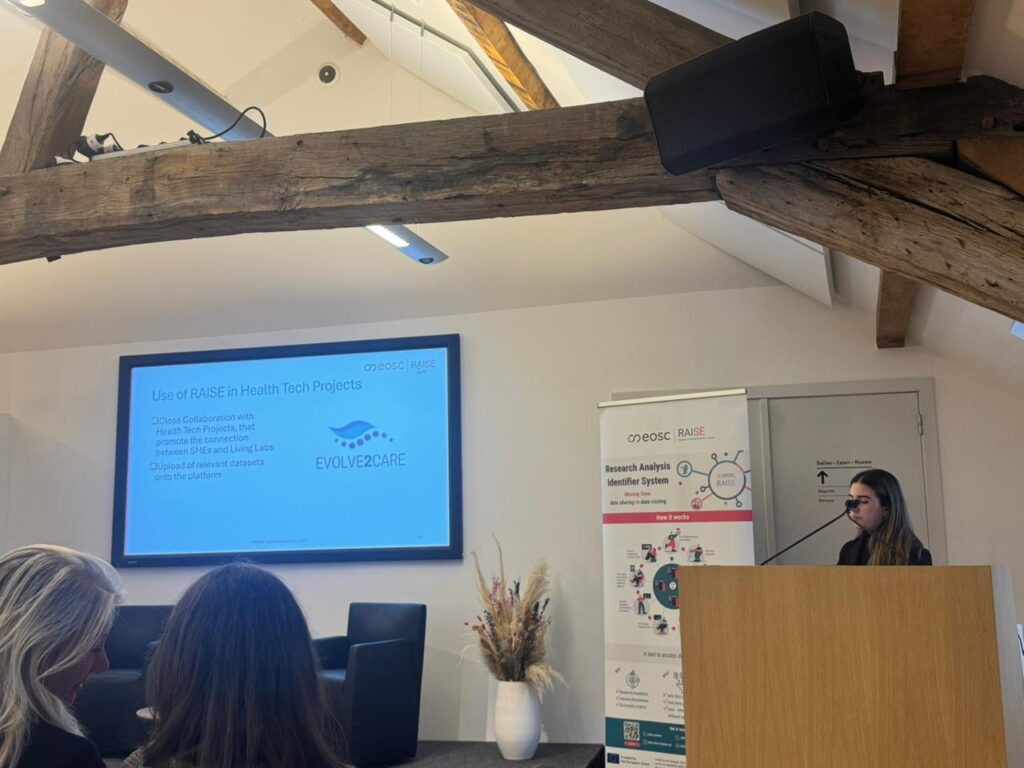
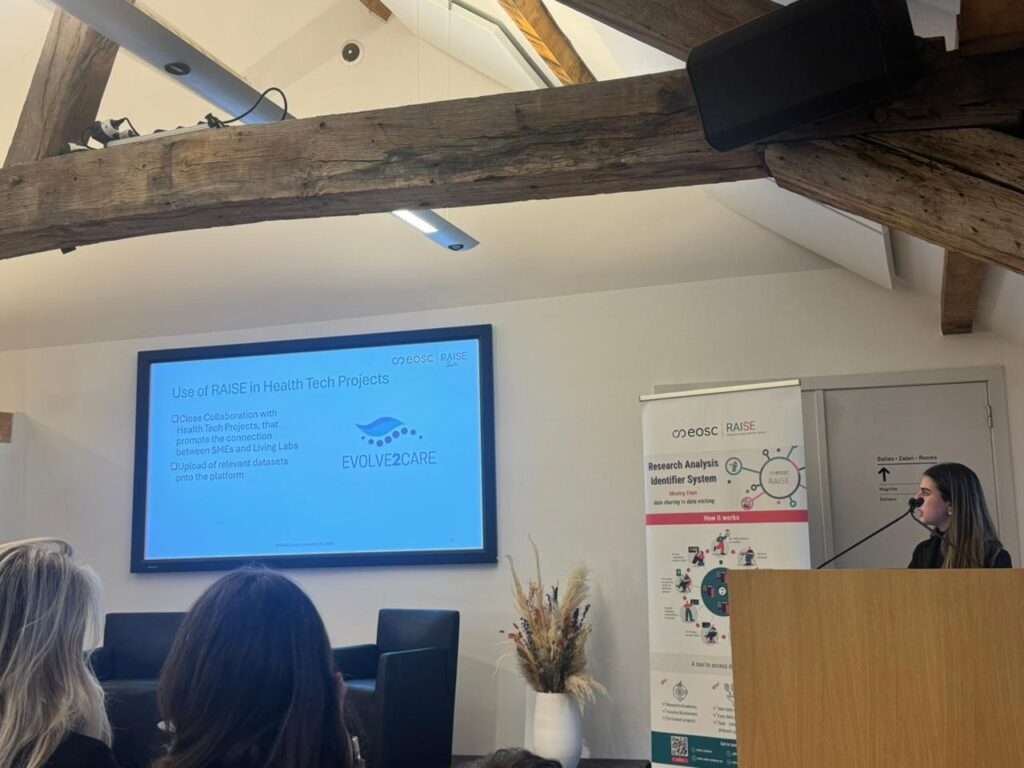
EVOLVE2CARE was featured during the RAISE Final Event – “Exploitable Results and their Impact”, held on 14 January 2026 in Brussels, as part of the midday session dedicated to the adoption of RAISE beyond project boundaries. The event brought together European research, Living Lab, and Open Science stakeholders to discuss how RAISE supports FAIR, harmonised, and transparent data use across third-party initiatives and collaborative ecosystems.

During the session, EVOLVE2CARE was presented by AUTH and ENoLL partners as a concrete example of a HealthTech project leveraging RAISE functionalities to align with Open Science and Open Data principles, particularly in the context of Living Lab activities. The presentation highlighted how EVOLVE2CARE exploits RAISE to support structured data management, facilitate collaboration between SMEs and Living Labs, and ensure FAIR handling of data generated through real-world experimentation.

The project’s contribution was positioned within a broader discussion involving Living Labs and European networks adopting RAISE to enable interoperable, trustworthy, and reusable research outputs. This visibility further reinforced EVOLVE2CARE’s role as an active adopter of EOSC-aligned tools and practices, strengthening its engagement with European Open Science infrastructures and sister EU initiatives.

From Testing to Adoption: What Makes HealthTech Solutions Ready for Real-World Deployment?

HealthTech innovation rarely fails because of a lack of ideas.
More often, it fails in the space between testing and adoption.

Many promising solutions perform well in pilot environments but struggle to scale, integrate into real healthcare settings, or gain long-term acceptance. The challenge is not proving that a technology works. The real challenge is proving that it is ready.

At EVOLVE2CARE, readiness is understood as a multi-dimensional journey, rather than just a final checkbox. Real-world deployment depends on whether solutions can respond to the practical, organisational, social, and regulatory realities of transitional care.

This blog builds on insights from Deliverable D1.2 – Stakeholder Needs Analysis and KPI Framework, which is publicly available and provides a deeper look into what makes HealthTech solutions ready for real-world deployment.

Why successful pilots don’t always lead to adoption

Testing a HealthTech solution in isolation can demonstrate technical feasibility, but real-world healthcare environments are far more complex.

Healthcare professionals operate under time pressure, fragmented systems, and strict accountability requirements. Hospitals must ensure that new solutions integrate smoothly into existing workflows without increasing workload or disrupting care delivery. Patients and caregivers need technologies that are understandable, usable, and supportive.

When these realities are not addressed early, innovations risk remaining “pilot-ready” but not system-ready.

Readiness starts with real-world relevance

A solution is ready for adoption when it demonstrates value where care actually happens.

Real-life experimentation helps innovators understand whether their solutions:

  • integrate into existing digital and organisational infrastructures
  • reduce administrative burden instead of adding complexity
  • support clinical decision-making in meaningful ways
  • improve patient experience, continuity of care, and outcomes

Living Labs play a critical role here by offering environments where innovations can be tested under realistic conditions, involving healthcare professionals, patients, caregivers, and organisations from the outset. This early exposure allows innovators to identify gaps, refine features, and adapt their solutions long before large-scale deployment.

Scaling requires more than technical performance

Moving beyond pilots requires attention to scale, sustainability, and long-term viability.

Healthcare organisations increasingly expect evidence that innovations are:

  • cost-effective and operationally efficient
  • adaptable to different care settings and regions
  • supported by training and knowledge transfer
  • aligned with broader health system goals

Regulatory preparedness as part of readiness

Regulatory compliance is often addressed late in the innovation process, creating delays and costly redesigns. However, readiness for deployment also means regulatory readiness.

Testing solutions in real-world settings helps innovators:

  • understand how regulations apply in practice
  • identify compliance challenges early
  • align development choices with safety, privacy, and legal requirements

Human-centred adoption

Readiness is ultimately about people.

Patients and caregivers have highlighted the importance of preserving human connection, clarity, and trust when digital solutions are introduced. Healthcare professionals have stressed the need for tools that support their expertise. Care organisations seek solutions that align with their operational realities.

Real-life experimentation allows these perspectives to shape innovation, ensuring that adoption is not forced, but earned through relevance and usability.

EVOLVE2CARE’s work on stakeholder needs and experimentation offers further insight into how readiness can be approached systematically across the HealthTech ecosystem. Readers interested in the methodological foundations behind this approach can further explore our public Deliverable D1.2 – Stakeholder Needs Analysis and KPI Framework.

Experimentation as a Trust-Building Tool in HealthTech

Why Real-Life Testing Matters for Patients, Providers, and Regulators

Trust is one of the most underestimated barriers in healthcare innovation.

HealthTech solutions promise better outcomes, smoother transitions, and more personalized care. Yet patients hesitate, healthcare professionals remain cautious, and regulators demand extensive evidence before approving deployment. The question is not whether innovation is needed, but whether it can be trusted.

At EVOLVE2CARE, we approach experimentation not as a technical checkpoint, but as a human, ethical, and social process. Real-life testing in Living Labs allows innovation to be shaped with people and not simply delivered to them.

Our approach is grounded in the work carried out within the project to better understand what different stakeholders truly need from HealthTech innovation in transitional care. These insights have been consolidated in Deliverable D1.2 – Stakeholder Needs Analysis and KPI Framework, which offers a deeper look into how experimentation can align innovation with real-world expectations across patients, healthcare providers, Living Labs, and regulators.

Why patients hesitate

For patients and caregivers, trust is deeply personal.

New digital health tools often raise concerns around data privacy, usability, and the fear that technology may replace, rather than support, human care. When innovations are introduced without sufficient explanation or involvement, uncertainty quickly turns into resistance.

Real-life experimentation helps address these concerns by actively involving patients and caregivers in the development process. Living Labs create safe, supportive environments where individuals can test solutions, provide feedback, and influence how technologies evolve. When patients see that their experiences, preferences, and limitations are taken seriously, trust begins to grow.

Why healthcare providers resist

Healthcare professionals operate in demanding environments, balancing patient care with administrative responsibilities and fragmented digital systems. New technologies are often perceived as adding complexity rather than relieving pressure.

Through real-life experimentation, healthcare providers can assess whether innovations genuinely integrate into existing workflows, reduce administrative burden, and support clinical decision-making. Testing solutions in realistic settings allows professionals to identify what works, what doesn’t, and what needs refinement before wider adoption.

Why regulators are cautious

Regulators play a critical role in safeguarding patient safety, data protection, and ethical standards. Their caution is not a barrier to innovation, but a necessary responsibility in a highly sensitive sector.

Living Lab experimentation offers regulators early insight into how HealthTech solutions function in real-world conditions. By observing technologies as they are tested with users, regulators can better understand emerging risks, ethical implications, and compliance challenges. Early engagement reduces uncertainty, helps avoid costly redesigns, and supports smoother pathways to approval.

Living Labs as trust enablers

Living Labs sit at the intersection of innovation, care delivery, and regulation.

Beyond providing physical spaces or technical infrastructure, Living Labs act as trusted intermediaries that facilitate transparent collaboration among patients, healthcare professionals, innovators, and policymakers. Living Labs ensure that ethical considerations, data protection, inclusivity, and societal context are embedded throughout the experimentation process and not only addressed as afterthoughts.

Trust is not built through promises or pilot demonstrations alone.
Trust is built through real-life evidence, transparency, and shared responsibility.

For readers interested in exploring the methodological foundations behind this trust-driven approach, Deliverable D1.2 – Stakeholder Needs Analysis and KPI Framework is publicly available and offers further insight into how real-life experimentation can support responsible HealthTech innovation in transitional care.


EVOLVE2CARE at LSOS 2025: Leveraging Living Labs for Innovation in Transitional Care

On 28 November 2025, EVOLVE2CARE was represented at LSOS 2025 – Life Science Open Space in Kraków, Poland, bringing the project’s work on Living Lab-based experimentation and validation to a wider life sciences and innovation community.

LSOS 2025 brought together researchers, healthcare professionals, industry representatives, startups, policymakers and other actors from across the life sciences ecosystem, with a strong focus on turning innovative ideas into real-world solutions through collaboration. Hosted in Kraków, the event explored areas ranging from prevention and next-generation therapies to inclusive healthcare, sustainable life sciences and the development and scale-up of innovative ventures.

Bringing Living Labs into the StartUp & ScaleUp conversation

As part of the StartUp & ScaleUp Zone: Where Life Science Ventures Take Off, Despoina Petsani from Aristotle University of Thessaloniki (AUTH), Coordinator of EVOLVE2CARE, delivered the presentation:

“Leveraging the Power of Living Labs for Innovation in Transitional Care.”

Her presentation highlighted the role of Living Labs as catalysts for digital health innovation, providing environments in which users and relevant stakeholders can actively participate in the development, experimentation, and validation of new solutions.

This approach is particularly important in transitional care, where innovative technologies need to respond to complex real-world needs and demonstrate their relevance in practice. Living Labs can help bridge the gap between technological development and real-world implementation by enabling innovators to engage with users and stakeholders throughout the innovation process.

Sharing the EVOLVE2CARE experience

The presentation showcased the experience and results of the EVOLVE2CARE Horizon Europe project, which works to strengthen collaboration between Living Labs and HealthTech innovators and facilitate access to real-life experimentation and validation opportunities.

A central message of the presentation was the value that Living Labs can offer startups, SMEs and companies seeking to bring HealthTech solutions closer to the market. Through user testing, experimentation and validation in real-life environments, innovators can better understand user and stakeholder needs, gather evidence and further develop their solutions.

At the same time, effective collaboration requires a clear understanding of what innovators themselves need from experimentation environments. This two-way relationship between Living Labs and innovation actors lies at the heart of the EVOLVE2CARE approach.

Connecting ideas for better health innovation

EVOLVE2CARE’s participation was closely aligned with the wider ambition of LSOS 2025: connecting ideas and accelerating innovation through collaboration. The StartUp & ScaleUp Zone provided a particularly relevant setting for exchanging perspectives on how promising HealthTech solutions can move from development towards real-world application and sustainable growth.

By sharing the project’s experience with the LSOS community, EVOLVE2CARE contributed to the wider discussion on how collaborative experimentation ecosystems can support innovators in developing solutions that are not only technologically promising, but also responsive to the needs of users and healthcare environments.