EVOLVE2CARE at MIE 2026: Grounding Digital Health Innovation in Living Labs

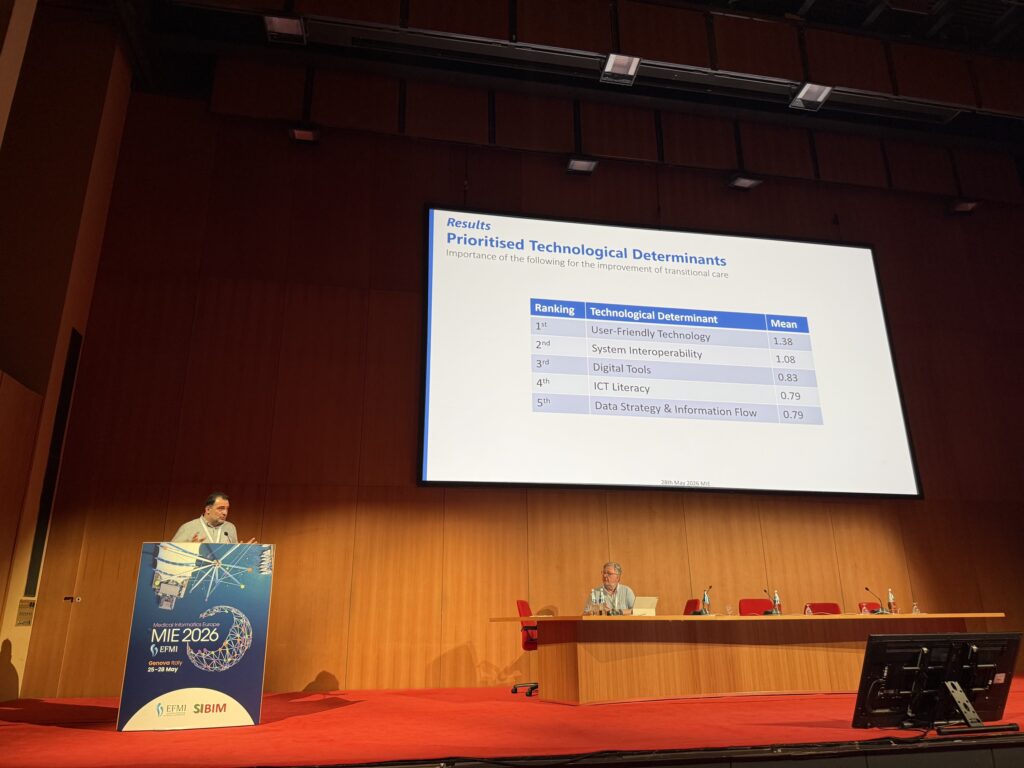
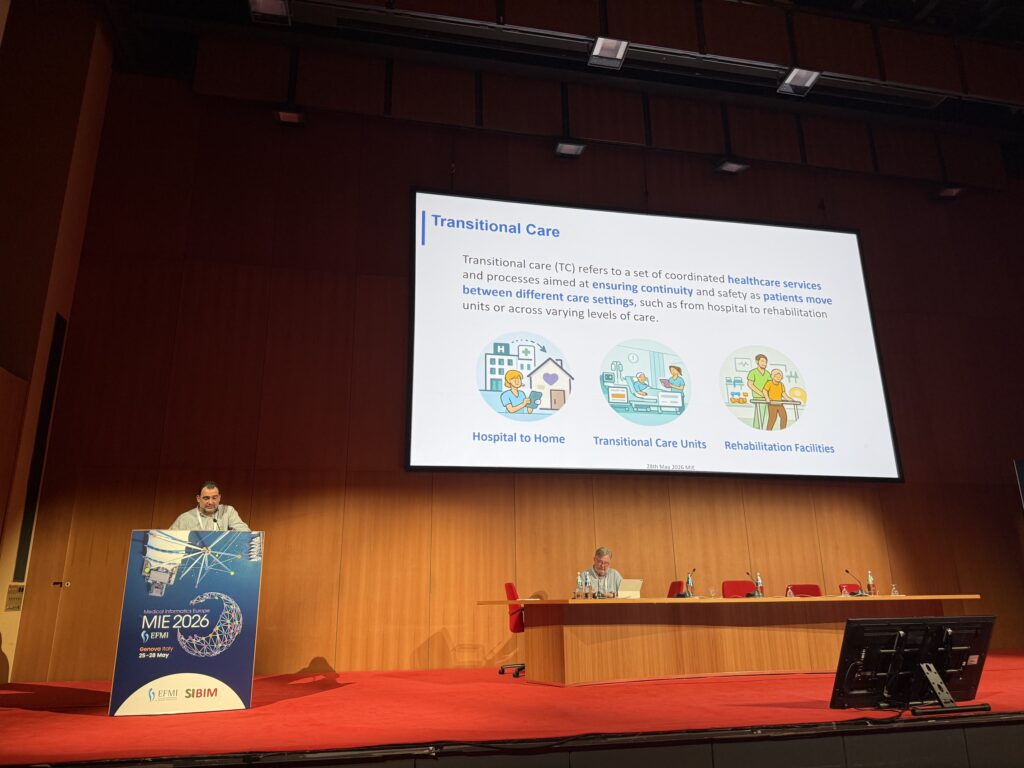
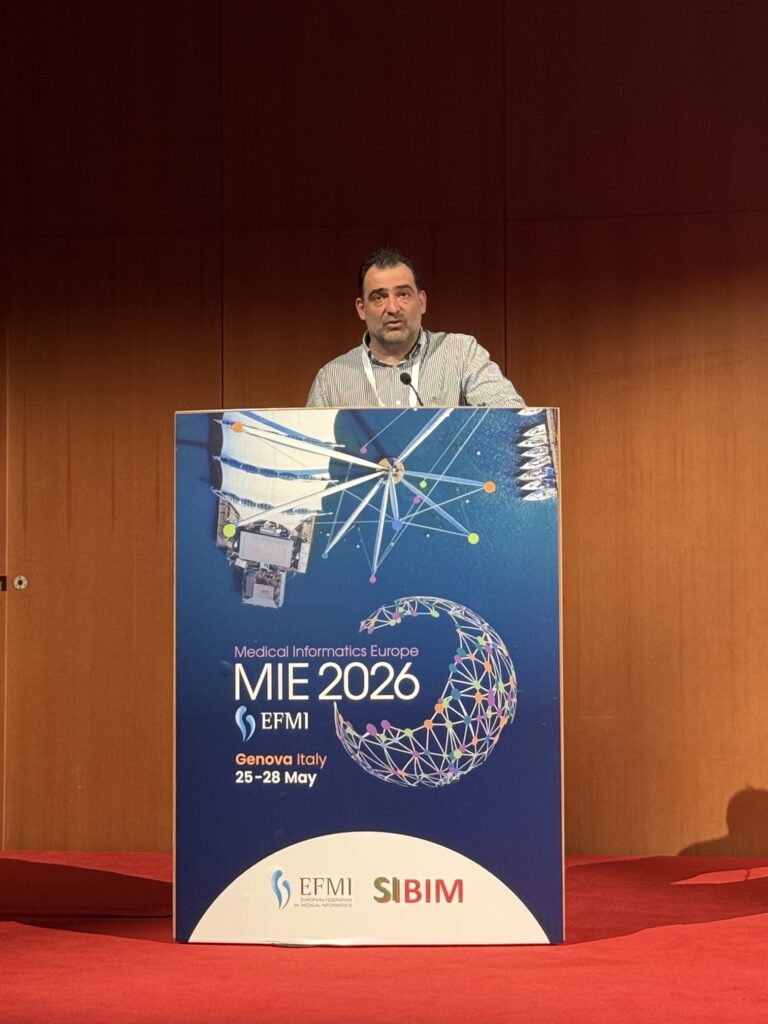
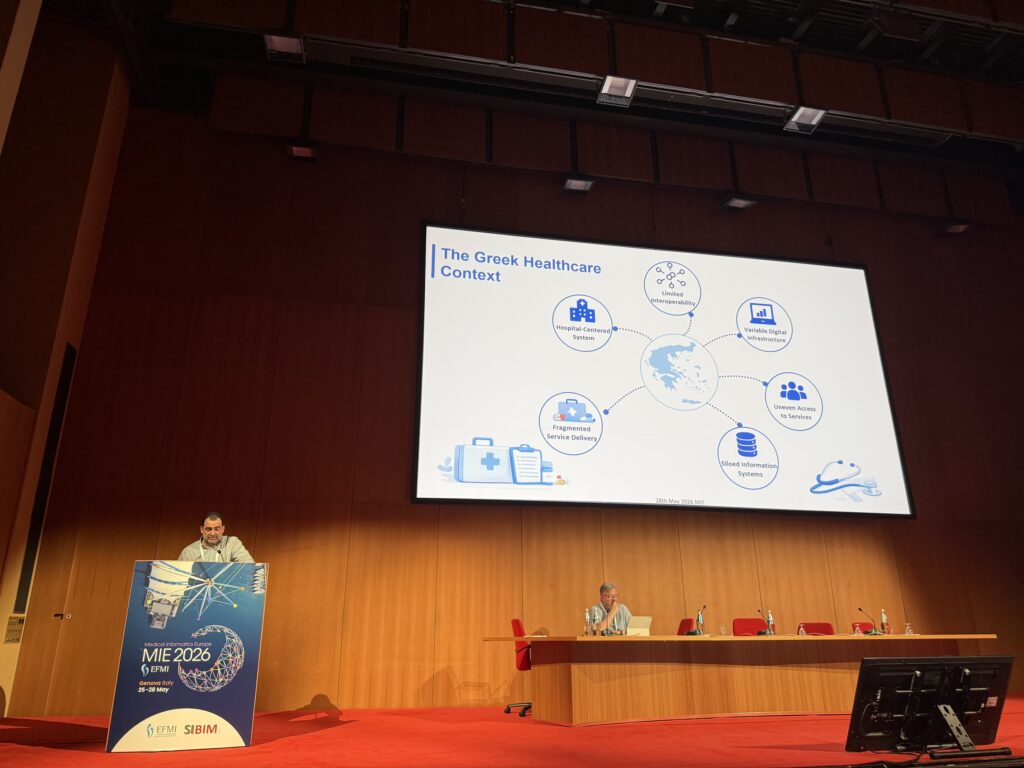
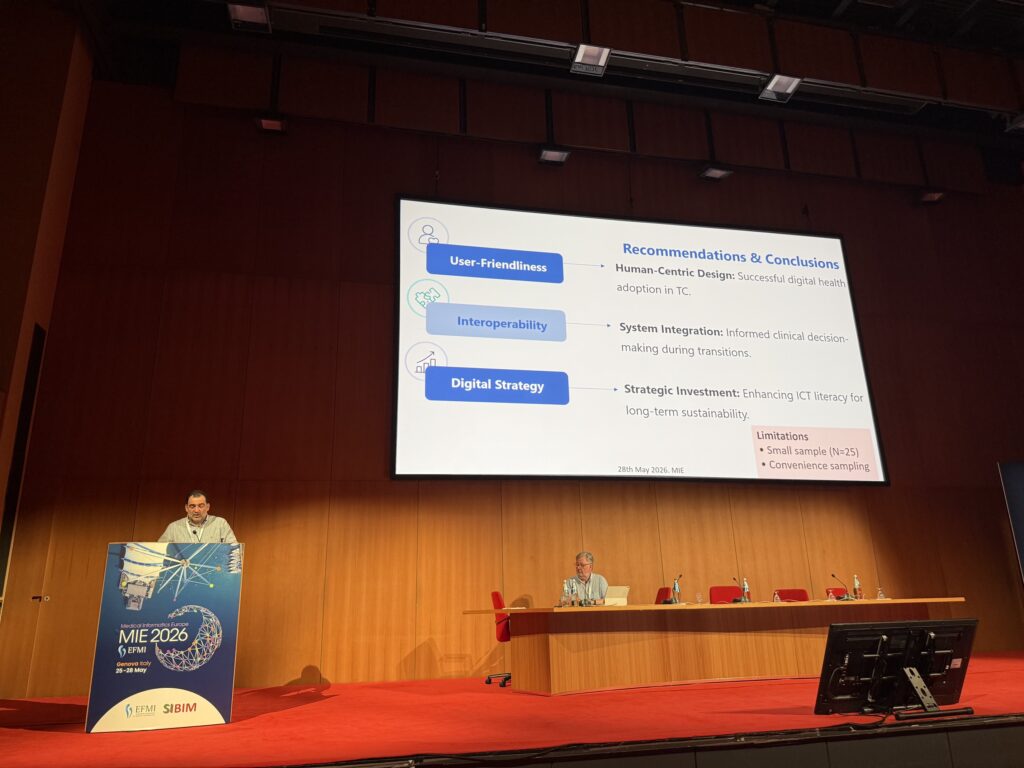
The intersection of technological innovation and real-world clinical application is at the forefront of digital health. Marking a significant contribution to this dialogue, Dr. Evdokimos Konstantinidis, Assistant Professor at the Aristotle University of Thessaloniki (AUTH), is participating in the 36th Medical Informatics Europe (MIE) conference. Taking place from May 25-28, 2026, in the historic city of Genova, Italy, Dr. Konstantinidis presented a compelling paper during the final day, which has stemmed from the EVOLVE2CARE project, highlighting the critical role of Living Labs in health technology.

The MIE 2026 Landscape: Technology Meets Healthcare

Set against the scenic backdrop of the Magazzini del Cotone, MIE 2026 is organized by the European Federation for Medical Informatics (EFMI), which is proudly celebrating its 50th anniversary this year. The conference theme, “Opening the Personal Gate between Technology and Health Care,” aligns perfectly with the current digital health climate.

As noted in the conference proceedings, while artificial intelligence continues to generate immense global interest, it is crucial that these technologies are not overestimated. Technological solutions must be carefully integrated into the healthcare process to provide high-quality, contextualized data. Dr. Konstantinidis’s participation underscored the shared vision that meaningful knowledge arises from open dialogue among all healthcare stakeholders.

EVOLVE2CARE: Bridging the Implementation Gap

The paper presented at MIE 2026 stems directly from the research and real-world experimentation conducted under the EVOLVE2CARE umbrella. The project tackles the persistent challenge of integrating research into everyday clinical settings. Healthcare professionals frequently face critical obstacles, which EVOLVE2CARE aims to resolve through:

  • Overcoming Time Constraints: Addressing the heavy clinical workloads that leave little room for research activities.
  • Aligning Priorities: Ensuring that long-term research objectives do not conflict with immediate patient care needs.
  • Fostering Co-ownership: Engaging healthcare professionals directly in the innovation process through structured, multi-stakeholder partnerships.

By leveraging Living Lab methodologies, Dr. Konstantinidis emphasizes how EVOLVE2CARE supports transitional care innovation. These environments enable the validation of scalable, human-centered solutions within authentic care settings rather than isolated laboratories.

Dr. Evdokimos Konstantinidis’s presentation at MIE 2026 has been a vital step forward in advocating for evidence-based validation in HealthTech. By sharing the practical applications of the EVOLVE2CARE project, he reinforces the necessity of grounding digital innovation in realistic healthcare environments.

New EVOLVE2CARE Joint Webinar Series: “Connecting the Dots in Transitional Care”

EVOLVE2CARE is thrilled to announce our upcoming two-part webinar series, “Connecting the Dots in Transitional Care: Open, Trusted & Interoperable Care.” We are proudly co-organizing this initiative alongside our fellow Horizon Europe projects RAISE-SUITE and DataPACT.

As we continue our mission to standardize HealthTech experimentation practices and enhance the symbiotic relationship between Health and Wellbeing Living Labs and innovators, navigating the complexities of digital health is more important than ever. By subjecting innovations to real-world scenarios through Living Labs, we aim to uncover and address ethical considerations, interoperability challenges, and unforeseen regulatory barriers.

Upcoming Sessions

June 11, 2026, 01:00 PM (Athens Time): Impact and use of Open Science in Transitional Care. Co-led with the RAISE-SUITE project, this session will explore the importance of Open Science for the democratization of data and how this could be practically implemented into transitional care settings.

Featured speaker:
Demosthenis Natsos – Security R&D Engineer, Cyclopt

June 25, 2026, 01:00 PM (Athens Time): Trusted AI in Transitional Care: Ethics, Regulation & the EU AI Act. As AI-driven tools play an increasing role in transitional care—from risk prediction to care coordination—navigating the European regulatory landscape is more important than ever. This webinar will examine the interplay between the AI Act, GDPR, and the European Health Data Space. We will also showcase how DATAPACT project outcomes address these gaps by detailing tools and frameworks for trustworthy AI governance, ethical impact assessments, and regulatory compliance.

Featured speakers:
Dr Paolo ParetiUniversity of Southampton
Tobias HerbSINTEF
Sharon XuerebMalta IT Law Association (MITLA)

Who Should Attend?

Whether your focus is on Hospital Discharge Management, Remote Monitoring and Home-Based Care Optimisation, or Inclusive Technologies for Aging and Chronic Care, these sessions will provide actionable, evidence-based insights. We strongly encourage participation from:

  • Innovators (Startups, SMEs, Researchers): Learn how to navigate regulatory complexities, reduce your time-to-market, and fast-track your HealthTech solutions in real-world settings.
  • Living Labs: Discover new ways to standardize services, onboard to the AccelUP platform, and unlock new collaborative revenue streams.
  • Policymakers & Regulators: Utilize evidence-based insights from real-world experiments to inform future healthcare policies.
  • Accelerators & Investors: Witness the impact of compliant, real-life tested innovations to identify prime investment opportunities.
  • End-Users (Care units, hospitals, patients, caregivers): Share your experiences to help shape user-friendly innovations that truly enhance patient care and streamline workflows.

Register today to secure your spots at https://authgr.zoom.us/meeting/register/mgbILJS3SxCF_YwCcYs91Q#/registration

EVOLVE2CARE Presented at the Aristotle Innovation Forum 2026

EVOLVE2CARE was presented at the Aristotle Innovation Forum (AIF) 2026, a high-impact international conference hosted by the Aristotle University of Thessaloniki (AUTH) that brings together academia, industry, policymakers, entrepreneurs, and society to explore innovation and artificial intelligence.

Held under the theme “Aristotle Meets AI”, the Forum examined how emerging technologies and ethical reasoning can shape future societies. Positioned as a landmark innovation event in Southeastern Europe, AIF provided a dynamic platform for dialogue, networking, and knowledge exchange across multiple sectors.

EVOLVE2CARE at the AI in Medical Education Session

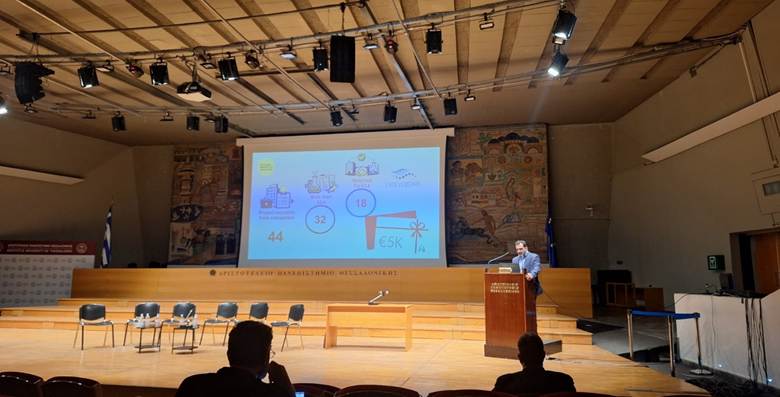
On 19 May 2026, EVOLVE2CARE was featured during the “AI in Medical Education” session of the Medical Forum at AIF.

Representing the project, Evdokimos Konstantinidis, Assistant Professor in Digital, Technological and Open Innovation in Health at the Laboratory of Medical Physics and Digital Innovation of the Aristotle University of Thessaloniki, presented EVOLVE2CARE and its contribution to advancing HealthTech innovation through Living Lab methodologies.

The session brought together researchers and healthcare professionals to discuss how artificial intelligence is reshaping medical education and healthcare systems, creating opportunities while also raising important questions regarding implementation, validation, and adoption.

Living Labs as Enablers of Health Innovation

The EVOLVE2CARE presentation highlighted the project’s mission to bridge the gap between technological innovation and real-world healthcare implementation.

A central message of the presentation was that innovation alone is not sufficient. Health technologies must be tested, refined, and validated within realistic healthcare settings involving the stakeholders who will ultimately use them.

Through Living Lab methodologies, EVOLVE2CARE supports this process by:

Real-world experimentation: validating solutions in authentic care environments rather than controlled laboratory settings.

Co-creation and stakeholder engagement: involving healthcare professionals, patients, innovators, and researchers throughout the innovation cycle.

Evidence-based validation: generating feedback and measurable outcomes to assess usability, feasibility, and impact.

Innovation support: connecting innovators with Living Lab infrastructures through the EVOLVE2CARE Open Call and experimentation framework.

These elements reflect the project’s broader vision of supporting transitional care innovation through structured experimentation and collaboration.

From Medical Education to Healthcare Transformation

The inclusion of EVOLVE2CARE within the AI in Medical Education session highlighted the growing recognition that innovation in healthcare extends beyond technology development alone.

Artificial intelligence and digital tools increasingly influence not only clinical practice but also how healthcare professionals are educated, trained, and prepared to adopt innovation responsibly.

By presenting at AIF, EVOLVE2CARE contributed to wider discussions on how HealthTech solutions can move beyond prototypes and research settings toward validated, scalable, and human-centered implementation.

A.R.I.A. in Berlin: Building the Infrastructure for Wearable Affect

The digital health landscape is currently defined by a paradox: while over 538 million wearables were shipped in 2024 alone, the data they collect remains trapped in incompatible silos. To address this “infrastructure challenge,” Anecoica Studio UG and the Good Tech Living Lab recently completed a successful real-world validation of A.R.I.A. (Affective Reasoning & Intelligent Adaptation). This collaboration, born from the EVOLVE2CARE Open Call, marks a critical shift in how we understand the body’s emotional context.

The API for Human Emotion

A.R.I.A. is not a consumer wellness app or a medical device; it is B2B infrastructure designed as a personalization API for wearable effect. It serves as a standardization layer that allows any wearable device to communicate with any application.

The core problem

The problem is the “labels problem”. Generic population models often reach high accuracy in labs (89.4%) but plummet to 56% in real-world conditions because biometric signals vary significantly between individuals. A.R.I.A.’s value lies in calibration, creating personalized models rather than relying on population averages.

Moving from Lab to Life: TRL 4 Validation

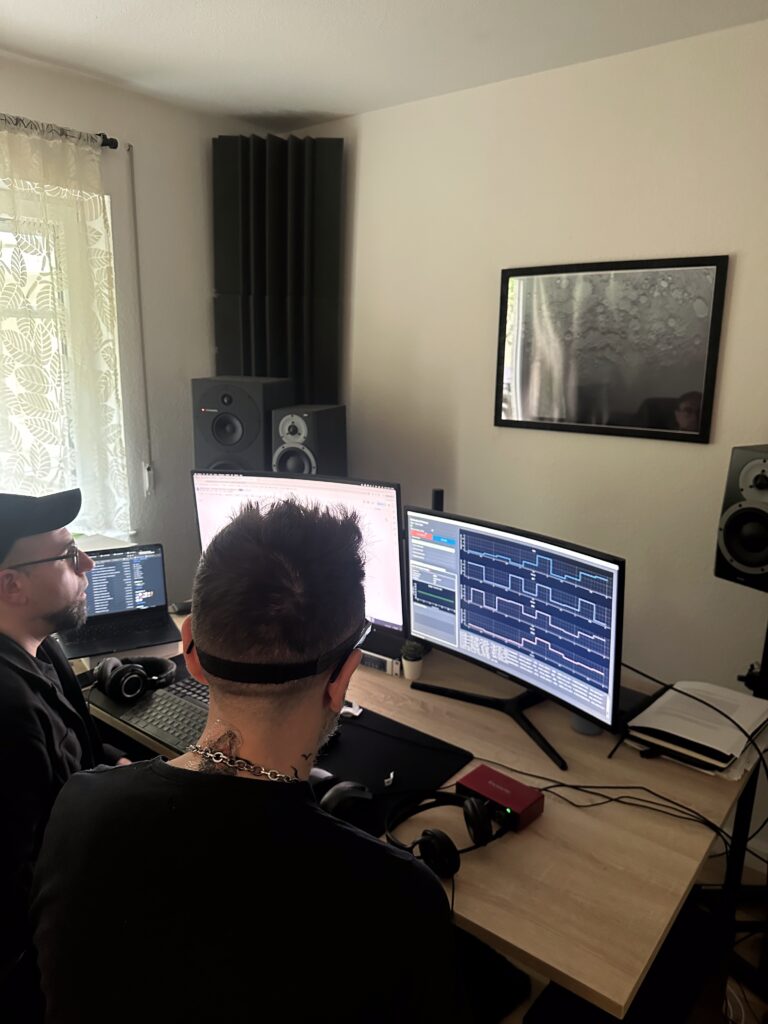
On May 3rd, 2026, in Berlin, the project reached a major milestone by moving from TRL 3 (lab accuracy) to TRL 4 (real-world validation). The Living Lab pilot involved 10 healthy adult volunteers in a non-clinical exploratory study.

Using a “Wizard-of-Oz” configuration, the team tested how participants perceived AI-generated soundscapes calibrated to three experiential states: Energetic, Meditative, and Focus. Key observations from this pilot include:

  • Emotional Safety: Participants consistently rated emotional safety at the highest levels, thanks to a neutral framing that eliminated discomfort risk.
  • Perceptual Coherence: High levels of absorption were reported, indicating that the calibrated soundscapes effectively matched the intended mental states.
  • Acceptability: Nearly all participants expressed a willingness to return for future sessions, a strong indicator of the system’s commercial viability.

The Roadmap to 2030

The Berlin pilot is just the first step in a multi-layered roadmap toward establishing a neutral infrastructure standard for the $25B biometric economy.

  • Layer 1 (Current): Focuses on 3-class arousal detection (Stress, Baseline, Amusement) with a 5-minute calibration.
  • Layer 2 (2027): Will introduce voice modality for richer emotional resolution.
  • Layer 3 (2028+): Will implement Per-User Embedding Spaces, creating continuous, longitudinal models that serve as a personalized “moat” for users.

Conclusion

The EVOLVE2CARE partnership has successfully bridged cutting-edge German deep tech with Romanian research expertise. By focusing on calibration as the primary product, A.R.I.A. is poised to solve the 80% churn problem in digital health, where static apps fail because they cannot adapt to the individual.

How could a personalized, real-time understanding of your emotional state transform the apps you use every day?

Driving Innovation: Key Takeaways from the EVOLVE2CARE Exploitation Workshop

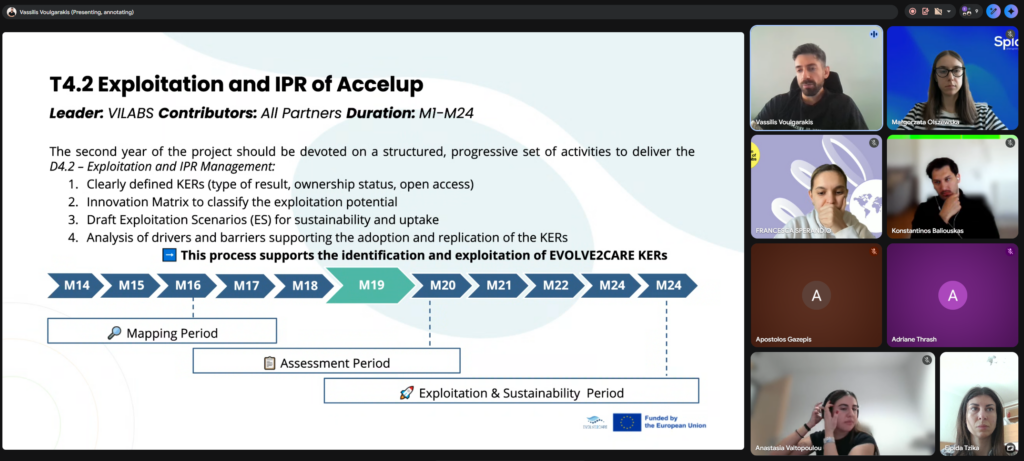
The journey from a research project to real-world impact requires a clear map. Recently, the EVOLVE2CARE team gathered for an intensive internal workshop to define that very map. The goal was simple but ambitious: to identify the project’s Key Exploitable Results (KERs) and establish a robust sustainability strategy to ensure our innovations thrive long after the project concludes.

This session marked a pivotal shift from development to delivery, focusing on how our outputs, ranging from digital platforms to policy frameworks, will serve the Health Tech Ecosystem in the years to come.

Mapping the Path: Four Key Exploitable Results

Through a participatory analysis, the team identified four core KERs. These elements are not just standalone products. The EVOLVE2CARE KERs form a complementary pathway from innovation to scaling.

  • AccelUP Market Platform: Our most technical asset, this digital platform serves as the central hub connecting innovators with Living Labs. It is the primary engine for commercialization and long-term sustainability.
  • KPI Framework for Health Tech Evaluation: A structured methodology designed to measure the real-world impact of health tech solutions, providing the evidence-based validation that investors and healthcare providers demand.
  • Training and Capacity Building Program: A training program that equips Living Labs with essential skills in service design and experimentation, currently hosted via the ENoLL Academy.
  • Living Lab Experimentation and Validation Framework: A unified methodology for designing and implementing health tech experiments, ensuring scalability and replication across different healthcare environments.

Strategizing for Sustainability: Commercial vs. Open Access

A major focus of the workshop was classifying these results into Tiers to determine their commercialisation nature. We categorized them based on their primary value:

Tier 1: Commercial Excellence

The AccelUP Platform remains the core commercial asset. Future efforts will focus on dedicated workshops to refine its business model, ensuring it becomes a self-sustaining marketplace for health tech stakeholders.

Tier 2: Non-Commercial & Cross-Cutting Impact

For results like the KPI Framework and the Training Program, the team reached a consensus: Open Access is key. Additionally, it was agreed that the Training Program will remain free of charge to maximize reach among researchers, innovators, and policymakers.

Building for the Future

Sustainability is only possible if the work remains relevant. During the session, partners discussed the importance of keeping training materials “living” by exploring ways to expand content rather than just maintaining it. We also committed to a dissemination strategy that moves beyond traditional repositories like Zenodo to engage directly with scientific communities and European decision-makers.

What’s Next?

The work does not stop here. The team is currently refining the exploitation strategy and formalising the sustainability models, with the aim of presenting the Key Exploitable Results of EVOLVE2CARE in the near future.

By standardizing how we measure impact and build capacity, EVOLVE2CARE is setting a new benchmark for how Health Tech Innovation can be validated and scaled across Europe.

Stay tuned as we move into the final stages of the project, bringing these tools to the wider health tech community!

Training Living Labs for Real-World HealthTech Innovation 

The EVOLVE2CARE project has successfully reached a major milestone in its mission to standardize and enhance HealthTech experimentation across Europe. By focusing on transitional care, specifically hospital discharge management, home care monitoring, and aging populations, the project has worked to bridge the gap between laboratory research and market-ready healthcare solutions. To achieve this, the consortium has designed and delivered a specialized training program that has already transformed how Living Labs support innovators.

A Journey Through Service Design and Operational Excellence 

The Training Program on Service Design for Living Labs was implemented by the European Network of Living Labs (ENoLL) as a series of six intensive online modules. These sessions took place between June 25 and September 24, 2025, providing a structured learning pathway for managers, researchers, and policymakers.

The curriculum was meticulously crafted to address the real-world complexities of the healthcare sector:

  • Foundational Concepts: Module 1 situated Living Labs within the broader innovation landscape, tracing their evolution from the Triple Helix model to the Quadruple Helix, which integrates civil society alongside government, academia, and industry.
  • Service Design Mastery: In Module 2, participants explored a five-step process—Discover, Define, Develop, Deliver, and Evolve—to turn abstract activities into repeatable, high-value services.
  • Legal and Ethical Guardrails: Module 3 navigated the critical requirements of GDPR, informed consent, and intellectual property management, ensuring that Labs can handle sensitive medical data responsibly.
  • Engagement and Impact: The final modules focused on building robust innovation networks and using Key Impact Indicators (KIIs) to measure the performance and societal value of pilot projects.

Tangible Tools and Proven Success 

The program has not just provided theory; it has equipped participants with actionable resources. Participants have received the Living Lab Service Blueprint to map customer journeys and a specialized Ethics Checklist to guide projects from design to exploitation. 

The impact of these efforts has been immediate and measurable: 

  • Broad Reach: A total of 116 unique participants attended the live sessions.
  • Immediate Application: 42.9% of participants have reported that they are already actively offering services or collaborating with innovators.
  • Future Readiness: An additional 28.6% have stated they are prepared to launch services within the next three to six months.

Sustainability: Now Available at the ENoLL Academy

While the live sessions have concluded, the knowledge generated continues to serve the community. On October 25, 2025, the entire training series was uploaded to the ENoLL Living Labs Academy.

This transition to an asynchronous format has already proven successful, with 37 new participants currently following the course online. By hosting these materials publicly, EVOLVE2CARE has ensured that its capacity-building efforts will remain accessible until the end of the project in October 2026 and beyond, fostering long-term strategic growth in the HealthTech ecosystem.

For a deep dive into the methodology and results of the EVOLVE2CARE Trainings, readers can explore the full D2.3 Deliverable available at the project’s Zenodo community.

EVOLVE2CARE has demonstrated that when Living Labs are empowered with the right tools, they can effectively translate experimentation into sustainable impact for patients and providers alike.

How can your organization leverage these newly available Service Design tools to accelerate your own HealthTech innovations?

EVOLVE2CARE at ISPIM Connects Bangkok 2026

EVOLVE2CARE was presented at ISPIM Connects Bangkok 2026 (9–11 March), an international forum bringing together researchers, industry experts, and policymakers to exchange knowledge on innovation management and its real-world applications.

Addressing the Gap in Clinical Practice 

During the event, Evdokimos Konstantinidis from Aristotle University of Thessaloniki (AUTH) represented the EVOLVE2CARE through a presentation titled “Leveraging Living Labs to Integrate Research into Clinical Practice”, highlighting how Living Lab methodologies can support the adoption of digital health solutions in transitional care.

A central focus of the presentation was the persistent challenge of integrating research into everyday clinical settings. Drawing on findings from research involving Living Lab practitioners, Konstantinidis highlighted that while integration is essential, healthcare professionals face several critical obstacles:

  • Time Constraints: Heavy workloads often leave little room for research activities. 
  • Competing Care Priorities: Immediate clinical needs frequently take precedence over long-term research objectives. 
  • Misalignment: There is often a gap between research goals and actual clinical needs, coupled with a lack of aligned incentives for practitioners. 

The presentation emphasized that Living Lab methodologies are key to overcoming these barriers. By providing structured environments for co-creation and real-world testing, Living Labs act as enablers for transitional care innovation by: 

  • Improving Relevance: Ensuring research activities directly address clinical needs. 
  • Fostering Co-ownership: Engaging healthcare professionals directly in the innovation process. 
  • Enabling Collaboration: Facilitating multi-stakeholder partnerships between researchers and clinicians. 
  • Supporting Validation: Testing and validating solutions within real care settings to ensure they work in practice. 

These insights align with EVOLVE2CARE’s broader mission to bridge the gap between innovation and implementation within healthcare systems.

Integrating research into everyday clinical settings remains a key challenge in healthcare innovation. Healthcare professionals often face barriers such as limited time, competing care priorities, and misalignment between research objectives and clinical needs. 

The EVOLVE2CARE contribution addressed these challenges by presenting findings from research involving Living Lab practitioners. The results underline that time constraints and lack of aligned incentives are among the most critical obstacles to integrating research into practice. 

From experimentation to Real-World Impact

Moving beyond theory, EVOLVE2CARE showcased its practical approach to supporting innovators through its experimentation frameworks. Rather than just providing theoretical guidance, the project matches innovators with Living Labs through a dedicated Open Call.

Under this model, selected innovators receive specialized experimentation services from certified Living Lab infrastructures to test their HealthTech solutions. The costs for these services are covered by the project’s Open Call budget, ensuring that financial barriers do not hinder the validation of high-impact technologies. 

Participation in ISPIM Connects Bangkok 2026 highlights EVOLVE2CARE’s contribution to international discussions on HealthTech innovation, Living Labs, and the integration of research into clinical practice.

Advancing Regulatory Learning in HealthTech through EVOLVE2CARE Workshops

Behind effective HealthTech innovation lies not only strong technology, but also a clear understanding of the regulatory environment in which it operates.

As part of its work on transitional care, EVOLVE2CARE organised two dedicated workshops in February and March 2026, bringing together innovators, Living Labs, researchers, and policymakers to explore how regulatory learning can support the real-world adoption of digital health solutions.

Workshop 1: Understanding regulatory barriers in transitional care

The first workshop, “Understanding Regulatory Barriers and Enablers in Transitional Care”, took place on 25 February 2026, gathering 19 participants in an interactive session focused on identifying key regulatory challenges.

The session introduced the concept of regulatory learning and explored how Living Labs can contribute to navigating complex regulatory environments. Through a hands-on exercise using a collaborative Miro board, participants shared real experiences, highlighting barriers related to compliance, policy fragmentation, and implementation constraints.

Beyond identifying challenges, the discussion also focused on potential solutions. Participants exchanged strategies for addressing regulatory obstacles and proposed policy measures that could better support innovation in transitional care.

Workshop 2: From insights to ecosystem-level discussion

Building on these initial findings, EVOLVE2CARE contributed to the ENoLL Joint Working Group on Regulatory Learning, relaunched on 4 March 2026, which brought together 61 participants.

During this session, EVOLVE2CARE presented the first results from the workshop and the regulatory learning survey, contributing to a wider discussion involving the Joint Research Centre (JRC) and Living Lab practitioners across Europe.

The workshop also featured best practice examples, illustrating how regulatory learning approaches are already being applied in real settings. Participants reflected on key questions around skills development, capacity building, and the role of collaborative frameworks in supporting regulatory adaptation.

Across both sessions, a clear message emerged: regulatory challenges remain a major barrier to scaling digital health solutions, but they can be addressed through structured, collaborative approaches. 

The Vital Role of Living Labs

Across both sessions, a clear message emerged: regulatory challenges remain a major barrier to scaling digital health solutions, but they can be adA recurring theme across both workshops was that while regulatory challenges are significant, they are manageable through structured, collaborative approaches. Living Labs are central to this effort because they enable: 

  • Real-world testing: Validating solutions in actual care environments. 
  • Early identification: Spotting regulatory constraints before they become roadblocks. 
  • Stakeholder collaboration: Building stronger ties between innovators, healthcare providers, and policymakers. 

Looking Ahead

The work continues with a third workshop scheduled for May 2026. This upcoming session will focus on translating workshop and survey data into actionable recommendations, capacity-building activities, and policy-oriented outcomes for the HealthTech ecosystem.

By fostering this ongoing dialogue, EVOLVE2CARE aims to bridge the gap between innovation and implementation, creating a more responsive regulatory environment for the future of healthcare.

From Applications to Experimentation: The Journey Behind the EVOLVE2CARE Open Call

Behind every successful experimentation phase lies a carefully designed selection process.

For EVOLVE2CARE, the Open Call was not simply a call for proposals. It was the foundation of a structured pathway connecting HealthTech innovators with Living Labs across Europe. The Open Call marked the transition from interest to engagement, and from ideas to implementation.

This blog builds on insights from Deliverable D2.2 – “Living Labs, Innovators and Researchers Scouting and Selection Report”, which is publicly available on Zenodo and provides a transparent overview of the scouting, evaluation, and selection process behind the EVOLVE2CARE Open Call.

Designing an Open Call with Purpose

HealthTech innovation thrives when solutions are tested where care actually happens. With this in mind, the EVOLVE2CARE Open Call focused on identifying innovators and Living Labs ready to collaborate in three critical domains of transitional care:

  • Hospital discharge management
  • Remote monitoring and home-based care
  • Ageing and chronic care support

The objective was not only to select promising technologies, but to ensure alignment between innovators’ ambitions and the real-world experimentation capacity of Living Labs.

A Structured and Transparent Process

The scouting and selection process was designed to be clear, fair, and impact-oriented.

Applications were evaluated against predefined criteria that considered:

  • Relevance to transitional care use cases
  • Technical feasibility and maturity
  • Potential for measurable impact
  • Readiness for collaboration within Living Lab environments

Beyond scoring, the process also focused on matchmaking, ensuring that selected innovators were paired with Living Labs capable of supporting meaningful experimentation.

This structured approach ensures that the experimentation phase is grounded in strategic alignment rather than opportunistic selection.

From Selection to Real-World Validation

With the Open Call phase completed, selected mini-projects have now entered Living Lab environments for real-world experimentation.

This marks a critical shift. The focus moves:

  • From proposal quality to implementation performance
  • From theoretical value to practical usability
  • From innovation potential to measurable impact

Within Living Labs, solutions are tested in real healthcare contexts, involving professionals, patients, and ecosystem actors. This enables innovators to refine their tools, identify integration challenges early, and generate evidence that goes beyond technical feasibility.

Building Evidence for Sustainable Uptake

The Open Call was the first step in a broader journey toward sustainability and scalability.

By documenting the scouting and evaluation methodology, EVOLVE2CARE reinforces its commitment to transparency and replicability. The structured selection process lays the groundwork for credible experimentation outcomes, stronger positioning of project results, and future ecosystem adoption.

Readers interested in understanding the full methodology behind the Open Call scouting and selection process can explore Deliverable D2.2 – “Living Labs, Innovators and Researchers Scouting and Selection Report”, available publicly on Zenodo.

From applications to experimentation, EVOLVE2CARE continues to build a pathway where innovation is not only selected, but validated, strengthened, and positioned for real-world healthcare transformation.

EVOLVE2CARE in Athens: Aligning for Impact and Sustainability

On 17–18 February 2026, the EVOLVE2CARE consortium met in Athens, Greece, for its 4th Plenary Meeting. Held in parallel with Athens Digital Health Week 2026 (ADHW2026) at the Royal Olympic Hotel, the gathering offered more than just coordination updates, it created a moment to reflect, realign, and strengthen the project’s next phase within Europe’s rapidly evolving digital health landscape.

Across two intensive days, partners focused on consolidating the Open Call results, reinforcing the EVOLVE2CARE experimentation framework, advancing the positioning of AccelUP, and scaling outreach and sustainability efforts.

Day 1: From Open Call Results to Real-World Experimentation

The first day was dedicated to a pivotal transition point for the project: moving from Open Call completion to structured implementation in Living Lab environments.

Reflecting on the Open Call Impact

With the Open Calls now officially finalised, the consortium reviewed:

  • Key statistics and insights from the application and selection process
  • Improvements introduced through Deliverable D2.2
  • The shift from recruitment to real-world pilot implementation

Beyond numbers, the discussion focused on impact. How can the lessons learned from the Open Call strengthen communication materials and support the long-term positioning of project outcomes?

The emphasis is now clear: experimentation must generate measurable, documented value within Living Labs.

Strengthening the EVOLVE2CARE Experimentation Framework

Day 1 also included final roadmap presentations for three central deliverables shaping the project’s experimentation model:

  • D1.4 – Roadmap on navigating complexities enabling innovative technologies in transitional care
  • D1.5 – Stakeholder Needs Analysis and KPI Framework
  • D1.6 – EVOLVE2CARE Action Plan

Concrete decisions were taken to reinforce structure and comparability across pilots:

  • Each mini-project will submit a structured “initial context” (solution, target users, key assumptions) before pilots begin, enabling meaningful before/after analysis.
  • A Regulatory & Ethics Log will allow Living Labs to systematically record compliance and data-related issues during implementation.
  • The KPI framework will be disseminated beyond the consortium, engaging relevant European health clusters and sister projects.

Day 2: Connecting Ecosystem Dialogue with Strategic Planning

The second day blended external engagement at ADHW2026 with focused internal alignment on evaluation, outreach, and long-term sustainability.

Engaging the Digital Health Ecosystem at ADHW2026

On the morning of 18 February, EVOLVE2CARE hosted the workshop:

“Engaging the Value of Living Labs to Innovate Healthcare”

Chaired by Despoina Petsani (AUTH), the session brought together innovators, clinicians, researchers, and ecosystem actors to tackle a pressing HealthTech question:

How can promising digital solutions successfully transition from pilot testing to routine clinical practice?

The discussion went beyond technology development and addressed the structural realities of healthcare innovation, including regulatory complexity, GDPR compliance, interoperability limitations, integration into clinical workflows, and fragmented stakeholder collaboration.

Across contributions, Living Labs emerged as structured experimentation environments capable of reducing deployment risks while generating real-world validation.

🔗 Read the full workshop recap here.

Aligning the Next Phase of the Project

Returning to the plenary discussions, partners focused on shaping the next phase of EVOLVE2CARE.

The agenda centred on five strategic priorities:

  • Structuring the evaluation framework for mini-project experimentation
  • Aligning questionnaires and feedback tools for innovators and Living Labs
  • Strengthening AccelUP’s positioning beyond the Open Call phase
  • Expanding participation in European Commission and EIT-related events
  • Planning sustainability and exploitation activities for all project results

Key Highlights from the Discussions

  • Evaluation tools were aligned to ensure structured before/after feedback capturing both technical and market-oriented value.
  • Pricing perception and value-creation questions were integrated into experimentation surveys.
  • Complementary assessment mechanisms were coordinated to ensure systematic data collection.
  • The exploitation approach was further defined, combining questionnaire-based validation with market and competitor analysis.
  • Dissemination efforts will intensify in the “Global Outreach & Sustainability” phase, with stronger participation in European-level events, broader press outreach, and enhanced digital engagement.
  • Strategic planning began for participation in Open Living Lab Days and policy-oriented events to showcase the project’s KPI framework and experimentation insights.

Key Decisions Moving Forward

  • Mini-project evaluation will follow a structured, comparable methodology capturing both experimentation outcomes and market insights.
  • Two internal exploitation workshops will be organized. One dedicated to AccelUP positioning, and another focusing on the remaining project results.
  • Outreach efforts will prioritise European Commission–related events and EIT KIC engagement.
  • Communication efforts will intensify, with coordinated partner promotion and increased focus on subscriber growth and stakeholder engagement.

A Strategic Transition Point

The 4th Plenary Meeting marked a clear evolution for EVOLVE2CARE:

  • From Open Call recruitment to structured pilot implementation
  • From framework design to measurable evidence generation
  • From awareness-building to strategic European outreach
  • From experimentation to sustainability planning

With mini-projects underway, evaluation tools aligned, and exploitation strategy defined, EVOLVE2CARE moves forward with a clearer pathway toward scalable, validated, and ecosystem-integrated HealthTech innovation!