EVOLVE2CARE at MIE 2026: Grounding Digital Health Innovation in Living Labs

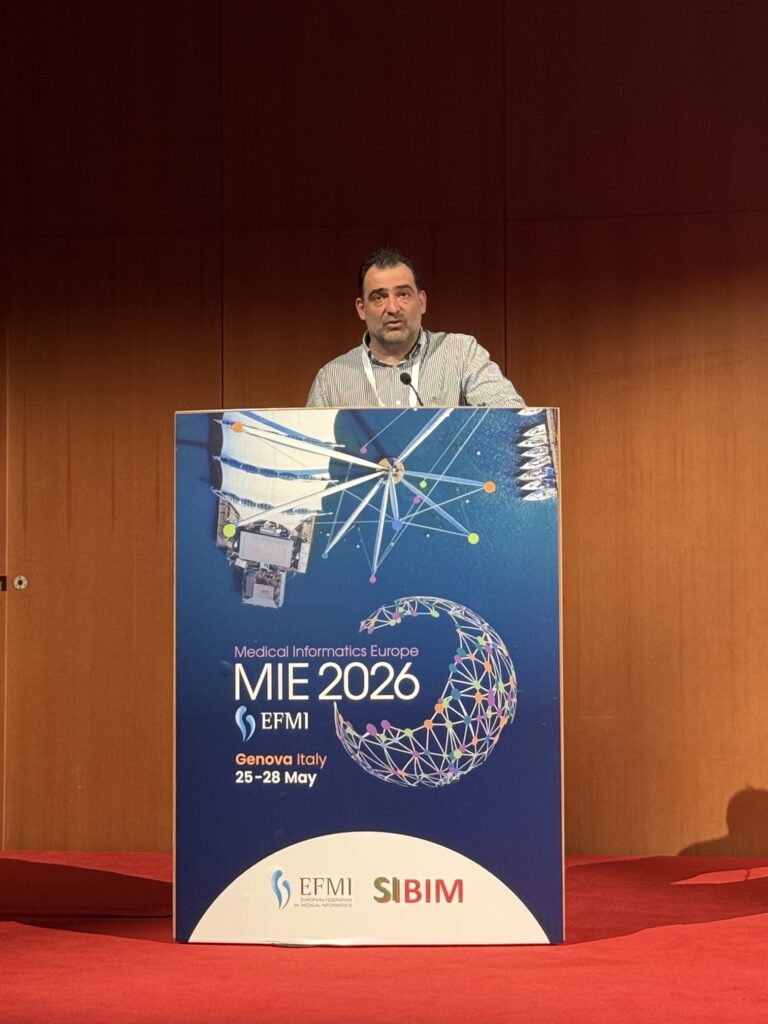
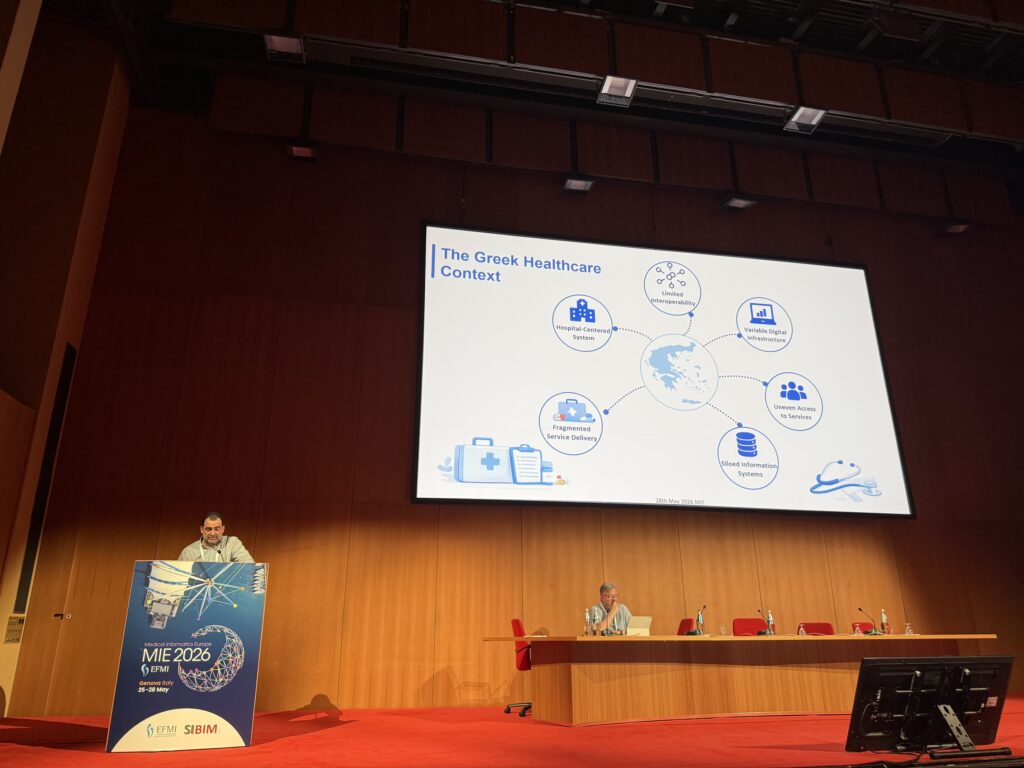
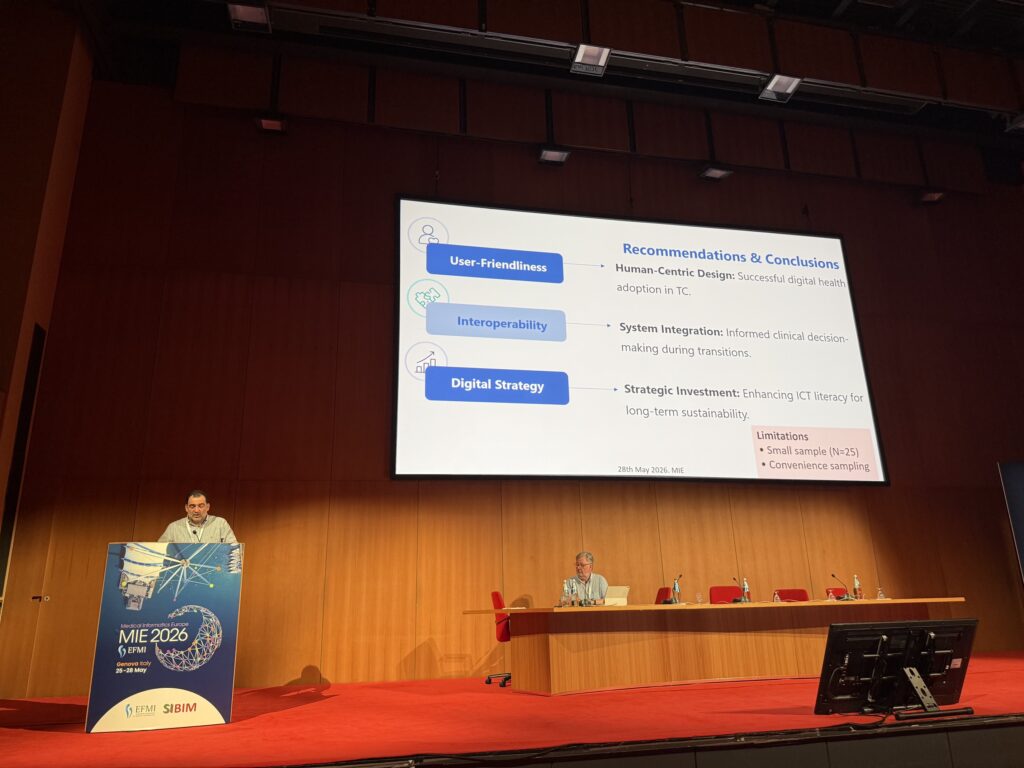
The intersection of technological innovation and real-world clinical application is at the forefront of digital health. Marking a significant contribution to this dialogue, Dr. Evdokimos Konstantinidis, Assistant Professor at the Aristotle University of Thessaloniki (AUTH), is participating in the 36th Medical Informatics Europe (MIE) conference. Taking place from May 25-28, 2026, in the historic city of Genova, Italy, Dr. Konstantinidis presented a compelling paper during the final day, which has stemmed from the EVOLVE2CARE project, highlighting the critical role of Living Labs in health technology.

The MIE 2026 Landscape: Technology Meets Healthcare

Set against the scenic backdrop of the Magazzini del Cotone, MIE 2026 is organized by the European Federation for Medical Informatics (EFMI), which is proudly celebrating its 50th anniversary this year. The conference theme, “Opening the Personal Gate between Technology and Health Care,” aligns perfectly with the current digital health climate.

As noted in the conference proceedings, while artificial intelligence continues to generate immense global interest, it is crucial that these technologies are not overestimated. Technological solutions must be carefully integrated into the healthcare process to provide high-quality, contextualized data. Dr. Konstantinidis’s participation underscored the shared vision that meaningful knowledge arises from open dialogue among all healthcare stakeholders.

EVOLVE2CARE: Bridging the Implementation Gap

The paper presented at MIE 2026 stems directly from the research and real-world experimentation conducted under the EVOLVE2CARE umbrella. The project tackles the persistent challenge of integrating research into everyday clinical settings. Healthcare professionals frequently face critical obstacles, which EVOLVE2CARE aims to resolve through:

  • Overcoming Time Constraints: Addressing the heavy clinical workloads that leave little room for research activities.
  • Aligning Priorities: Ensuring that long-term research objectives do not conflict with immediate patient care needs.
  • Fostering Co-ownership: Engaging healthcare professionals directly in the innovation process through structured, multi-stakeholder partnerships.
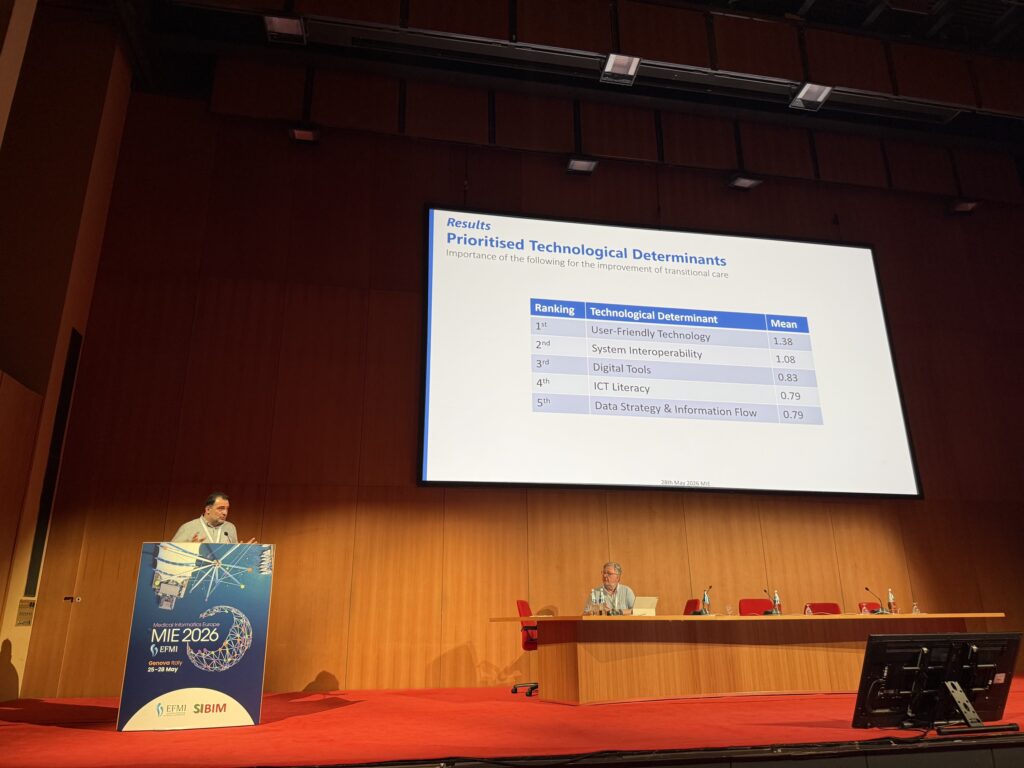
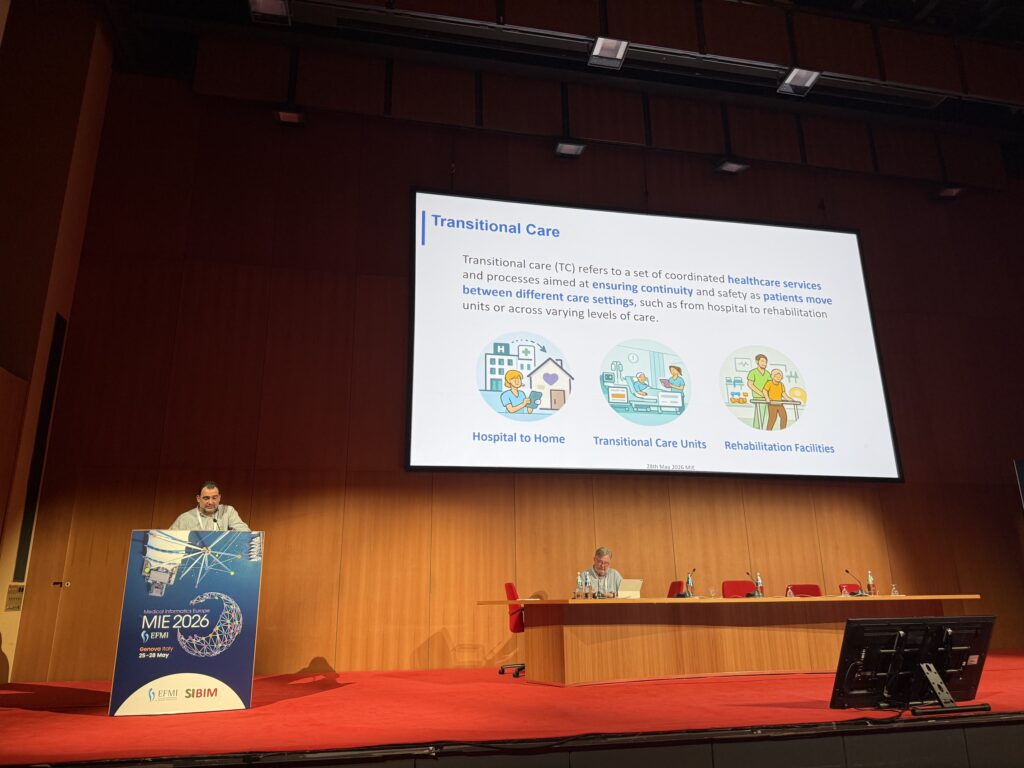
By leveraging Living Lab methodologies, Dr. Konstantinidis emphasizes how EVOLVE2CARE supports transitional care innovation. These environments enable the validation of scalable, human-centered solutions within authentic care settings rather than isolated laboratories.

Dr. Evdokimos Konstantinidis’s presentation at MIE 2026 has been a vital step forward in advocating for evidence-based validation in HealthTech. By sharing the practical applications of the EVOLVE2CARE project, he reinforces the necessity of grounding digital innovation in realistic healthcare environments.

New EVOLVE2CARE Joint Webinar Series: “Connecting the Dots in Transitional Care”

EVOLVE2CARE is thrilled to announce our upcoming two-part webinar series, “Connecting the Dots in Transitional Care: Open, Trusted & Interoperable Care.” We are proudly co-organizing this initiative alongside our fellow Horizon Europe projects RAISE-SUITE and DataPACT.

As we continue our mission to standardize HealthTech experimentation practices and enhance the symbiotic relationship between Health and Wellbeing Living Labs and innovators, navigating the complexities of digital health is more important than ever. By subjecting innovations to real-world scenarios through Living Labs, we aim to uncover and address ethical considerations, interoperability challenges, and unforeseen regulatory barriers.

Upcoming Sessions

June 11, 2026, 01:00 PM (Athens Time): Impact and use of Open Science in Transitional Care. Co-led with the RAISE-SUITE project, this session will explore the importance of Open Science for the democratization of data and how this could be practically implemented into transitional care settings.

Featured speaker:
Demosthenis Natsos – Security R&D Engineer, Cyclopt

June 25, 2026, 01:00 PM (Athens Time): Trusted AI in Transitional Care: Ethics, Regulation & the EU AI Act. As AI-driven tools play an increasing role in transitional care—from risk prediction to care coordination—navigating the European regulatory landscape is more important than ever. This webinar will examine the interplay between the AI Act, GDPR, and the European Health Data Space. We will also showcase how DATAPACT project outcomes address these gaps by detailing tools and frameworks for trustworthy AI governance, ethical impact assessments, and regulatory compliance.

Featured speakers:
Dr Paolo ParetiUniversity of Southampton
Tobias HerbSINTEF
Sharon XuerebMalta IT Law Association (MITLA)

Who Should Attend?

Whether your focus is on Hospital Discharge Management, Remote Monitoring and Home-Based Care Optimisation, or Inclusive Technologies for Aging and Chronic Care, these sessions will provide actionable, evidence-based insights. We strongly encourage participation from:

  • Innovators (Startups, SMEs, Researchers): Learn how to navigate regulatory complexities, reduce your time-to-market, and fast-track your HealthTech solutions in real-world settings.
  • Living Labs: Discover new ways to standardize services, onboard to the AccelUP platform, and unlock new collaborative revenue streams.
  • Policymakers & Regulators: Utilize evidence-based insights from real-world experiments to inform future healthcare policies.
  • Accelerators & Investors: Witness the impact of compliant, real-life tested innovations to identify prime investment opportunities.
  • End-Users (Care units, hospitals, patients, caregivers): Share your experiences to help shape user-friendly innovations that truly enhance patient care and streamline workflows.

Register today to secure your spots at https://authgr.zoom.us/meeting/register/mgbILJS3SxCF_YwCcYs91Q#/registration

EVOLVE2CARE Presented at the Aristotle Innovation Forum 2026

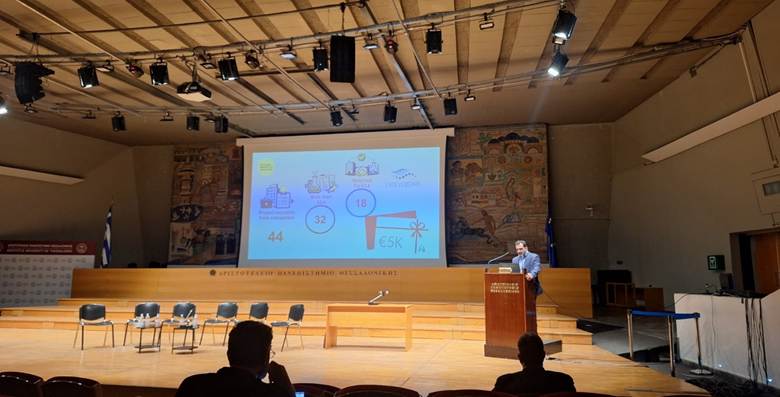
EVOLVE2CARE was presented at the Aristotle Innovation Forum (AIF) 2026, a high-impact international conference hosted by the Aristotle University of Thessaloniki (AUTH) that brings together academia, industry, policymakers, entrepreneurs, and society to explore innovation and artificial intelligence.

Held under the theme “Aristotle Meets AI”, the Forum examined how emerging technologies and ethical reasoning can shape future societies. Positioned as a landmark innovation event in Southeastern Europe, AIF provided a dynamic platform for dialogue, networking, and knowledge exchange across multiple sectors.

EVOLVE2CARE at the AI in Medical Education Session

On 19 May 2026, EVOLVE2CARE was featured during the “AI in Medical Education” session of the Medical Forum at AIF.

Representing the project, Evdokimos Konstantinidis, Assistant Professor in Digital, Technological and Open Innovation in Health at the Laboratory of Medical Physics and Digital Innovation of the Aristotle University of Thessaloniki, presented EVOLVE2CARE and its contribution to advancing HealthTech innovation through Living Lab methodologies.

The session brought together researchers and healthcare professionals to discuss how artificial intelligence is reshaping medical education and healthcare systems, creating opportunities while also raising important questions regarding implementation, validation, and adoption.

Living Labs as Enablers of Health Innovation

The EVOLVE2CARE presentation highlighted the project’s mission to bridge the gap between technological innovation and real-world healthcare implementation.

A central message of the presentation was that innovation alone is not sufficient. Health technologies must be tested, refined, and validated within realistic healthcare settings involving the stakeholders who will ultimately use them.

Through Living Lab methodologies, EVOLVE2CARE supports this process by:

Real-world experimentation: validating solutions in authentic care environments rather than controlled laboratory settings.

Co-creation and stakeholder engagement: involving healthcare professionals, patients, innovators, and researchers throughout the innovation cycle.

Evidence-based validation: generating feedback and measurable outcomes to assess usability, feasibility, and impact.

Innovation support: connecting innovators with Living Lab infrastructures through the EVOLVE2CARE Open Call and experimentation framework.

These elements reflect the project’s broader vision of supporting transitional care innovation through structured experimentation and collaboration.

From Medical Education to Healthcare Transformation

The inclusion of EVOLVE2CARE within the AI in Medical Education session highlighted the growing recognition that innovation in healthcare extends beyond technology development alone.

Artificial intelligence and digital tools increasingly influence not only clinical practice but also how healthcare professionals are educated, trained, and prepared to adopt innovation responsibly.

By presenting at AIF, EVOLVE2CARE contributed to wider discussions on how HealthTech solutions can move beyond prototypes and research settings toward validated, scalable, and human-centered implementation.

A.R.I.A. in Berlin: Building the Infrastructure for Wearable Affect

The digital health landscape is currently defined by a paradox: while over 538 million wearables were shipped in 2024 alone, the data they collect remains trapped in incompatible silos. To address this “infrastructure challenge,” Anecoica Studio UG and the Good Tech Living Lab recently completed a successful real-world validation of A.R.I.A. (Affective Reasoning & Intelligent Adaptation). This collaboration, born from the EVOLVE2CARE Open Call, marks a critical shift in how we understand the body’s emotional context.

The API for Human Emotion

A.R.I.A. is not a consumer wellness app or a medical device; it is B2B infrastructure designed as a personalization API for wearable effect. It serves as a standardization layer that allows any wearable device to communicate with any application.

The core problem

The problem is the “labels problem”. Generic population models often reach high accuracy in labs (89.4%) but plummet to 56% in real-world conditions because biometric signals vary significantly between individuals. A.R.I.A.’s value lies in calibration, creating personalized models rather than relying on population averages.

Moving from Lab to Life: TRL 4 Validation

On May 3rd, 2026, in Berlin, the project reached a major milestone by moving from TRL 3 (lab accuracy) to TRL 4 (real-world validation). The Living Lab pilot involved 10 healthy adult volunteers in a non-clinical exploratory study.

Using a “Wizard-of-Oz” configuration, the team tested how participants perceived AI-generated soundscapes calibrated to three experiential states: Energetic, Meditative, and Focus. Key observations from this pilot include:

  • Emotional Safety: Participants consistently rated emotional safety at the highest levels, thanks to a neutral framing that eliminated discomfort risk.
  • Perceptual Coherence: High levels of absorption were reported, indicating that the calibrated soundscapes effectively matched the intended mental states.
  • Acceptability: Nearly all participants expressed a willingness to return for future sessions, a strong indicator of the system’s commercial viability.

The Roadmap to 2030

The Berlin pilot is just the first step in a multi-layered roadmap toward establishing a neutral infrastructure standard for the $25B biometric economy.

  • Layer 1 (Current): Focuses on 3-class arousal detection (Stress, Baseline, Amusement) with a 5-minute calibration.
  • Layer 2 (2027): Will introduce voice modality for richer emotional resolution.
  • Layer 3 (2028+): Will implement Per-User Embedding Spaces, creating continuous, longitudinal models that serve as a personalized “moat” for users.

Conclusion

The EVOLVE2CARE partnership has successfully bridged cutting-edge German deep tech with Romanian research expertise. By focusing on calibration as the primary product, A.R.I.A. is poised to solve the 80% churn problem in digital health, where static apps fail because they cannot adapt to the individual.

How could a personalized, real-time understanding of your emotional state transform the apps you use every day?