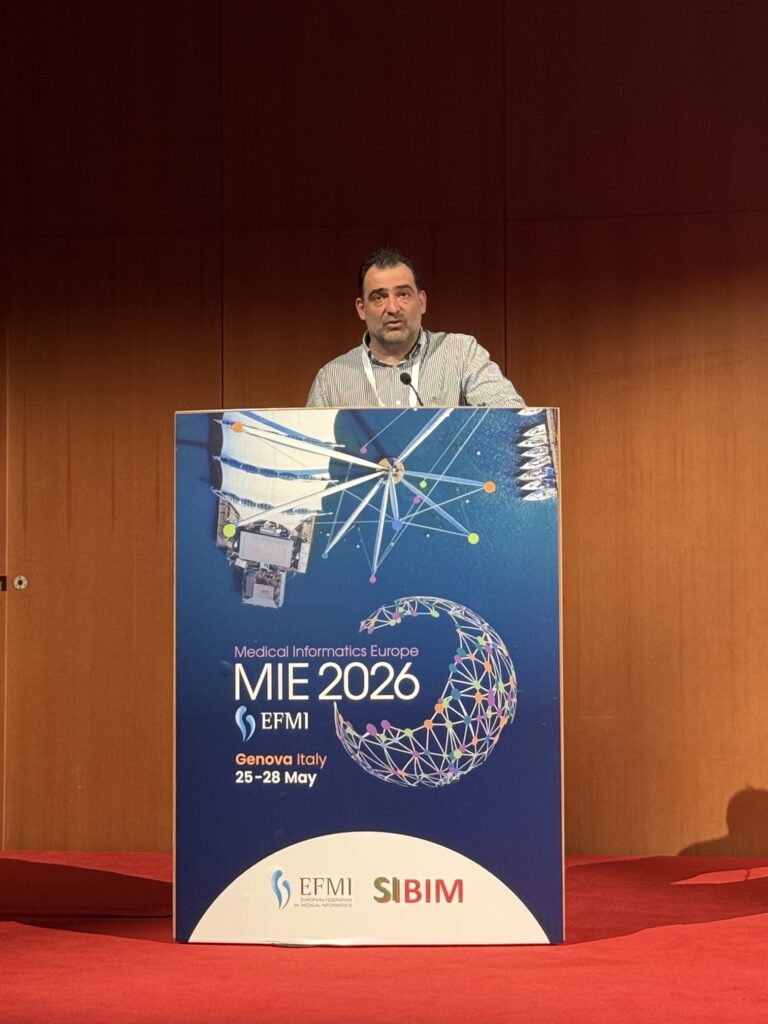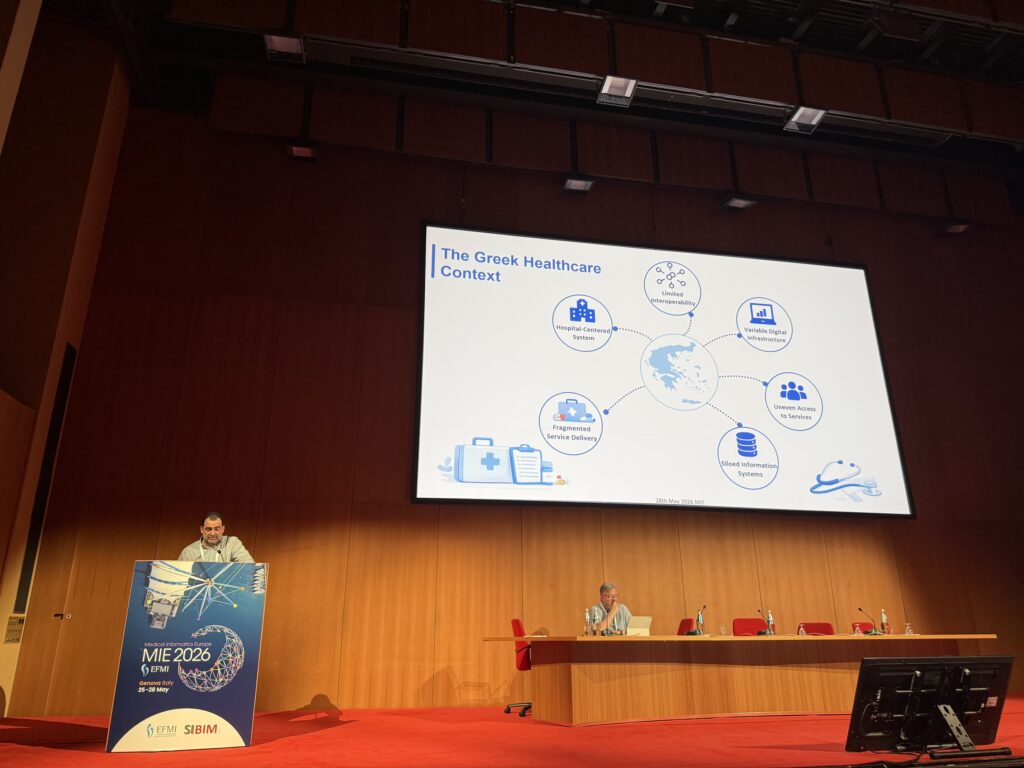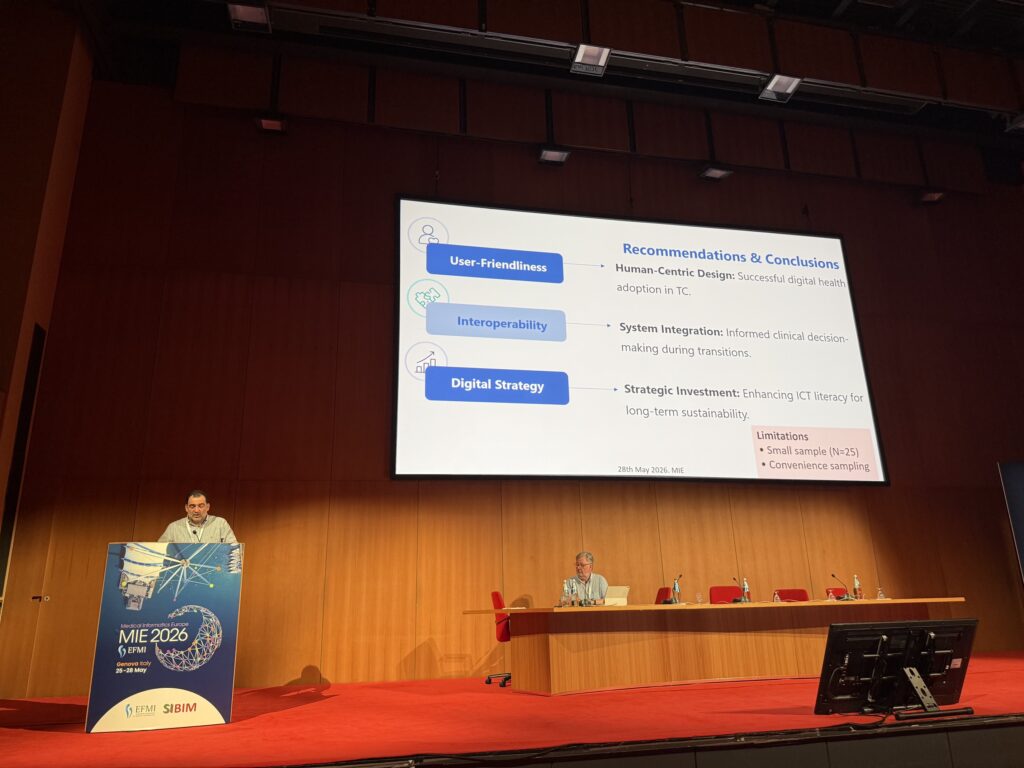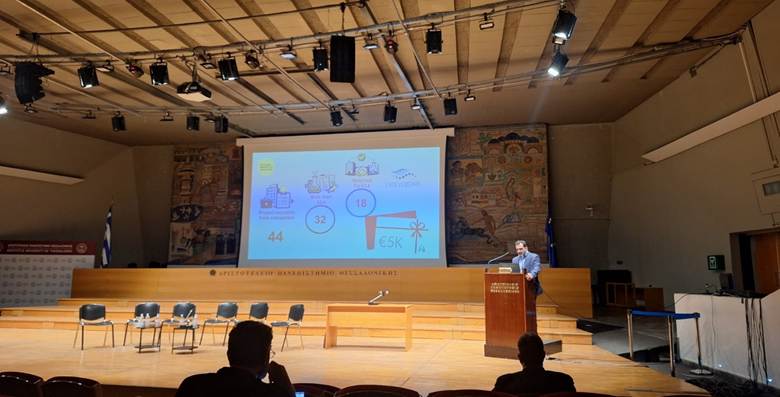
Driving Innovation: Key Takeaways from the EVOLVE2CARE Exploitation Workshop

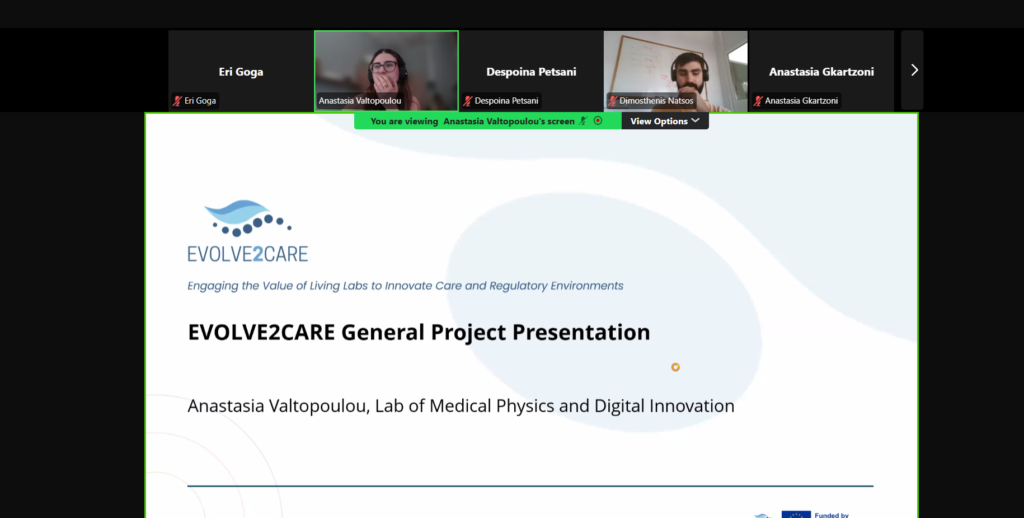
The journey from a research project to real-world impact requires a clear map. Recently, the EVOLVE2CARE team gathered for an intensive internal workshop to define that very map. The goal was simple but ambitious: to identify the project’s Key Exploitable Results (KERs) and establish a robust sustainability strategy to ensure our innovations thrive long after the project concludes.

This session marked a pivotal shift from development to delivery, focusing on how our outputs, ranging from digital platforms to policy frameworks, will serve the Health Tech Ecosystem in the years to come.

Mapping the Path: Four Key Exploitable Results

Through a participatory analysis, the team identified four core KERs. These elements are not just standalone products. The EVOLVE2CARE KERs form a complementary pathway from innovation to scaling.

  • AccelUP Market Platform: Our most technical asset, this digital platform serves as the central hub connecting innovators with Living Labs. It is the primary engine for commercialization and long-term sustainability.
  • KPI Framework for Health Tech Evaluation: A structured methodology designed to measure the real-world impact of health tech solutions, providing the evidence-based validation that investors and healthcare providers demand.
  • Training and Capacity Building Program: A training program that equips Living Labs with essential skills in service design and experimentation, currently hosted via the ENoLL Academy.
  • Living Lab Experimentation and Validation Framework: A unified methodology for designing and implementing health tech experiments, ensuring scalability and replication across different healthcare environments.

Strategizing for Sustainability: Commercial vs. Open Access

A major focus of the workshop was classifying these results into Tiers to determine their commercialisation nature. We categorized them based on their primary value:

Tier 1: Commercial Excellence

The AccelUP Platform remains the core commercial asset. Future efforts will focus on dedicated workshops to refine its business model, ensuring it becomes a self-sustaining marketplace for health tech stakeholders.

Tier 2: Non-Commercial & Cross-Cutting Impact

For results like the KPI Framework and the Training Program, the team reached a consensus: Open Access is key. Additionally, it was agreed that the Training Program will remain free of charge to maximize reach among researchers, innovators, and policymakers.

Building for the Future

Sustainability is only possible if the work remains relevant. During the session, partners discussed the importance of keeping training materials “living” by exploring ways to expand content rather than just maintaining it. We also committed to a dissemination strategy that moves beyond traditional repositories like Zenodo to engage directly with scientific communities and European decision-makers.

What’s Next?

The work does not stop here. The team is currently refining the exploitation strategy and formalising the sustainability models, with the aim of presenting the Key Exploitable Results of EVOLVE2CARE in the near future.

By standardizing how we measure impact and build capacity, EVOLVE2CARE is setting a new benchmark for how Health Tech Innovation can be validated and scaled across Europe.

Stay tuned as we move into the final stages of the project, bringing these tools to the wider health tech community!

EVOLVE2CARE at ISPIM Connects Bangkok 2026

EVOLVE2CARE was presented at ISPIM Connects Bangkok 2026 (9–11 March), an international forum bringing together researchers, industry experts, and policymakers to exchange knowledge on innovation management and its real-world applications.

Addressing the Gap in Clinical Practice 

During the event, Evdokimos Konstantinidis from Aristotle University of Thessaloniki (AUTH) represented the EVOLVE2CARE through a presentation titled “Leveraging Living Labs to Integrate Research into Clinical Practice”, highlighting how Living Lab methodologies can support the adoption of digital health solutions in transitional care.

A central focus of the presentation was the persistent challenge of integrating research into everyday clinical settings. Drawing on findings from research involving Living Lab practitioners, Konstantinidis highlighted that while integration is essential, healthcare professionals face several critical obstacles:

  • Time Constraints: Heavy workloads often leave little room for research activities. 
  • Competing Care Priorities: Immediate clinical needs frequently take precedence over long-term research objectives. 
  • Misalignment: There is often a gap between research goals and actual clinical needs, coupled with a lack of aligned incentives for practitioners. 

The presentation emphasized that Living Lab methodologies are key to overcoming these barriers. By providing structured environments for co-creation and real-world testing, Living Labs act as enablers for transitional care innovation by: 

  • Improving Relevance: Ensuring research activities directly address clinical needs. 
  • Fostering Co-ownership: Engaging healthcare professionals directly in the innovation process. 
  • Enabling Collaboration: Facilitating multi-stakeholder partnerships between researchers and clinicians. 
  • Supporting Validation: Testing and validating solutions within real care settings to ensure they work in practice. 

These insights align with EVOLVE2CARE’s broader mission to bridge the gap between innovation and implementation within healthcare systems.

Integrating research into everyday clinical settings remains a key challenge in healthcare innovation. Healthcare professionals often face barriers such as limited time, competing care priorities, and misalignment between research objectives and clinical needs. 

The EVOLVE2CARE contribution addressed these challenges by presenting findings from research involving Living Lab practitioners. The results underline that time constraints and lack of aligned incentives are among the most critical obstacles to integrating research into practice. 

From experimentation to Real-World Impact

Moving beyond theory, EVOLVE2CARE showcased its practical approach to supporting innovators through its experimentation frameworks. Rather than just providing theoretical guidance, the project matches innovators with Living Labs through a dedicated Open Call.

Under this model, selected innovators receive specialized experimentation services from certified Living Lab infrastructures to test their HealthTech solutions. The costs for these services are covered by the project’s Open Call budget, ensuring that financial barriers do not hinder the validation of high-impact technologies. 

Participation in ISPIM Connects Bangkok 2026 highlights EVOLVE2CARE’s contribution to international discussions on HealthTech innovation, Living Labs, and the integration of research into clinical practice.

Advancing Regulatory Learning in HealthTech through EVOLVE2CARE Workshops

Behind effective HealthTech innovation lies not only strong technology, but also a clear understanding of the regulatory environment in which it operates.

As part of its work on transitional care, EVOLVE2CARE organised two dedicated workshops in February and March 2026, bringing together innovators, Living Labs, researchers, and policymakers to explore how regulatory learning can support the real-world adoption of digital health solutions.

Workshop 1: Understanding regulatory barriers in transitional care

The first workshop, “Understanding Regulatory Barriers and Enablers in Transitional Care”, took place on 25 February 2026, gathering 19 participants in an interactive session focused on identifying key regulatory challenges.

The session introduced the concept of regulatory learning and explored how Living Labs can contribute to navigating complex regulatory environments. Through a hands-on exercise using a collaborative Miro board, participants shared real experiences, highlighting barriers related to compliance, policy fragmentation, and implementation constraints.

Beyond identifying challenges, the discussion also focused on potential solutions. Participants exchanged strategies for addressing regulatory obstacles and proposed policy measures that could better support innovation in transitional care.

Workshop 2: From insights to ecosystem-level discussion

Building on these initial findings, EVOLVE2CARE contributed to the ENoLL Joint Working Group on Regulatory Learning, relaunched on 4 March 2026, which brought together 61 participants.

During this session, EVOLVE2CARE presented the first results from the workshop and the regulatory learning survey, contributing to a wider discussion involving the Joint Research Centre (JRC) and Living Lab practitioners across Europe.

The workshop also featured best practice examples, illustrating how regulatory learning approaches are already being applied in real settings. Participants reflected on key questions around skills development, capacity building, and the role of collaborative frameworks in supporting regulatory adaptation.

Across both sessions, a clear message emerged: regulatory challenges remain a major barrier to scaling digital health solutions, but they can be addressed through structured, collaborative approaches. 

The Vital Role of Living Labs

Across both sessions, a clear message emerged: regulatory challenges remain a major barrier to scaling digital health solutions, but they can be adA recurring theme across both workshops was that while regulatory challenges are significant, they are manageable through structured, collaborative approaches. Living Labs are central to this effort because they enable: 

  • Real-world testing: Validating solutions in actual care environments. 
  • Early identification: Spotting regulatory constraints before they become roadblocks. 
  • Stakeholder collaboration: Building stronger ties between innovators, healthcare providers, and policymakers. 

Looking Ahead

The work continues with a third workshop scheduled for May 2026. This upcoming session will focus on translating workshop and survey data into actionable recommendations, capacity-building activities, and policy-oriented outcomes for the HealthTech ecosystem.

By fostering this ongoing dialogue, EVOLVE2CARE aims to bridge the gap between innovation and implementation, creating a more responsive regulatory environment for the future of healthcare.

EVOLVE2CARE in Athens: Aligning for Impact and Sustainability

On 17–18 February 2026, the EVOLVE2CARE consortium met in Athens, Greece, for its 4th Plenary Meeting. Held in parallel with Athens Digital Health Week 2026 (ADHW2026) at the Royal Olympic Hotel, the gathering offered more than just coordination updates, it created a moment to reflect, realign, and strengthen the project’s next phase within Europe’s rapidly evolving digital health landscape.

Across two intensive days, partners focused on consolidating the Open Call results, reinforcing the EVOLVE2CARE experimentation framework, advancing the positioning of AccelUP, and scaling outreach and sustainability efforts.

Day 1: From Open Call Results to Real-World Experimentation

The first day was dedicated to a pivotal transition point for the project: moving from Open Call completion to structured implementation in Living Lab environments.

Reflecting on the Open Call Impact

With the Open Calls now officially finalised, the consortium reviewed:

  • Key statistics and insights from the application and selection process
  • Improvements introduced through Deliverable D2.2
  • The shift from recruitment to real-world pilot implementation

Beyond numbers, the discussion focused on impact. How can the lessons learned from the Open Call strengthen communication materials and support the long-term positioning of project outcomes?

The emphasis is now clear: experimentation must generate measurable, documented value within Living Labs.

Strengthening the EVOLVE2CARE Experimentation Framework

Day 1 also included final roadmap presentations for three central deliverables shaping the project’s experimentation model:

  • D1.4 – Roadmap on navigating complexities enabling innovative technologies in transitional care
  • D1.5 – Stakeholder Needs Analysis and KPI Framework
  • D1.6 – EVOLVE2CARE Action Plan

Concrete decisions were taken to reinforce structure and comparability across pilots:

  • Each mini-project will submit a structured “initial context” (solution, target users, key assumptions) before pilots begin, enabling meaningful before/after analysis.
  • A Regulatory & Ethics Log will allow Living Labs to systematically record compliance and data-related issues during implementation.
  • The KPI framework will be disseminated beyond the consortium, engaging relevant European health clusters and sister projects.

Day 2: Connecting Ecosystem Dialogue with Strategic Planning

The second day blended external engagement at ADHW2026 with focused internal alignment on evaluation, outreach, and long-term sustainability.

Engaging the Digital Health Ecosystem at ADHW2026

On the morning of 18 February, EVOLVE2CARE hosted the workshop:

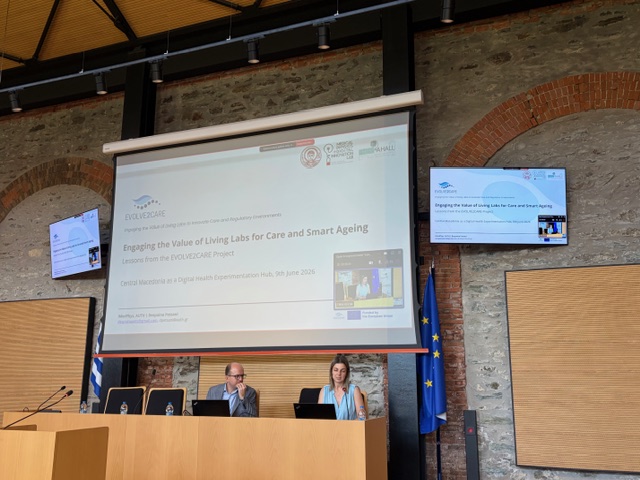
“Engaging the Value of Living Labs to Innovate Healthcare”

Chaired by Despoina Petsani (AUTH), the session brought together innovators, clinicians, researchers, and ecosystem actors to tackle a pressing HealthTech question:

How can promising digital solutions successfully transition from pilot testing to routine clinical practice?

The discussion went beyond technology development and addressed the structural realities of healthcare innovation, including regulatory complexity, GDPR compliance, interoperability limitations, integration into clinical workflows, and fragmented stakeholder collaboration.

Across contributions, Living Labs emerged as structured experimentation environments capable of reducing deployment risks while generating real-world validation.

🔗 Read the full workshop recap here.

Aligning the Next Phase of the Project

Returning to the plenary discussions, partners focused on shaping the next phase of EVOLVE2CARE.

The agenda centred on five strategic priorities:

  • Structuring the evaluation framework for mini-project experimentation
  • Aligning questionnaires and feedback tools for innovators and Living Labs
  • Strengthening AccelUP’s positioning beyond the Open Call phase
  • Expanding participation in European Commission and EIT-related events
  • Planning sustainability and exploitation activities for all project results

Key Highlights from the Discussions

  • Evaluation tools were aligned to ensure structured before/after feedback capturing both technical and market-oriented value.
  • Pricing perception and value-creation questions were integrated into experimentation surveys.
  • Complementary assessment mechanisms were coordinated to ensure systematic data collection.
  • The exploitation approach was further defined, combining questionnaire-based validation with market and competitor analysis.
  • Dissemination efforts will intensify in the “Global Outreach & Sustainability” phase, with stronger participation in European-level events, broader press outreach, and enhanced digital engagement.
  • Strategic planning began for participation in Open Living Lab Days and policy-oriented events to showcase the project’s KPI framework and experimentation insights.

Key Decisions Moving Forward

  • Mini-project evaluation will follow a structured, comparable methodology capturing both experimentation outcomes and market insights.
  • Two internal exploitation workshops will be organized. One dedicated to AccelUP positioning, and another focusing on the remaining project results.
  • Outreach efforts will prioritise European Commission–related events and EIT KIC engagement.
  • Communication efforts will intensify, with coordinated partner promotion and increased focus on subscriber growth and stakeholder engagement.

A Strategic Transition Point

The 4th Plenary Meeting marked a clear evolution for EVOLVE2CARE:

  • From Open Call recruitment to structured pilot implementation
  • From framework design to measurable evidence generation
  • From awareness-building to strategic European outreach
  • From experimentation to sustainability planning

With mini-projects underway, evaluation tools aligned, and exploitation strategy defined, EVOLVE2CARE moves forward with a clearer pathway toward scalable, validated, and ecosystem-integrated HealthTech innovation!

Bridging the Digital Health Innovation Gap – ADHW26 Workshop Recap

Organised by the EVOLVE2CARE project in the context of Athens Digital Health Week 2026, the workshop “Engaging the Value of Living Labs to Innovate Healthcare” took place on 18 February and was chaired by Despoina Petsani, Project Mission Coordinator (AUTH). The session convened innovators, researchers, and ecosystem actors to examine a pressing question in HealthTech: how can promising digital solutions successfully transition from pilot testing to routine clinical practice?

Rather than focusing solely on the generation of new technologies, the discussion addressed the structural and operational barriers that prevent digital health innovations from scaling within real healthcare environments. Speakers highlighted a persistent misalignment between technological development and clinical realities. Digital tools frequently struggle to integrate into established workflows, while regulatory complexity, GDPR compliance, interoperability limitations, and fragmented stakeholder collaboration continue to slow adoption . This creates tension between rapid technological advancement and the healthcare sector’s demand for rigorous validation and governance, often resulting in solutions that are technically robust but operationally stalled.

Spyridoula Trakaki emphasised that startups commonly face systemic barriers to market entry and underscored the importance of open innovation ecosystems in overcoming fragmentation and accelerating uptake. Complementing this perspective, Konstantina Kostopoulou, Chief Product Owner of the Healthentia App, shared practical insights into integration pain points during experimentation, particularly around stakeholder engagement and the initial reactions of clinicians and third parties to new digital tools . Her intervention reinforced the idea that adoption depends not only on technological robustness but also on early trust-building and alignment with end-user expectations.

From a service design standpoint, Thanos Loules and Ilias Rafail of IASIS AMKE explored the challenges of developing inclusive services while maintaining active citizen engagement throughout the experimentation process . They stressed that meaningful co-creation requires sustained involvement rather than superficial consultation. Dr. Angelina Kouroubali further addressed the delicate balance between thorough research and the urgency to bring solutions to market, suggesting that structured experimentation frameworks can reconcile scientific rigor with innovation speed .

Across contributions, Living Labs emerged as a strategic integration mechanism. By enabling structured testing within authentic care settings, they reduce deployment risks, strengthen collaboration among stakeholders, and generate the field-based validation required for broader adoption . Rather than positioning digital tools as external add-ons, Living Labs facilitate their evolution into embedded components of care delivery systems.

The workshop ultimately underscored that sustainable healthcare transformation depends on aligning fast-moving innovation cycles with the operational and regulatory realities of the care sector. Through open ecosystems and Living Lab methodologies, stakeholders can bridge this divide—ensuring that digital health innovations are interoperable, credible, and capable of delivering measurable value in real-world clinical settings .

EVOLVE2CARE Workshop at Athens Digital Health Week 2026

EVOLVE2CARE will participate in Athens Digital Health Week 2026 (ADHW2026) with a dedicated workshop titled:

“Engaging the Value of Living Labs to Innovate Healthcare”

📍 Royal Olympic Hotel, Athens
📅 Wednesday, 18 February 2026
🕙 10:00–11:30 | Kallirhoe Hall

About Athens Digital Health Week 2026

Taking place from 16–20 February 2026, ADHW2026 brings together leading experts, innovators, policymakers, and decision-makers to address critical challenges and showcase breakthrough advancements shaping the future of digital health across Europe and beyond.

Co-organised by IDIKA S.A., the National eHealth Authority (NeHA) of Cyprus, and HL7 Hellas, the event serves as a high-profile networking hub where European projects, governance bodies, and digital health stakeholders connect to accelerate healthcare transformation across Europe.

Workshop Overview

Digital health innovation often encounters significant barriers, including regulatory complexity, interoperability limitations, misalignment with real clinical and user needs, financial constraints, and fragmented stakeholder collaboration.

This EVOLVE2CARE workshop will explore how Living Labs and open innovation ecosystems can help address these challenges by:

  • Strengthening stakeholder engagement
  • Supporting user-centred design
  • Facilitating real-world experimentation
  • Accelerating the translation of innovation into clinical practice

The session will combine theoretical reflections with practical insights drawn from real-world experiences of innovators, clinicians, and ecosystem actors.

Panel Discussion

The workshop will feature short expert interventions from key stakeholders across the digital health ecosystem:

  • Spyridoula Trakaki, Co-Founder of Kakushin, will discuss the main challenges startups face in digital health and reflect on how open innovation ecosystems can create added value for emerging HealthTech ventures.
  • Konstantina Kostopoulou, Chief Product Owner of Healthentia App, will share practical insights on stakeholder integration challenges during experimentation and how clinicians and third parties initially responded to innovation adoption.
  • Thanos Loules & Ilias Rafail (IASIS AMKE) will explore service design challenges in health innovation and discuss how citizens can be meaningfully engaged throughout the experimentation process.
  • Dr. Angelina Kouroubali, Digital Health Expert, will address stakeholder engagement pain points and examine how innovators can balance rigorous research and validation with the urgency of bringing solutions to market.
  • Prof. Dr. Vassilis Vasilikos, Cardiologist, will provide the clinician’s perspective on innovation adoption, highlighting common barriers in clinical practice, nparticularly in cardiology, and attitudes toward integrating digital solutions into healthcare settings.

The session will conclude with an open discussion on how Living Labs can strengthen collaboration, enhance experimentation processes, and accelerate the translation of digital health innovation into sustainable real-world impact.

The workshop will be facilitated by the EVOLVE2CARE coordinator team from Aristotle University of Thessaloniki (AUTH).

🔗 Registration is required:
https://www.athensdigitalhealth.eu/registration

EVOLVE2CARE Contributes to Open Science at the ManagiDiTH Winter School 2026

EVOLVE2CARE was featured during the ManagiDiTH Winter School and Innovation Bootcamp 2026, held in Finland from 26–30 January 2026, an intensive five-day programme combining innovation, entrepreneurship, and hands-on collaboration in the field of digital health.

The Winter School brought together students, researchers, enterprises, and academic partners to explore innovative health technologies through keynote sessions, teamwork, ideation, prototyping, and final concept presentations. Activities focused on bridging academic knowledge with real-world healthcare challenges, encouraging interdisciplinary collaboration and practical experimentation.

During the programme, Aristotle University of Thessaloniki (AUTH) presented EVOLVE2CARE as a concrete example of a European HealthTech project supporting Living Lab–based experimentation and Open Science practices. The presentation highlighted how EVOLVE2CARE contributes to transparent and responsible innovation in transitional care, while actively engaging with Open Science principles.

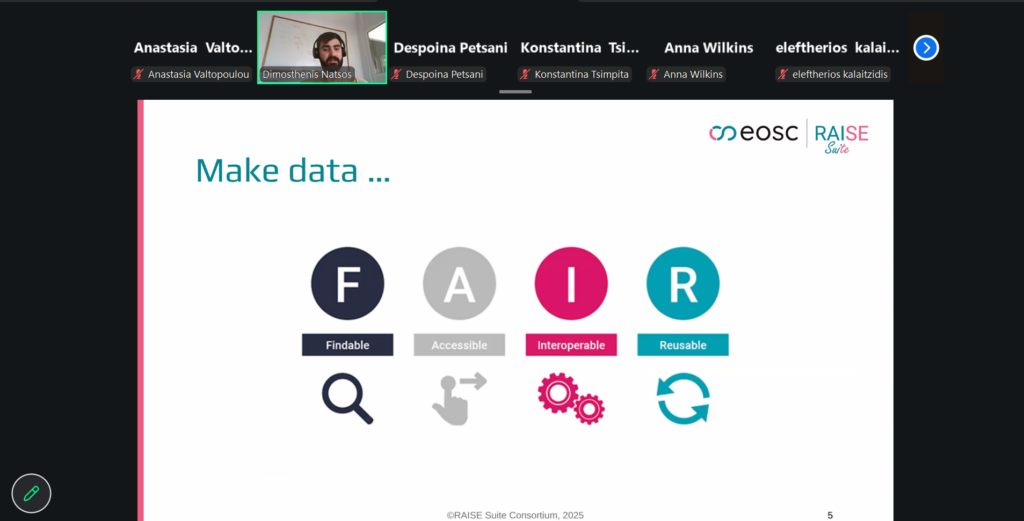
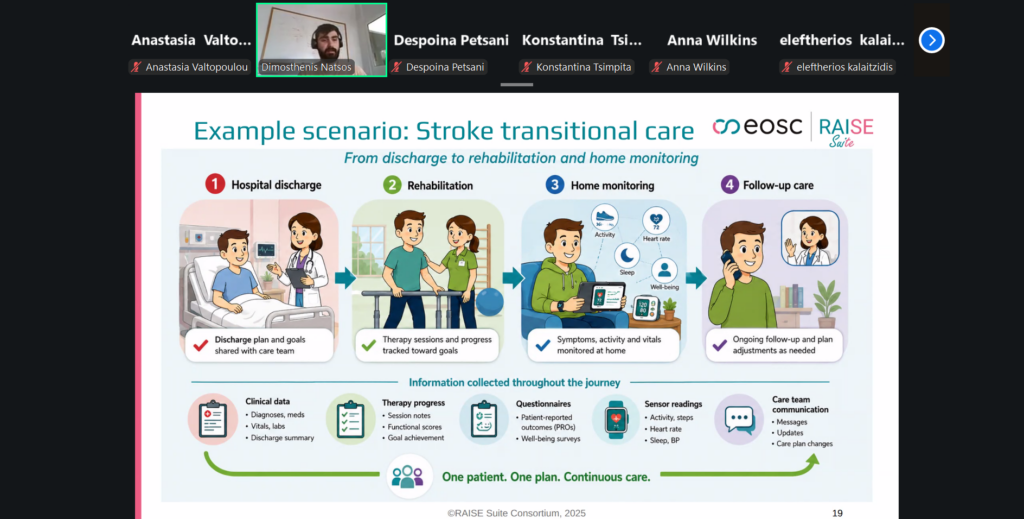
In particular, AUTH showcased the use of the RAISE platform for uploading and managing datasets generated through Living Lab activities, demonstrating how EVOLVE2CARE supports FAIR data practices and enables responsible data sharing across collaborative research environments.

Through its presence at the Winter School, EVOLVE2CARE strengthened its visibility within academic and innovation communities, while reinforcing its mission to support human-centred, data-aware HealthTech solutions that can be tested and refined in real-life settings.

EVOLVE2CARE Featured at the RAISE Final Event in Brussels

EVOLVE2CARE was featured during the RAISE Final Event – “Exploitable Results and their Impact”, held on 14 January 2026 in Brussels, as part of the midday session dedicated to the adoption of RAISE beyond project boundaries. The event brought together European research, Living Lab, and Open Science stakeholders to discuss how RAISE supports FAIR, harmonised, and transparent data use across third-party initiatives and collaborative ecosystems.

During the session, EVOLVE2CARE was presented by AUTH and ENoLL partners as a concrete example of a HealthTech project leveraging RAISE functionalities to align with Open Science and Open Data principles, particularly in the context of Living Lab activities. The presentation highlighted how EVOLVE2CARE exploits RAISE to support structured data management, facilitate collaboration between SMEs and Living Labs, and ensure FAIR handling of data generated through real-world experimentation.

The project’s contribution was positioned within a broader discussion involving Living Labs and European networks adopting RAISE to enable interoperable, trustworthy, and reusable research outputs. This visibility further reinforced EVOLVE2CARE’s role as an active adopter of EOSC-aligned tools and practices, strengthening its engagement with European Open Science infrastructures and sister EU initiatives.

One-year EVOLVE2CARE project: Highlights from the 3rd Virtual Plenary Meeting

On November 4–5, 2025, the EVOLVE2CARE consortium gathered online for its 3rd Plenary Meeting, marking a key milestone: the conclusion of the project’s first year and the transition into its second and final phase.

This two-day online meeting served as a moment of reflection and strategic alignment. Partners reviewed progress across all areas of the project, celebrated achievements, and laid the groundwork for the next steps — with a clear shift in focus from building foundations to generating impact.

Highlights from the 1st year – Building strong foundations

Over the past year, EVOLVE2CARE has made significant strides in supporting innovation in Transitional Care:

  • Overall, the project has already achieved 9 out of 19 Key Performance Indicators (KPIs) — a strong signal of momentum and engagement. Work is actively underway to reach the remaining targets.
  • The Open Call for HealthTech innovators and Living Labs to collaborate and test digital solutions for Transitional Care scenarios attracted strong interest from EU’s ecosystems.
  • Two full training programs were delivered, featuring 12 webinars designed to empower both Living Labs and HealthTech innovators and researchers. These sessions helped build capacity, foster collaboration, and share practical knowledge across Europe.
  • The Accelup platform has continued to play a central role in the project as the matchmaking space between innovators and Living Labs. During the plenary meeting, partners shared feedback and discussed improvements to enhance its usability and ensure it remains a practical and intuitive place for collaboration.

Looking ahead – From results to impact

As EVOLVE2CARE enters its second year, the focus shifts toward disseminating outcomes, engaging with EU-level events, and contributing to policy dialogues. In fact, the project΄ key aims will revolve around:

  • Disseminating the results of the Open Call, with dedicated communication efforts to highlight the selected mini-projects and their expected impact; and
  • Organizing knowledge-sharing workshops to exchange best practices and insights with stakeholders.

Throughout the meeting, partners emphasized the importance of collaboration — not only within the consortium but also with external stakeholders, regulators, and decision-makers. The project’s second year will focus on turning lessons learned into actionable strategies, supporting the scalability and sustainability of innovations in Transitional Care. EVOLVE2CARE continues to connect people, platforms, and ideas — building a future where health innovation is inclusive, evidence-based, and ready to scale.

EVOLVE2CARE at the 8th Health IT Conference 2025

On October 30–31, 2025, EVOLVE2CARE proudly participated in the 8th Health IT Conference, held at the OTE Academy Amphitheater in Athens, Greece. This year’s conference, titled “Designing the Digital Healthcare Ecosystem in the Age of AI”, brought together industry leaders, innovators, Greek national authorities, and research communities to explore how artificial intelligence, data, and modern technologies can transform healthcare and strengthen the National Health System.

EVOLVE2CARE was represented by Despoina Petsani, Project Mission Coordinator, who joined the panel discussion “Innovative Digital Solutions and Modern Health Support Tools” alongside three synergy projects: COMFORTage, IRHIS, and SEARCH. In her presentation, “EVOLVE2CARE: Leveraging the Power of Living Labs for Innovation in Transitional Health Care”, Despoina Petsani highlighted how Living Labs act as enablers of real-world experimentation and multi-stakeholder collaboration, accelerating innovation in Transitional Care.

The conference served as a dynamic platform for open dialogue and collaboration, reinforcing EVOLVE2CARE’s commitment to building a sustainable and innovative future for digital health in Europe.

By presenting its approach, EVOLVE2CARE demonstrated the value of Living Labs as catalysts for innovation in Transitional Care, bridging the gap between technology and patient needs.