Measuring impact & Evaluating success: A recap of the final training session for Living Labs

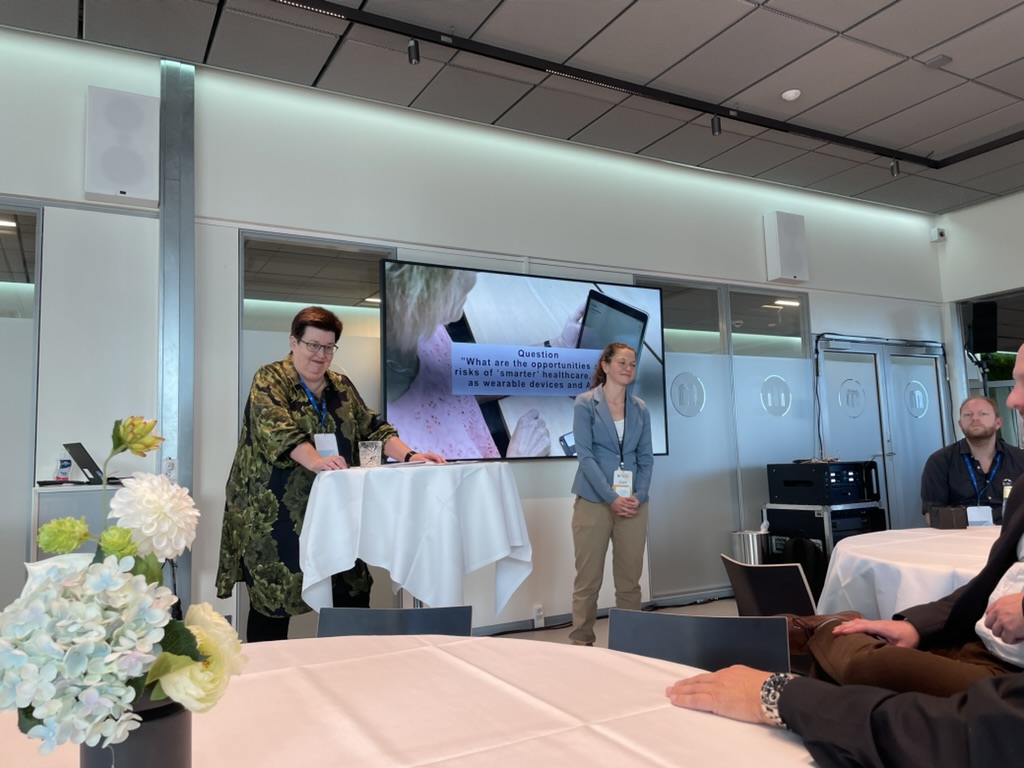
The sixth and final webinar of the EVOLVE2CARE Training Series for Living Labs took place on 19 September 2025, with a focus on measuring impact and scaling pilots. This session, titled “Measuring Impact & Evaluating Success”, was led by Prof. Dr. Dimitri Schuurman, Senior Research Strategist at the European Network of Living Labs (ENoLL).

Key takeaways from the session

Understanding Living Lab characteristics

Prof. Schuurman emphasized the core elements that define a Living Lab, which include:

  • Multi-stakeholder: Living Labs engage a diverse group of stakeholders, including researchers, businesses, governments, and end-users. This broad collaboration ensures that innovation is inclusive and relevant to all parties involved.
  • Active user involvement: Ensuring the continuous feedback of users throughout the innovation process, from idea generation to final implementation.
  • Orchestration: Orchestration refers to the strategic coordination of all actors in the Living Lab. By aligning the interests and expertise of different stakeholders, Living Labs facilitate effective collaboration and drive the innovation process forward.
  • Co-Creation: Involving all relevant stakeholders in the design and development processes.
  • Real-Life Setting: Unlike traditional laboratories, Living Labs test solutions in real environments, which increases the relevance and applicability of the results.
  • Multi-Method Approach: Each Living Lab adapts its methods based on the problem and stakeholders involved, blending exploratory and confirmatory approaches.

Impact Models and Measuring Outcomes

One of the central frameworks discussed during the session was the Impact Model. This model is essential for understanding how to track the effectiveness of Living Labs over time. It incorporates the Theory of Change, which categorizes results into:

  • Input: Resources and efforts that go into the project.
  • Process: The activities and interactions that drive the project forward.
  • Output (Short-Term): Direct deliverables and tangible results produced immediately after implementation.
  • Outcome (Medium-Term): The effects of those outputs on the targeted stakeholders or systems.
  • Impact (Long-Term): The ultimate, lasting change or influence of the project, contributing to broader societal goals.

This model helps Living Labs track not just the immediate outputs, but also the long-term impacts, offering a roadmap for continuous improvement.


Living Lab Assessment Method


To effectively evaluate the impact of Living Lab projects, the Living Lab Assessment Method was introduced. It is designed to measure the effectiveness across six key areas:

  • Skill Capacity Enhancement
  • Instrumental Capacity Enhancement
  • Network Capacity Enhancement
  • Knowledge Capacity Enhancement
  • Agenda Setting
  • Real Solution Generation

These indicators are critical for understanding how well a Living Lab is contributing to innovation and systemic change in its targeted sector.
A heartfelt thank you to all participants who joined us for the six-part EVOLVE2CARE Training Program for Living Labs led by ENoLL from June to September 2025. Your engagement and contributions made this series a great success. In the coming weeks, all the session recordings will be made available at the ENoLL Living Labbers Academy, so you can revisit the valuable insights shared throughout the program. We look forward to continuing the journey of innovation with you!

Measuring impact & scaling pilots — Highlights from the last session for Innovators & Researchers

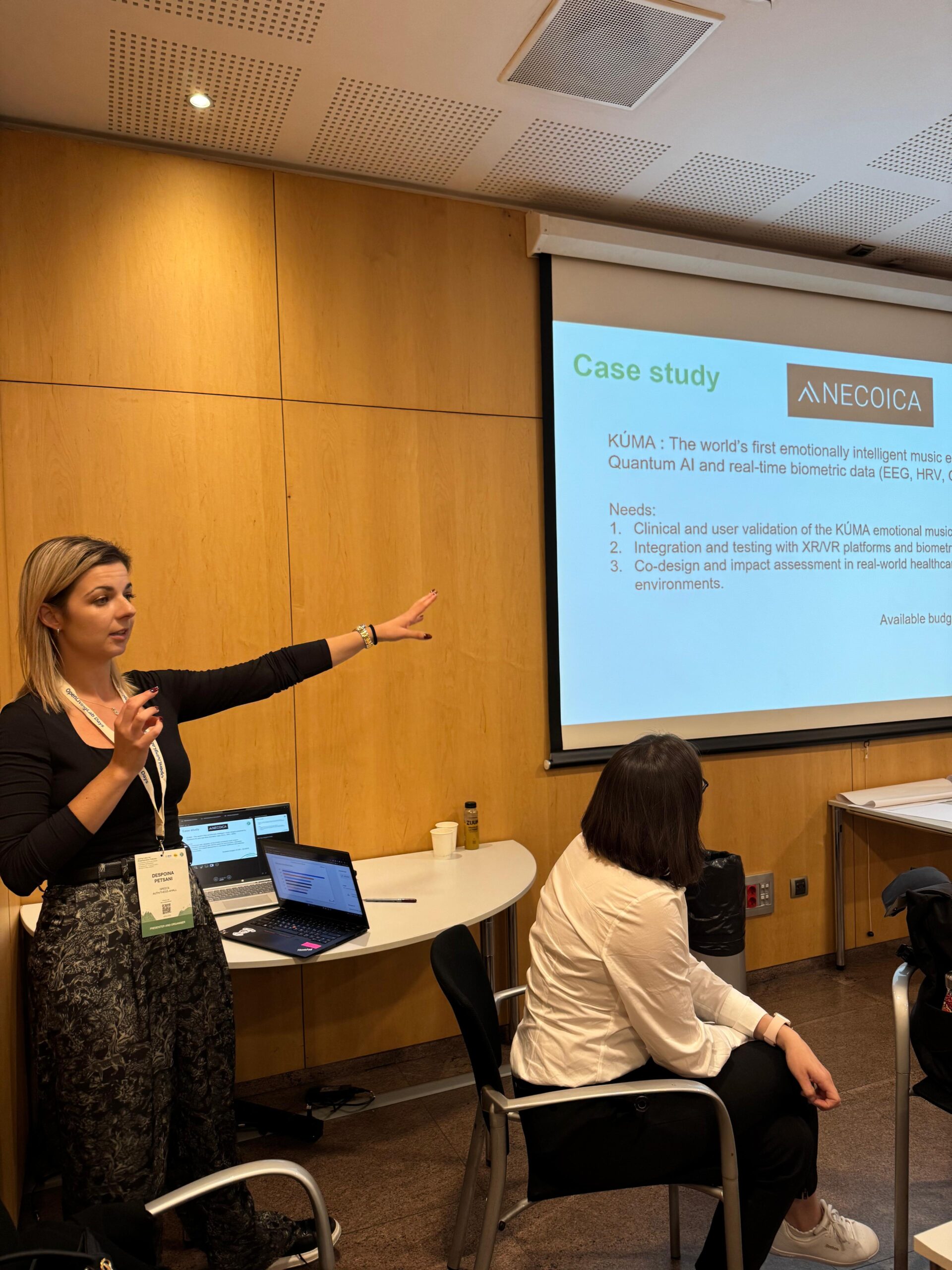
The final session of the EVOLVE2CARE Training Series for HealthTech Innovators and Researchers was held on 19 September 2025, bringing the six-part journey to a close with a focus on how to measure meaningful outcomes and scale innovation with purpose. The session, titled “Measuring Impact & Scaling Pilots — Driving Evidence-Based Growth in Living Labs,” was led by Despoina Petsani, Project Manager at ThessAHALL – Thessaloniki Action for HeAlth & Wellbeing Living Lab.

Drawing from practical experience and Living Lab methodology, the session guided participants through the mindset and tools needed to move from small-scale pilot projects to real, system-level change.

From activities to outcomes

Despoina Petsani opened with a key challenge in innovation evaluation: many projects focus on reporting what they did (outputs), rather than what they achieved (outcomes). For example, counting users reached is not the same as understanding whether user behavior or well-being improved. To build real impact, innovators must start with clear goals and plan for measurable change from the beginning.

Planning for impact from day one

Participants were encouraged to define 2–3 priority outcomes before launching a pilot. These should be tied to the needs of users and stakeholders. The use of SMART indicators—Specific, Measurable, Achievable, Relevant, and Time-bound—was recommended to track progress clearly and objectively.

How to evaluate a pilot

Effective evaluation goes beyond proving that something worked. It explores how, why, and for whom it worked. Despoina presented a step-by-step evaluation framework that includes:

Defining pilot objectives (What are you trying to learn or prove?)
Set evaluation questions (e.g., Does this tool improve patient engagement in rural clinics?
Set evaluation questions (Who are your users? Where and how long will the pilot run?)
Set evaluation questions (Understand the “before” to measure the “after”)
Ethics and Privacy (Data protection, informed consent – especially in health and education sectors)

A mixed-methods approach was strongly recommended, blending quantitative and qualitative tools to provide both scale and depth.

Scaling pilots responsibly

Scaling isn’t simply about growing bigger—it’s about expanding what works, in ways that fit new contexts. Before scaling, a solution should show strong user feedback, positive outcomes, operational readiness, and a clear value proposition.

Three paths to scale were introduced:

  • Replication – Apply the same model in a similar setting – High control, but limited adaptability
  • Adaptation – Tailor to different user needs/settings – Maintain core principles, flex where needed
  • Dissemination – Spread knowledge, frameworks, and tools – Enable others to replicate/adapt independently
  • The instructor also emphasized the importance of partnerships, technology infrastructure, business model and policy and systems alignment.

Final reflections

The session closed with a strong message: evidence is essential for impact. It builds trust, informs decisions, and enables scale. Living Labs and innovators must embed evaluation early and treat it not just as a reporting tool, but as a driver of learning and growth.

What makes a Living Lab official? Highlights from the 5th webinar

On September 10, 2025, the EVOLVE2CARE Training Series for Living Labs continued with its fifth session, focusing on one of the most defining aspects of Living Labs: certification and standardization. Delivered by Gabriella Quaranta and Alessandra Tricarico of the European Network of Living Labs (ENoLL), the session unpacked not only the why of certification, but also the how—from evaluation frameworks and tools, to good practices and lessons learned.

Why certification matters

As Gabriella Quaranta explained, ENoLL certification for Living Labs is widely regarded as a global standard for user-driven innovation, reflecting a structural and methodological assessment of their maturity as an innovation ecosystem.

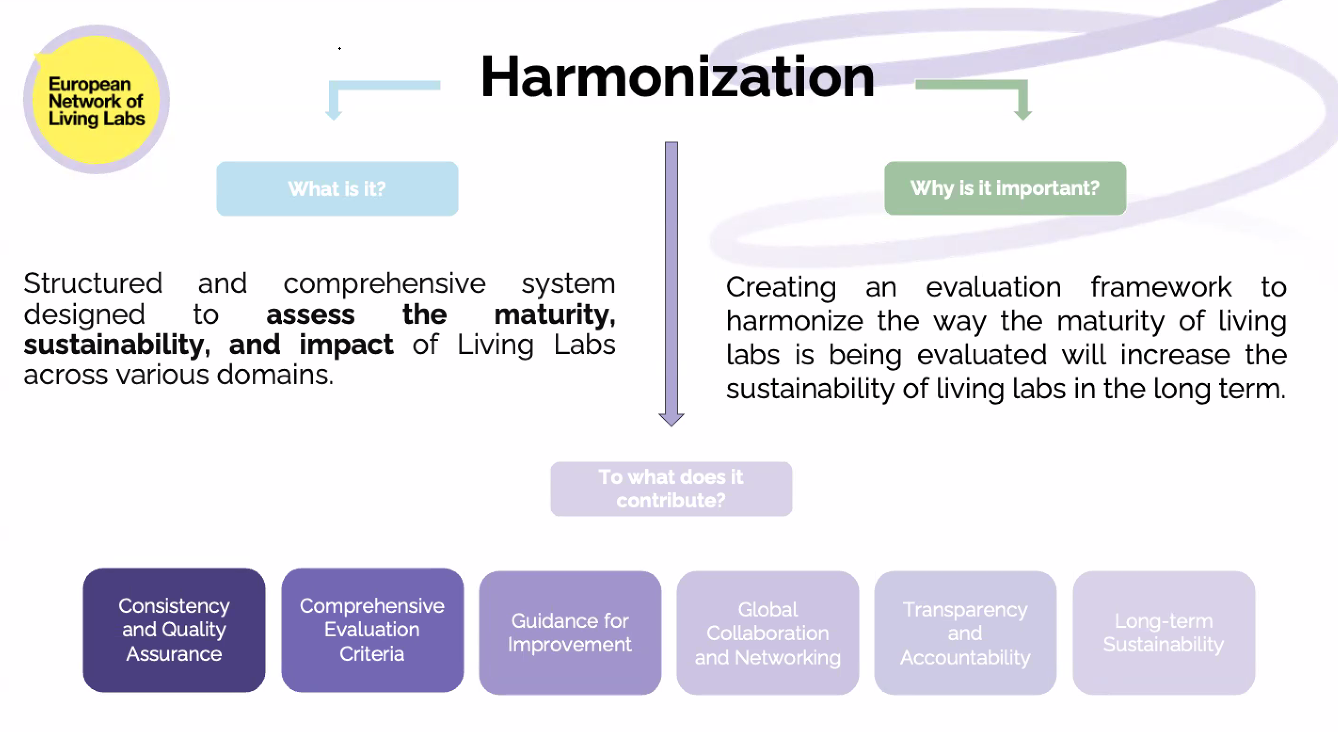
Harmonization: What is it?

A central theme of the session was harmonization. Gabriella Quaranta highlighted that ENoLL has developed a structured and comprehensive system to assess the maturity, sustainability, and impact of Living Labs. By harmonizing evaluations, ENoLL ensures consistency and quality assurance, while also providing guidance for improvement, enabling global collaboration, transparency, and accountability, and strengthening long-term sustainability.

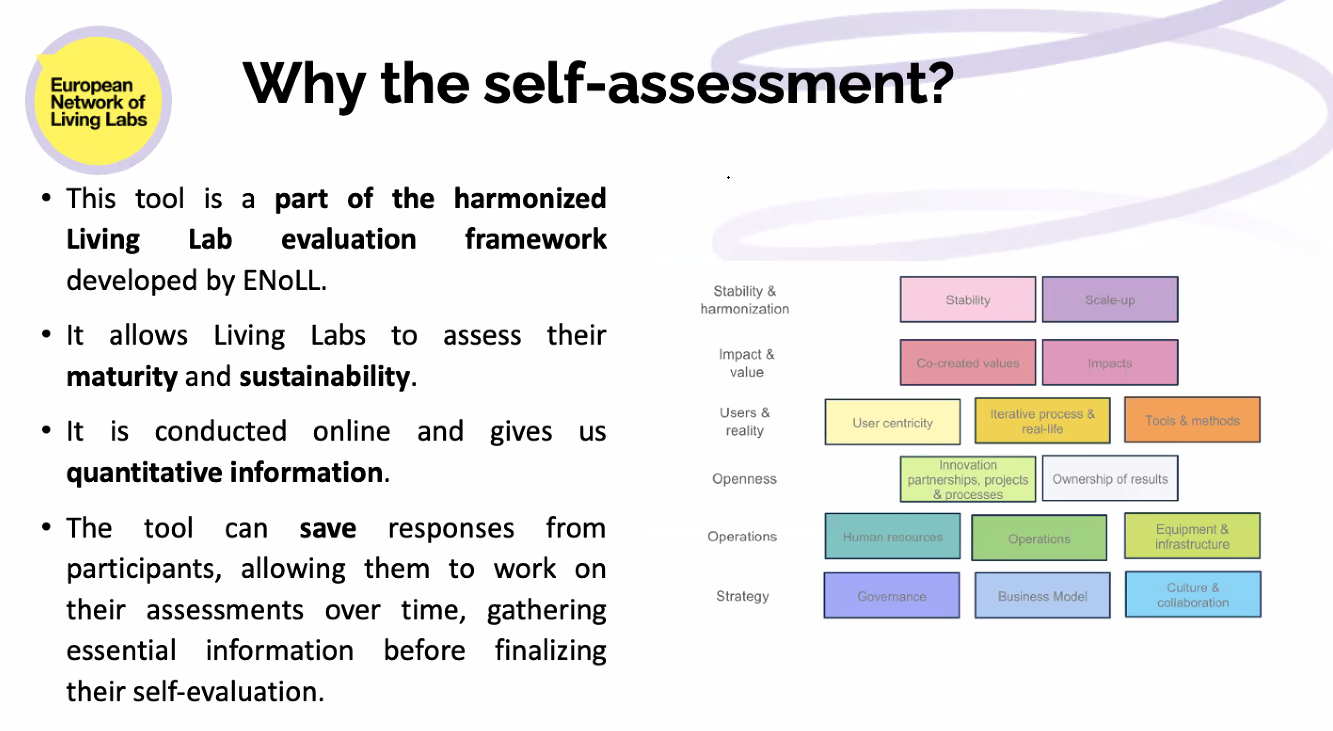
This harmonized evaluation framework is built around six evaluation chapters, covering:

  • Strategy: Examines macro-level issues such as multi-stakeholder participation, the orchestration role of the Living Lab, collaboration strategies, and its overall business model.
  • Users & reality: Looks at collaboration with users, levels of engagement, and participation, with emphasis on iterative processes in real-life contexts and the correct use of tools and methods.
  • Operations: Evaluates how a Living Lab manages its operations, including infrastructure, equipment, and human resources.
  • Openness: Reviews the openness of processes, partnerships, and projects, as well as practices for feedback and intellectual property protection.
  • Value & Impact: Focuses on the development of co-created values and the identification of impact clusters generated by the Living Lab for its stakeholders.
  • Stability & Scale-up: Assesses financial and organizational stability, long-term sustainability, and the replication of strategies and practices across ecosystems.

Together, these chapters translate into 15 evaluation criteria, forming the backbone of certification.
Tools for Evaluation: Self-assessment and qualitative application

Certification is supported by two complementary tools, as Alessandra Tricarico pointed:

Self-Assessment Tool: A quantitative instrument that allows Livin Labs to assess their maturity and sustainability and following that gives them a customized evaluation report.

Qualitative Application Form: A narrative-based tool where applicants describe governance structures, business plans, internal and external communication, human resources, projects, available equipment and infrastructure, innovation partnerships and processes, and ownership of results. It is limited to 20 pages (plus annexes) and allows supplementary materials. Here, evaluators look not only at facts but also at the story of the Living Lab’s vision and practice.

By combining these two, certification captures both hard data and contextual insights, ensuring fairness, depth, and comparability.

Tips & good practices

To help applicants succeed, the speakers shared practical advice drawn from years of experience evaluating Living Labs:

  • Spend enough time preparing a proper assessment and compiling all supporting material.
  • Start working in advance, avoiding last-minute submissions.
  • In the qualitative application form, answer each question, keep responses to one page (excluding visuals), and ensure all documents are in English.
  • Provide a clear explanation of governance structures.
  • Prepare a business plan that transparently presents future strategies.
  • Detail human resources, specifying who is involved, in what roles, and with what expertise.
  • Describe equipment and infrastructure, emphasizing availability and access.
  • Highlight collaboration strategies, showing how diverse stakeholders are engaged beyond single-project contexts.

These tips underscored the importance of thoroughness, clarity, and forward-looking planning in the application process
What’s next?

The EVOLVE2CARE Training Series will conclude with its final webinar: “Measuring Impact & Evaluating Success” on September 24, 2025, at 15:00 CEST. This closing session will guide participants in defining key performance indicators (KPIs), assessing service design, and measuring the broader impact of Living Lab activities.

Accelup in focus | Interview with the Project Coordination team of EVOLVE2CARE

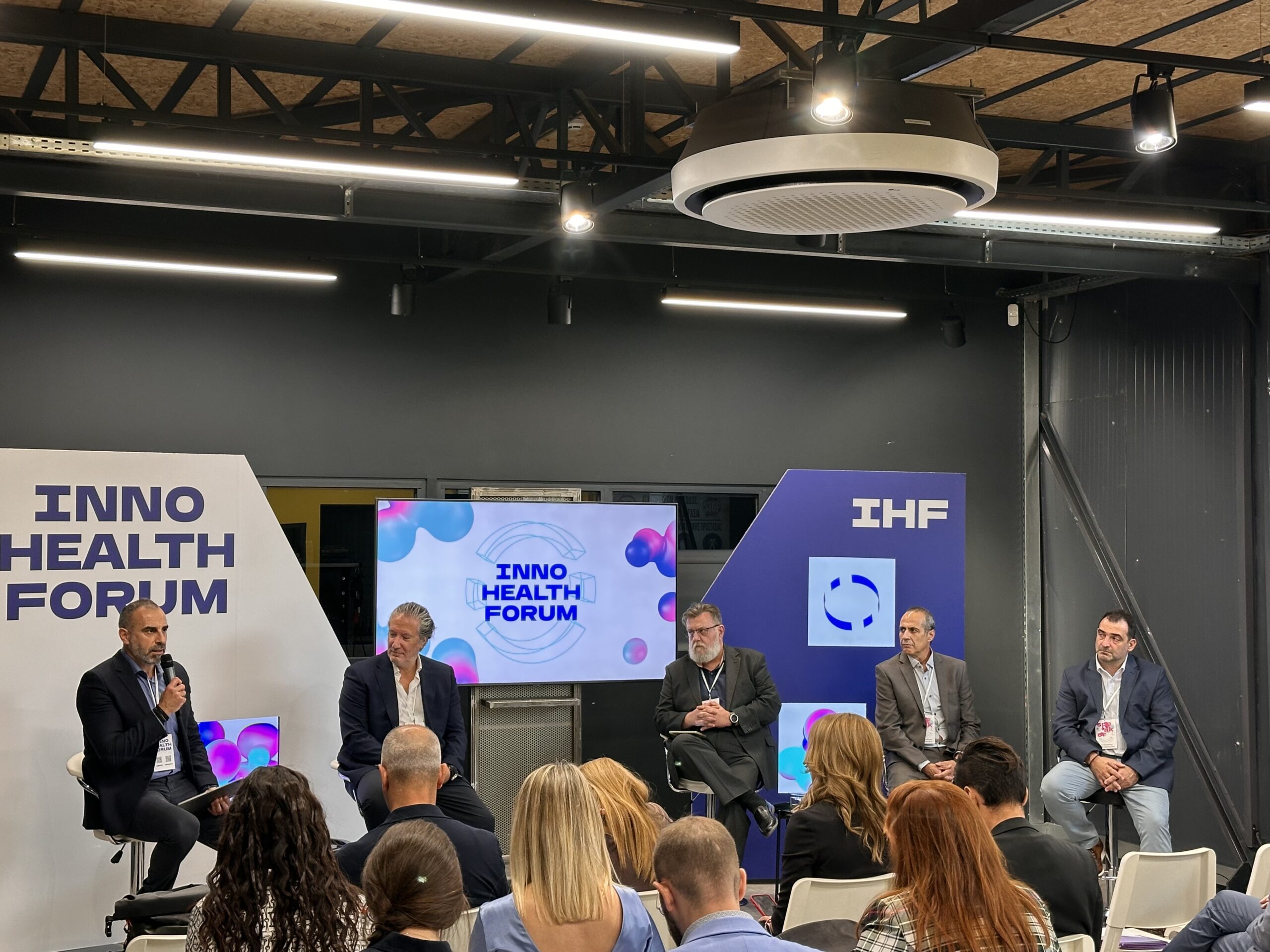
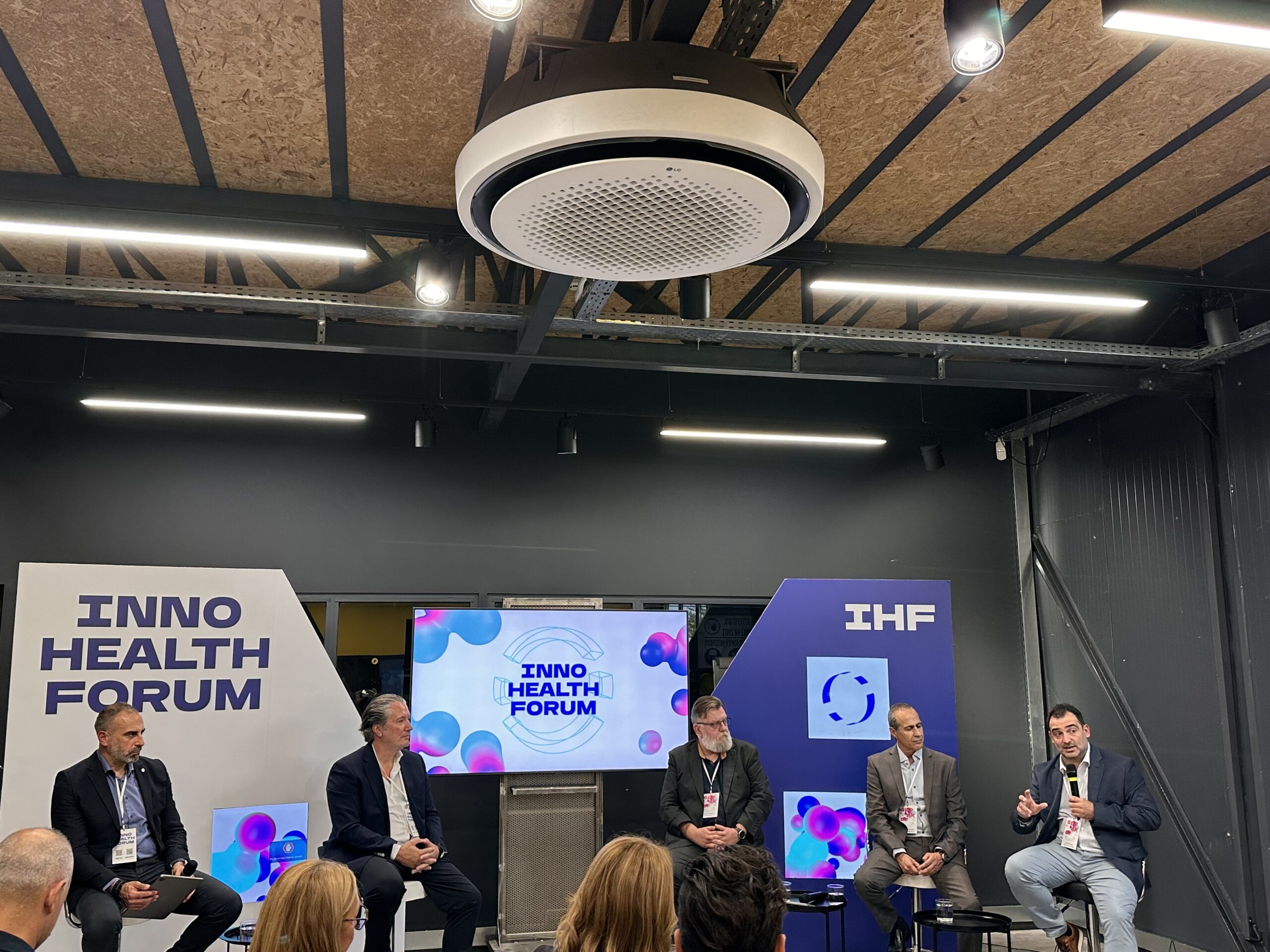
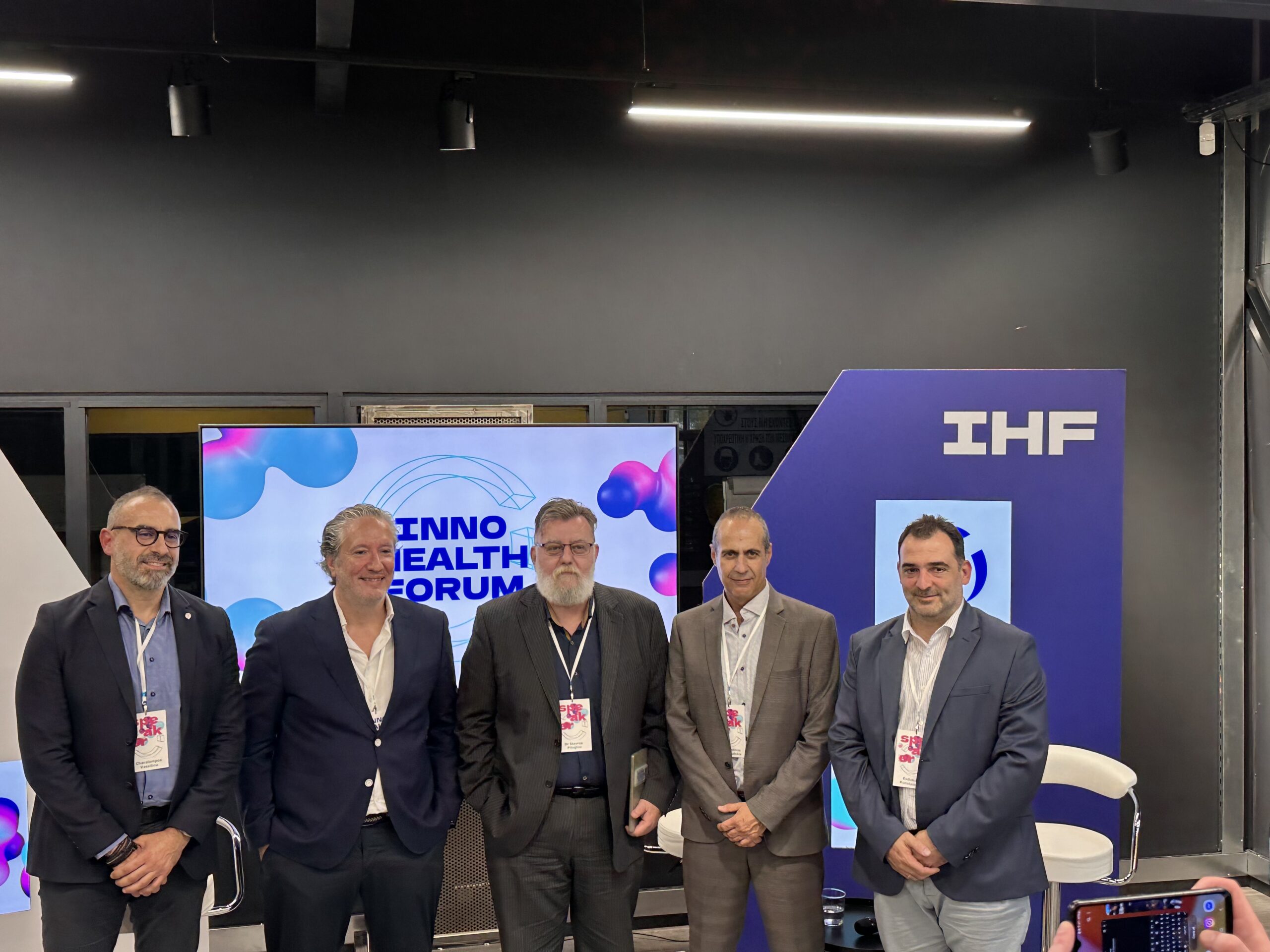
As the EVOLVE2CARE Open Call continues to welcome applications from HealthTech innovators across Europe in order to matchmaking with Health and Wellbeing Living Labs and test their digital HealthTech solutions, one platform stands at the heart of the collaboration process: Accelup. Designed to streamline matchmaking, Accelup ensures that project proposals meet the right expertise, infrastructure, and support. In this interview, Evdokimos Konstantinidis, Project Coordinator, and Despoina Petsani, Project Mission Coordinator, share how Accelup works, what makes it unique, and why it’s a key enabler for co-creation and real-world validation in the EVOLVE2CARE ecosystem.

Read on to discover how Accelup is shaping collaboration in EVOLVE2CARE:

1. What is the Accelup platform, and how does it help innovators and Living Labs collaborate more effectively?

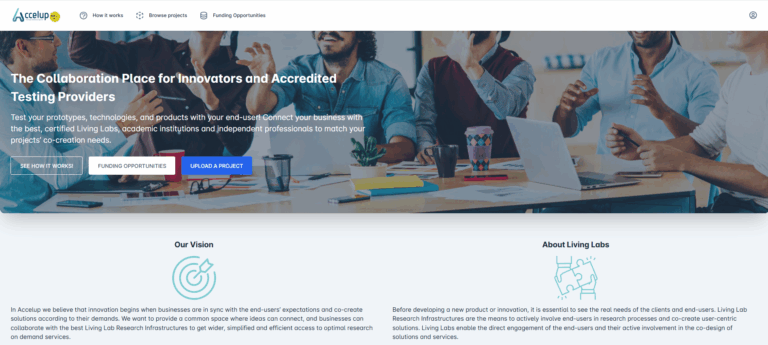
The Accelup platform is a digital matchmaking platform designed to connect innovators with Living Lab infrastructures. The platform offers the possibility for the innovator to upload a specific project specifying the services that would be required for its completion. For the design of the platform, a continuous assessment of stakeholder needs, existing tools and frameworks has been conducted, ensuring improved efficiency for the collaboration of the two parties.

2. How is it used within the EVOLVE2CARE project?

Within the EVOLVE2CARE project, the primary objective is to facilitate matchmaking between Health Tech companies and Living Labs. Rather than requiring innovators to independently identify a suitable Living Lab, Accelup facilitates improved communication and ensures that the matching process is streamlined, thereby relieving innovators of the need to undertake this task on their own. Therefore, it is designed to bring users with diverse research on demand needs together with Living Labs to co-develop, validate, and test innovative HealthTech solutions in real-life conditions.

3. Please give us a simple overview of how Accelup works.
Accelup enables innovators to create projects by submitting key details such as title, description, services required, budget range, and bid. ENoLL Certified Living Labs can then browse these projects, review the information provided, and submit bids with the required amount to perform the project, creating a structured and transparent matchmaking process.
4. Are there other platforms that aim to connect innovators with Living Labs? If so, what makes Accelup stand out in this space?

Yes, there are some other matchmaking tools that can be used in a similar way as Accelup. Such tools involve both digital and methodological approaches that facilitate the matchmaking process. However, Accelup’s mission is to enable transparent and effective matchmaking between innovators and Living Labs. Accelup is the only platform that gives the opportunity to innovators to get in contact with ENoLL Certified Living Labs that can facilitate their work. ENoLL certification provides a quality seal so that the innovators know that they will receive high-quality Living Lab services.

5. And finally, how is Accelup currently supporting the EVOLVE2CARE Open Call?

Accelup is the main form of connection of the two parties, with the innovator being given the opportunity to select a desired Living Lab. EVOLVE2CARE supports the collaboration by providing €5,000 to the selected Living Lab to perform the work that the innovator requested.

Ready to take the next step?

If you’re a HealthTech innovator looking to validate your solution or a Living Lab eager to collaborate on cutting-edge projects, join the EVOLVE2CARE Open Call and experience the power of Accelup matchmaking.

How HealthTech innovators can fundraise with confidence

The fifth session of the EVOLVE2CARE Training Series for HealthTech Innovators and Researchers took place on 4 September 2025, delivering a deep and practical dive into the realities of startup fundraising. Led by Adriane Thrash, the session “Fundraising & Pitching: An Investor’s Guide” offered a no-nonsense guide to what investors actually look for—and how innovators can meet those expectations with clarity, strategy, and confidence.

One of the core themes of the session was understanding the different types of investors and what each brings to the table. Adriane Thrash broke down the key categories:

  • Angel Investors: Often the first to believe in a startup, angel investors typically invest at early stages. They are usually more flexible and founder-friendly but offer limited capital and may not always bring sector-specific expertise.
  • Venture Capitalists (VCs): VCs look for high-growth potential and scalability. They expect aggressive expansion, clear exit strategies, and strong returns. Their involvement often comes with structured oversight and performance expectations.
  • Corporate Investors: These investors seek strategic alignment with their own business goals. They may offer more than capital—such as access to distribution channels, technical resources, or regulatory support—but their priorities may shift based on internal strategy.
  • Impact Investors: Focused on measurable social or health outcomes alongside financial returns, impact investors are particularly relevant in HealthTech. They value mission-driven innovation and often require robust impact metrics.
  • Public funding sources: These include grants, subsidies, and innovation programs from national or EU-level institutions. While non-dilutive and mission-aligned, public funding often comes with strict eligibility criteria, reporting obligations, and longer timelines. Innovators must be prepared to demonstrate societal value, policy alignment, and long-term sustainability.

Choosing the right type of investor is as important as securing the funding itself.

Fundraising is a strategy, not serendipity

Adriane Thrash emphasized that fundraising is not about luck or charm—it’s about building a strategic plan that aligns with your startup’s stage, goals, and long-term vision. Innovators must understand their business fundamentals and be able to communicate them effectively.

Know your numbers — and your market

Investors want facts. That means knowing your TAM (Total Addressable Market), SAM (Serviceable Addressable Market), SOM (Serviceable Obtainable Market), your projected growth, your burn rate, and your financial runway. 

Transparency builds trust

One of the most important lessons: don’t hide problems. Investors are not deterred by challenges—they’re deterred by surprises. Be upfront about risks, gaps, and what you’re still figuring out. A founder who can clearly articulate both strengths and weaknesses earns credibility.

Pitching is communication

A strong pitch is built on clarity, confidence, and relevance. Adriane Thrash encouraged innovators to focus on storytelling—connecting the problem, solution, team, and market in a way that resonates. Avoid jargon, be concise, and tailor your message to the investor’s perspective.

Prepare for due diligence

Fundraising doesn’t end with the pitch. Adriane Thrash highlighted the importance of being ready for due diligence—the process where investors validate your claims, assess risks, and examine your operations. Innovators should have their data room organized, with financials, legal documents, team bios, and product details ready to share.

What’s next?

The final session of the EVOLVE2CARE Training Series for HealthTech Innovators and Researchers, titled “Measuring Impact & Scaling Pilots — Driving Evidence-Based Growth in Living Labs,” will take place on 19 September 2025 at 15:00 CEST. It will focus on helping innovators define success through SMART metrics, design effective pilot evaluations, and use data to demonstrate real-world impact. Led by Despoina Petsani, ThessAHALL Project Manager at AUTH, the session will guide participants in generating the kind of evidence that funders, policymakers, and partners require to support and scale innovation.

Communication as the engine of innovation in Living Labs

The fourth session of the “Trainings on Service Design for Living Labs,” held on September 3, 2025, focused on building innovation networks and engaging stakeholders in meaningful ways. Titled “Building Innovation Networks: Communication and Engagement”, the webinar brought together four speakers who shared practical cases, conceptual frameworks, and tools for stakeholder engagement within Living Lab ecosystems.

Clara Garcia Blanch, Pilot Test Manager at the Social Digital Lab (Suara), opened the session with practical reflections on identifying and engaging stakeholders in co-creation processes. She stressed that while visible actors are crucial, hidden stakeholders often influence project outcomes in unexpected ways. Drawing from her experience, she underlined the importance of mapping, listening, and uncovering less obvious contributors in order to design inclusive and sustainable innovations.

Leen Broeckx, Panel Manager at LiCalab, presented how her organization structures stakeholder engagement in health and care innovation. LiCalab operates test environments involving citizens and care professionals, drawn from its own database, in real-life settings, and works in close collaboration with hospitals, residential care centres, and home care services. Leen explained how their stakeholders are categorized into internal and external, how their stakeholder analysis uses approaches such as power/interest grids to position actors and design suitable engagement activities. She described the identifying needs process, which includes workshops, expert interviews, and inspiration sessions. As an example, she presented the “Orion” dementia care case, where staff and users tested smart technologies such as bed sensors and smart lamps.

Marta I. De Los Ríos White, representing the European Network of Living Labs (ENoLL), provided the theoretical foundation for stakeholder engagement. She defined categories such as internal vs. external, primary vs. secondary, and direct vs. indirect stakeholders, while clarifying distinctions between stakeholders, users, and customers. Marta also highlighted the role of the Quadruple Helix Model, which positions the public sector, businesses, education and research, and civil society as central actors.

The instructor also shared practical tips and tricks for effective communication with stakeholders:

  • Be transparent: Clear communication builds trust and credibility.
  • Be adaptable: Be prepared to adjust communication strategies as projects evolve and stakeholder needs shift.
  • Ensure accessibility: Consider potential language barriers and disabilities by developing inclusive strategies.
  • Aim for two-way communication: Establish mechanisms for feedback and input rather than one-way dissemination.
  • Be present and responsive: Actively listen to stakeholder concerns, questions, and suggestions, and respond promptly.

Finally, she explained why citizens are essential stakeholders, because they:

  • Align the community’s projects with real local needs
  • Secure people’s long-term support to the community
  • Ensure social acceptance
  • Ensure transparency and accountability in decision-making and community operations
  • Empower people to make informed decisions
  • Boost innovation and creativity, bringing fresh ideas and solutions
  • Stimulate economic benefits for the people, such as job creation within the community

Concluding the session, the focus shifted to the Thessaloniki Active and Healthy Ageing Living Lab (Thess-AHALL), presented by Despoina Petsani, Research Associate at the AUTH Medical Physics and Digital Innovation Lab, showcasing how long-term citizen engagement and structured tools can transform a Living Lab into a robust innovation ecosystem. Despoina presented outcomes from projects such as Long Lasting Memories, showing impacts in cognitive and physical training. She also showcased practical tools: Accelup, a collaboration platform for innovators and Living Labs; PaneLab, a panel management platform; and a methodological guide (partners of experience) for citizen involvement. Thess-AHALL’s work demonstrates how trust, continuity, and structured tools help Living Labs evolve into strong innovation ecosystems.

What's next?

The training series will continue with its fifth session on Certification & Standardization of Living Labs, taking place on September 10, 2025, at 15:00 CEST. This upcoming webinar will explore the essential requirements for certification, the benefits of achieving it, and the international recognition it brings to Living Labs.

Responsible innovation: Legal & Ethical Essentials for Living Labs

The third session of the EVOLVE2CARE Living Labs Training Series took place on August 27, 2025, and focused on a critical yet often overlooked dimension of innovation: legal, ethical, and regulatory frameworks. As Living Labs operate in real-world environments with real users, understanding these frameworks is essential to ensure responsible, inclusive, and sustainable innovation.

The session featured two distinguished experts—Maria Iakovidou, Attorney at Law at the Supreme Court of Greece, LLM in Civil Procedure Law, MSc in Law & Informatics, Data Protection Officer (DPO), who opened the discussion with a legal deep dive into GDPR, consent, and intellectual property; and Dr. Abdolrasoul (Rasoul) Habibipour, Director of Botnia Living Lab and Associate Professor in Information Systems at Luleå University of Technology, who followed with practical insights on embedding ethics into Living Lab design through real-world case studies.

Legal Essentials for Living Labs

Maria Iakovidou opened the session with a comprehensive legal roadmap for Living Labs, covering:

Data Protection & GDPR

Living Labs often collect personal data through sensors, wearables, interviews, and digital platforms. Maria Iakovidou emphasized that GDPR applies whenever data relates to an identifiable person, and outlined the six core principles of lawful processing: lawfulness, purpose limitation, data minimization, accuracy, storage limitation, and confidentiality.

Informed Consent in Real-Life Settings

Consent, Maria Iakovidou explained, must be freely given in advance, specific, informed, and unambiguous—and must be obtained before any data is collected. In Living Labs, where testing often occurs in public or semi-public spaces, this becomes especially complex. She highlighted red flags such as bundled consent, lack of withdrawal options, and overly technical language.

She also addressed the documentation of consent, stressing the need for signed forms or digital tools, and the importance of making it easy for participants to say both “yes” and “no.”

Intellectual Property (IP)

Living Labs frequently co-create innovations with startups, researchers, and citizens. Maria Iakovidou urged participants to clarify IP ownership and licensing terms early, distinguishing between background and foreground IP. She recommended involving legal advisors in drafting collaboration agreements and defining usage rights to avoid disputes later.

Liability & Risk in experimentation and pilot phases

From allergic reactions to data breaches, Living Labs face real risks. Maria advised teams to assess risks before deployment, include insurance and liability clauses, and clearly define responsibilities in case of harm or failure.

Living Lab & Ethics

Dr. Abdolrasoul Habibipour presented a structured approach to integrating ethical and legal considerations into Living Lab design. He explored key principles such as stakeholder engagement, transparency, and real-life experimentation. He illustrated their application through case studies from EU projects like SynAir-G and U4IoT, highlighting practical strategies for managing consent, data protection, IP rights, and liability.

Real-World Case Studies

SynAir-G

This EU project co-developed air quality monitoring tools with children in schools. The ethical challenges were significant: children are a vulnerable group under GDPR, and the app collected sensitive data like health status and GPS location. Dr. Abdolrasoul Habibipour shared how the team addressed these issues through dual consent (parents + children), age-appropriate explanations, and national ethics approvals.

U4IoT

This case supported large-scale IoT pilots in domains like smart cities and healthcare. It uncovered common pitfalls: biometric data collected without explanation, lack of signage in public testing, and unclear data ownership. The team responded by developing GDPR toolkits, user dashboards to increase transparency, and promoting Data Protection Impact Assessments.

Practical Tools & Red Flags

Abdolrasoul Habibipour introduced a Living Lab Ethics Checklist covering seven key areas: data protection (GDPR), informed consent, IP, risk and liability, inclusion and vulnerability, transparency and communication, and ethics integration in design. He encouraged teams to use this checklist at every stage—from kickoff to pilot launch—and to normalize ethical reflection in team meetings.

What’s next?

The Living Labs Training Series continues with the fourth session: “Building Innovation Networks: Communication and Engagement”, taking place on September 3, 2025, at 15:00 CEST. This session will focus on the importance of building strong innovation networks and effective stakeholder engagement within Living Labs. Participants will learn how to engage stakeholders in service design, with a particular focus on the Accelup platform. 

Stay tuned—and remember, attending at least 4 out of 6 sessions earns you a Certificate of Attendance from the EVOLVE2CARE project!

Smarter Matchmaking in HealthTech Innovation – Methodological Approaches

While digital tools outlined in the previous blog provide speed and scalability, certain methodological approaches/processes, frameworks and best practices can ensure that the matchmaking system yields effective results. These approaches concern what data to collect, how to structure it, and how humans can facilitate the match process. Methodologies can be just as important as technology: a fancy algorithm will underperform if profiles are poorly defined, and conversely, a simple tool can excel if guided by a solid methodology!

As outlined in the latest project deliverable D1.3 – EVOLVE2CARE Action Plan, effective matchmaking relies on structured data, active engagement, and co-creation practices that make partnerships sustainable and impactful.

Structured profile frameworks and taxonomies

A fundamental step is defining what information innovators and Living Labs should provide to enable meaningful matches. Structured profiling means having well-defined fields and classification systems that capture the relevant attributes of each side.

  • Living Lab Information: Clearly describe services and capabilities using standardized frameworks.
  • Innovator Information: Include project details, target users, stage (e.g., prototype), and specific requirements (e.g., access to patients or regulatory advice).
  • Rating and Compatibility Scores: Profiles are scored on key factors such as project stage, domain match, and size to recommend the best matches.
  • Data Quality and Verification: Regular updates ensure accuracy; verification processes prevent mismatches.
  • Use of Structured Fields in Application Process: Shifting from free-text descriptions to dropdowns and tags improves matching, transparency, and fairness, with stakeholder input ensuring fields capture what truly matters.

Co-Creation and Engagement Methods in Matchmaking

Applying the principles of co-creation and user engagement to the matchmaking process can be beneficial. Methodologically, this means treating matchmaking not just as a database query, but as a collaborative journey where innovators and Living Labs actively engage to find a fit.

  • Moderated Matchmaking by Facilitators: Innovation brokers help bridge public and private sectors, review profiles, propose matches, and provide introductions, improving early-stage or critical pairings.
  • Case Studies and Best-Practice Sharing: Sharing examples of successful collaborations guides users in selecting the right partners.
  • KPI Framework for Matchmaking: Metrics such as successful matches, time to project start, user satisfaction, and match diversity allow continuous improvement.

By combining structured data, co-creation, and user engagement, Accelup’s methodological approaches ensure that the matchmaking process is transparent, fair, and of high quality. These approaches, along with the digital tools discussed earlier, make Accelup a comprehensive platform for fostering successful HealthTech collaborations. Together, the digital and methodological elements ensure that Accelup not only accelerates the matchmaking process but also guarantees that these connections create lasting, impactful partnerships.

Smarter Matchmaking in HealthTech Innovation – Digital Approaches

In healthcare innovation, getting the right collaborators is essential for success, and this is the actual goal for the EVOLVE2CARE project as a whole! In order to bring this into life, the project utilises the Accelup platform, a product of ENoLL that provides an online space for wider, simplified, and more efficient access to the best Living Lab infrastructures and their research on demand services. As outlined in one of the latest public deliverables of the project, the D1.3 – EVOLVE2CARE Action Plan, the Accelup platform adds value by accurately profiling both innovators and Living Labs to create the most suitable partnerships.

To further enhance the Accelup matchmaking capabilities, the EVOLVE2CARE team has compiled an inventory of existing tools, surveying digital platforms and methodological frameworks that support similar processes—focusing on European examples and notable global initiatives. This blog highlights the most prominent digital functions used for effective and transparent matchmaking, knowledge exchange, and collaboration.

Digital approaches to innovator-Living Lab matchmaking

Digital approaches are categorized in D1.3 EVOLVE2CARE Action Plan into three groups: lightweight plug-ins, APIs & integrations, and AI-based recommendation systems.

Lightweight Plug-ins and Modular Tools:

Lightweight plug-ins add matchmaking features to existing platforms without building complex systems. They use structured profile data and simple algorithms, such as tag matching or rule-based filtering.

  1. Tag-Based Matching Modules: Use tags to identify shared interests or needs. The goal is to deliver “personalized connections” by filtering the community’s profiles to find resonant matches for each user.
  2. Profile Search and Filters as Plug-In Features: Platforms enable advanced search and filters, allowing users to find matches autonomously.
  3. Simple Recommender Libraries: Open-source libraries, like Python or JavaScript recommendation engines, provide plug-in solutions for developers.

API-Driven Integrations and Data Sharing

APIs allow Accelup to integrate external platforms to enrich profiles and improve matchmaking. For example, innovators can import LinkedIn or ORCID data, and startups can sync Crunchbase info automatically.

  1. Cross-platform Profile Federation: Users can pull in existing data to seed their Accelup profile, reducing manual input and improving accuracy.

AI-Based Recommendation Systems

AI recommenders analyze complex data to suggest the most relevant match between Living Labs and innovators, going beyond simple tags by using past interactions, project descriptions, and success rates.

  1. Machine Learning Recommenders in Innovation Networks: Platforms like Crowdhelix, which is a global open innovation network, connecting universities, SMEs and innovators and organizations for Horizon Europe collaboration. By harnessing bespoke AI technology, Crowdhelix claims to “establish synergetic connections” among its 18,500+ members.
  2. Collaborative Filtering & User Feedback: In a mature recommender, the system learns from user behavior and feedback from successful collaborations to improve future recommendations.
Digital tools can significantly streamline the process of matching innovators with Living Labs by automating profile collection, search, and recommendations. While these tools are not mutually exclusive, combining elements from all three could offer a flexible and scalable approach for future development. In the next blog, we’ll dive into how methodological approaches complement these digital tools, ensuring that matchmaking remains not only fast but also fair, transparent, and of high quality.

EVOLVE2CARE at the Digital Public Health Conference 2025

On July 24–25, 2025, EVOLVE2CARE was represented at the International Digital Public Health Conference (DPH25) in Madeira by Ecem Özdemir from Sploro. The conference brought together experts from across the digital and public health sectors, offering a dynamic platform for sharing insights and exploring innovative collaboration.

Ecem introduced the EVOLVE2CARE Open Call to more than 60 innovators, highlighting the opportunity for them to access Living Labs services and infrastructures across Europe. Through the Open Call, selected innovators will receive experimentation services support to test and co-develop their HealthTech solutions in real-world environments.

The presence of EVOLVE2CARE at DPH25 helped raise awareness of the project’s role in fostering inclusive, human-centric healthcare innovation. By bridging innovators with a dynamic network of Living Labs, EVOLVE2CARE contributes to building a collaborative ecosystem for the co-creation and validation of impactful solutions that address the challenges of Transitional Care; a critical area where patients move between care settings such as hospital to home, or from specialised care to long-term support.